
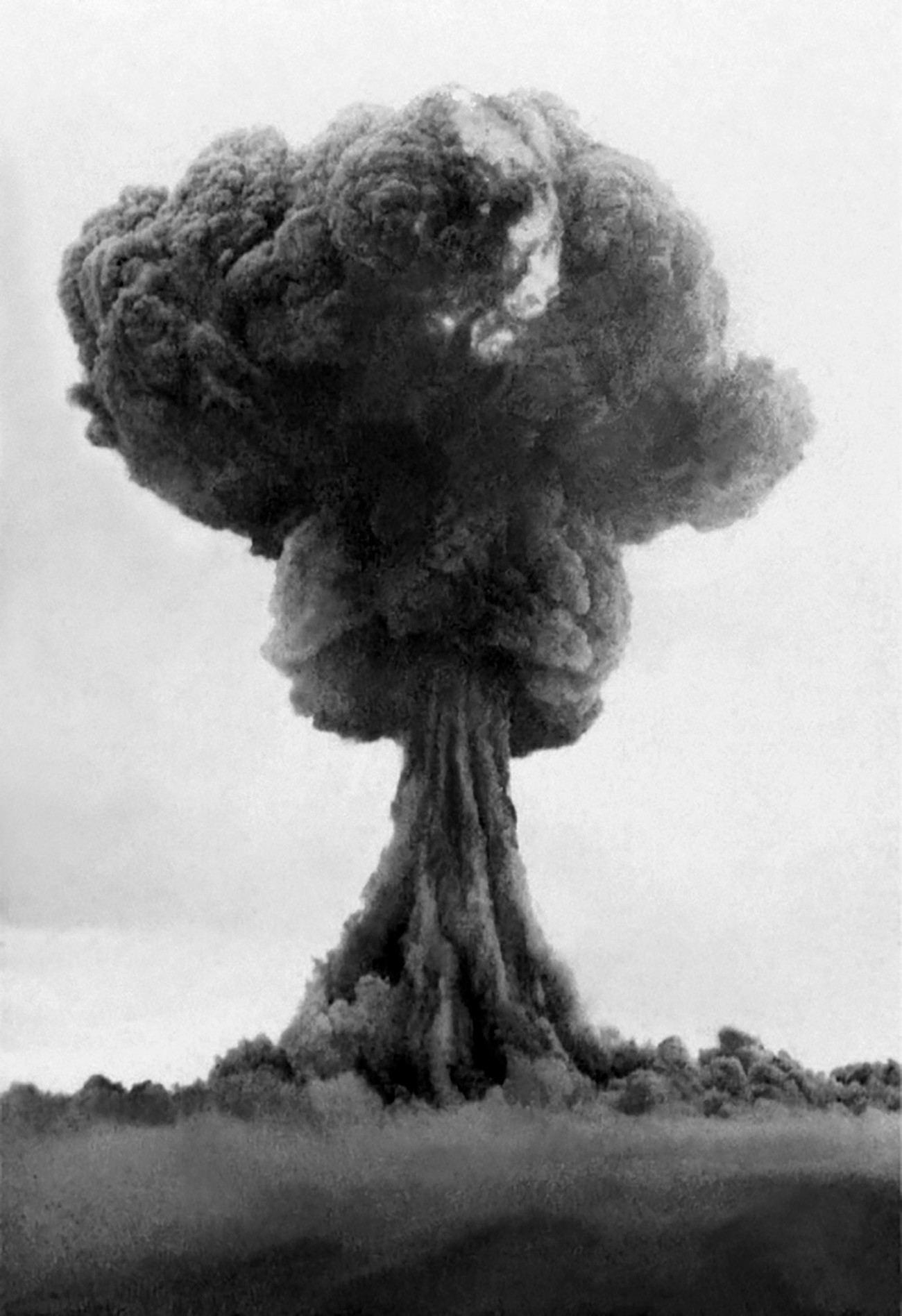
29 August 1949 — the USSR conducted the test of its first atomic bomb. The 10 kilograms of plutonium needed to build an analogue of the American atomic bomb were obtained in the USSR by mid-1949. On 29 August 1949, the first domestic atomic bomb, a copy of the American plutonium bomb detonated over Nagasaki, was successfully tested at the Semipalatinsk Test Site.
The tactical and technical requirements (TTR) stated that the atomic bomb was to be developed in two variants: using “heavy fuel” (plutonium) and using “light fuel” (uranium-235). The drafting of the requirements for RDS-1 and the subsequent development of the first Soviet atomic bomb, RDS-1, were carried out with account taken of the available materials on the design of the US plutonium bomb tested in 1945. These materials were provided by Soviet foreign intelligence. An important source of information was K. Fuchs, a German physicist involved in the nuclear programs of the United States and the United Kingdom.
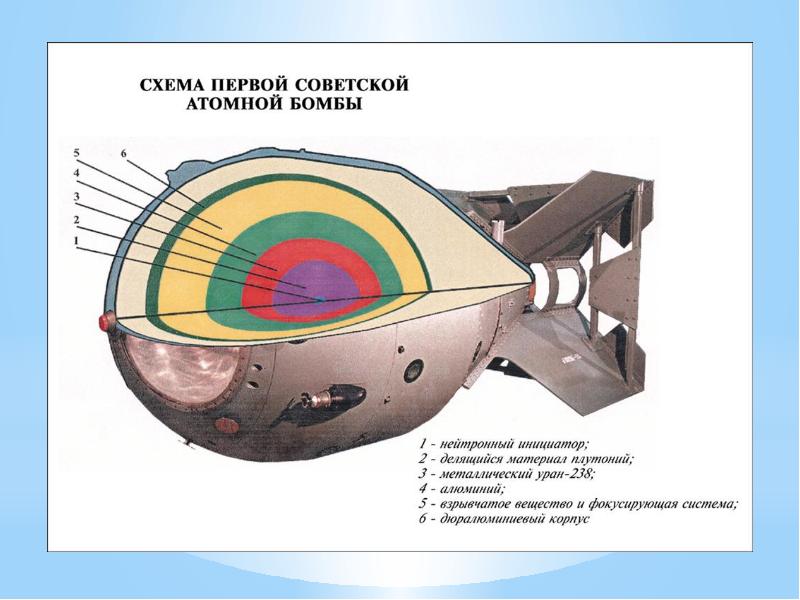
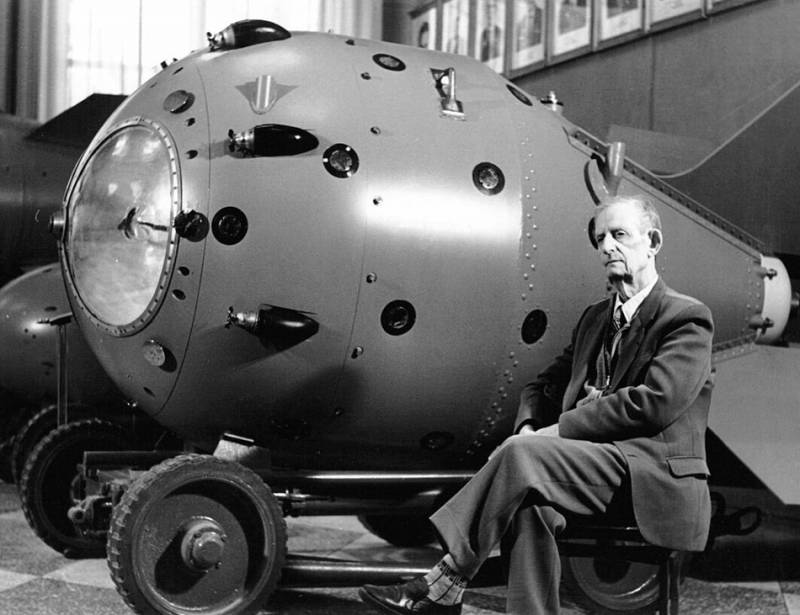
On 5 August 1949, the plutonium charge was accepted by a commission headed by Khariton and sent by a special-designation train to KB-11. By that time, work on creating the explosive device was practically complete there. At KB-11 in Sarov, on the night of 10–11 August, a control assembly of the nuclear charge was carried out; it received index 501 for the RDS-1 atomic bomb. After that, the device was disassembled, the parts were inspected, packed, and prepared for shipment to the test site. Thus, the Soviet atomic bomb was made in 2 years and 8 months (in the United States it took 2 years and 7 months).
The test of the first domestic atomic bomb, RDS-1, was conducted on 29 August 1949 at the Semipalatinsk Test Site (170 km west of the city of Semipalatinsk). At the location of the tower with the bomb, a crater formed 3 m in diameter and 1.5 m deep, covered with a fused, glass-like substance; the radiation level at ground zero was 0.5 Sv/s, and it was permitted to remain no more than 15 minutes at 2 km from ground zero. At 25 m from the tower there was a reinforced-concrete building with an overhead crane in the hall for installing the plutonium charge into the high-explosive charge. The structure was partially destroyed, but the main frame remained standing. Of 1,538 test animals (dogs, sheep, goats, pigs, rabbits, rats), 345 were killed by the blast (some animals simulated soldiers in trenches). A T-34 tank and field artillery sustained minor damage within a radius of 500–550 m from ground zero, and at distances up to 1,500 m all types of aircraft suffered significant damage. At a distance of one kilometer from ground zero and then every 500 meters, 10 “Pobeda” passenger cars were placed; all 10 cars burned. At a distance of 800 m, two residential 3-story buildings, built 20 m apart so that the first shielded the second, were completely destroyed; residential panel and log houses of an urban type were completely destroyed within a radius of 5 km. Most of the damage was caused by the shock wave. The railway (1,000 m) and highway (1,500 m) bridges were twisted and thrown 20–30 m from their positions. Railcars and vehicles located on the bridges, partially burned, were scattered across the steppe at a distance of 50–80 m from the installation point. Tanks and guns were overturned and mangled, and the animals were blown away.
The leaders of the work, Lavrentiy Beria and Igor Kurchatov, were awarded the title Honorary Citizen of the USSR. A number of scientists who took part in the project—Kurchatov, Flyorov, Khariton, Khlopin, Shchelkin, Zeldovich, Bochvar, as well as Nikolaus Riehl—became Heroes of Socialist Labor. All of them received Stalin Prizes and were also given dachas near Moscow and “Pobeda” cars, while Kurchatov received a “ZIS” car. The title Hero of Socialist Labor was also awarded to one of the leaders of the Soviet defense industry, Boris Vannikov, his deputy Pervukhin, Deputy Minister Zavenyagin, as well as 7 more MVD generals who supervised atomic facilities. The project leader Beria was awarded the Order of Lenin.