
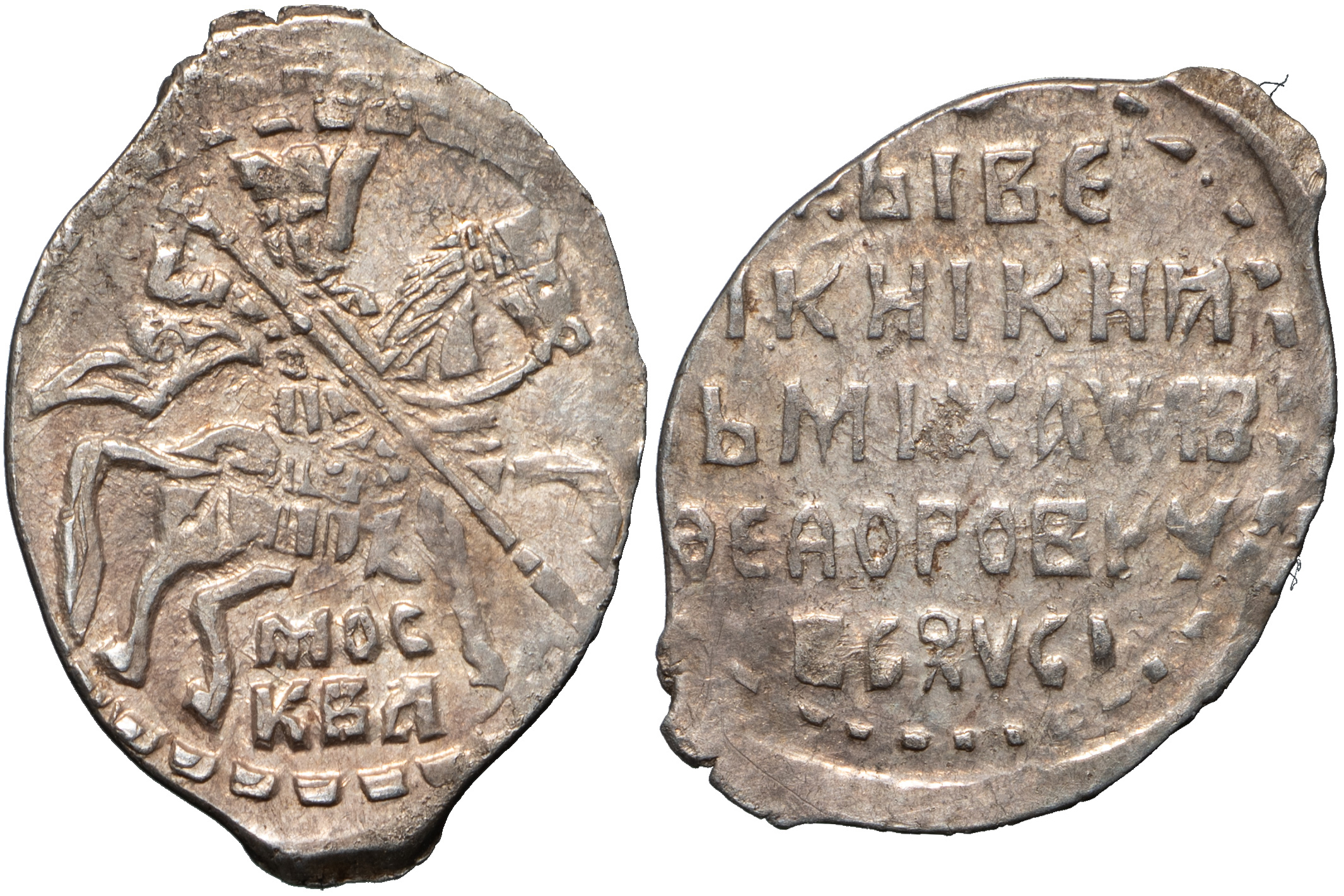
Deacon Semen Zaborovsky was sent together with Stepan Ushakov to the German Emperor Matthias with a proposal of "peace and brotherhood." From the Emperor the envoys were to go to Holland to "demand aid against the enemies" (the Poles and the Swedes). On May 1, 1614, they arrived in The Hague, but in such a wretched condition that the Dutch government found it necessary to grant them an allowance of 1,000 guilders, yet refused assistance. According to the Dutch, the envoys astonished everyone with their modesty and courtesy. Their first mission was unsuccessful as well. In the reply charter, the Emperor did not even mention the name of Mikhail, so the next year a new envoy (Fomin) was sent to him.
On April 23, the Don ataman Ivan Onisimov arrived in Samara together with the Volga Cossack Fedor Ivanov. He reported the Cossacks' decision to march against Zarutsky. To capture him and Marina Mnishek, men-at-arms were sent from Samara to Astrakhan.
This year, by decision of the Zemsky Sobor, an extraordinary tax was levied: the "fifth money" (den'ga pyataya). The tax was collected "from surpluses according to assessment, from whoever can, from his own means and trade," that is, from income, at a rate of 20%, and exclusively from the town and district trading people who had at least 10 rubles of annual income, as well as from the privileged merchant class (gosti). In practice, the attempt to collect it gave rise to many misunderstandings: the taxable unit was not understood uniformly everywhere, and people were not always willing to disclose their real income. In some places the "fifth money" turned into a most burdensome property tax; having paid it, one Mezen merchant fled with his wife and children; in some places they openly offered armed resistance to its collection. In other places, the "fifth money" was collected according to "razrub lists," under which members of a posad or peasant commune paid a direct levy, aligning it with the weight of the razrub unit. Elected assessors determined the size of the payment; government collectors either accepted their determination or conducted an inspection, which was far from always successful.