
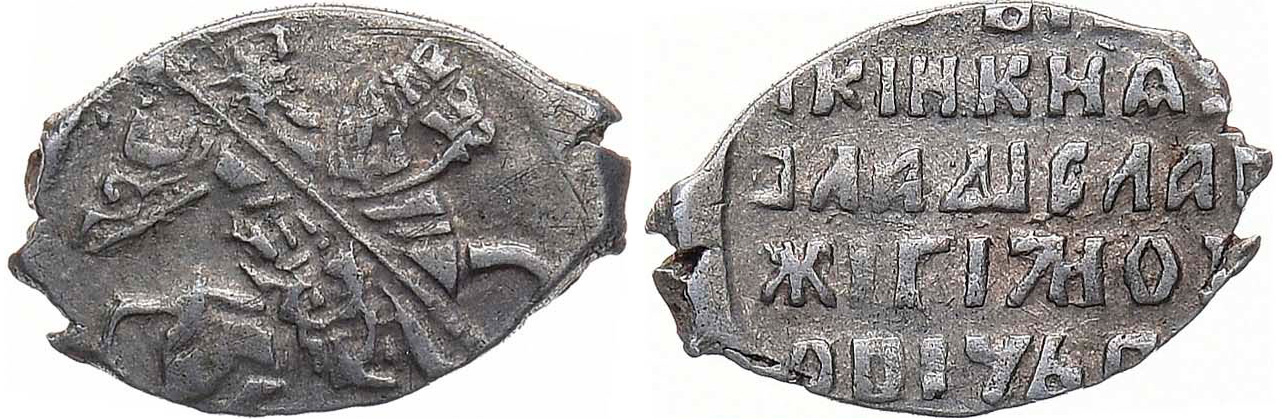
26 July — the Swedish army under De la Gardie captures Novgorod. The Novgorod boyars sign an agreement with the Swedes to support the candidacy of the Swedish king’s son for the Russian throne, to detach Novgorod lands from the Russian state, and to enter the war with Poland on Sweden’s side.
29 October — the Poles held celebrations in Warsaw on the occasion of the “final” victory over Muscovy.
The Time of Troubles in Russia (1598–1613) was marked by natural disasters, Polish-Swedish intervention, and a severe political, economic, governmental, and social crisis. The accession of False Dmitry I, Shuisky’s plot, numerous uprisings, and military raids on Russian towns by the Poles and the forces of the Grand Duchy of Lithuania, which at that time were subordinate to the Polish-Lithuanian Commonwealth, weakened the country. On 4 July 1610, the Battle of Klushino took place, as a result of which the Polish army led by Zholkiewski defeated the Russian-Swedish forces commanded by Dmitry Shuisky and Jacob De la Gardie.
During the battle, German mercenaries serving with the Russians went over to the Polish side. The road to Moscow was opened for the Poles. The defeat of Vasily Shuisky’s troops by the Poles at Klushino finally undermined the fragile authority of the “boyar tsar,” and when news of this event reached Moscow, a coup took place.
As a result of a boyar conspiracy, Vasily Shuisky was deposed, and on 20–21 September Polish troops entered the capital. On 17 March 1611, the Poles, taking a quarrel at the market for the start of an uprising, carried out a massacre in Moscow; 7,000 Muscovites died in Kitai-gorod alone. On 29 October 1611, the Polish king Sigismund III and his de facto viceroy in Moscow, Hetman Stanislaw Zholkiewski, held festivities in Warsaw on the occasion of what they believed was the final victory over Muscovy. Through the streets of Warsaw, packed with jubilant crowds, they paraded “living trophies”: Tsar Vasily Shuisky, deposed by the boyars a year earlier, as well as a group of Russian diplomats and military commanders. Shuisky was then brought into the royal castle and forced to bow to Sigismund at his feet.
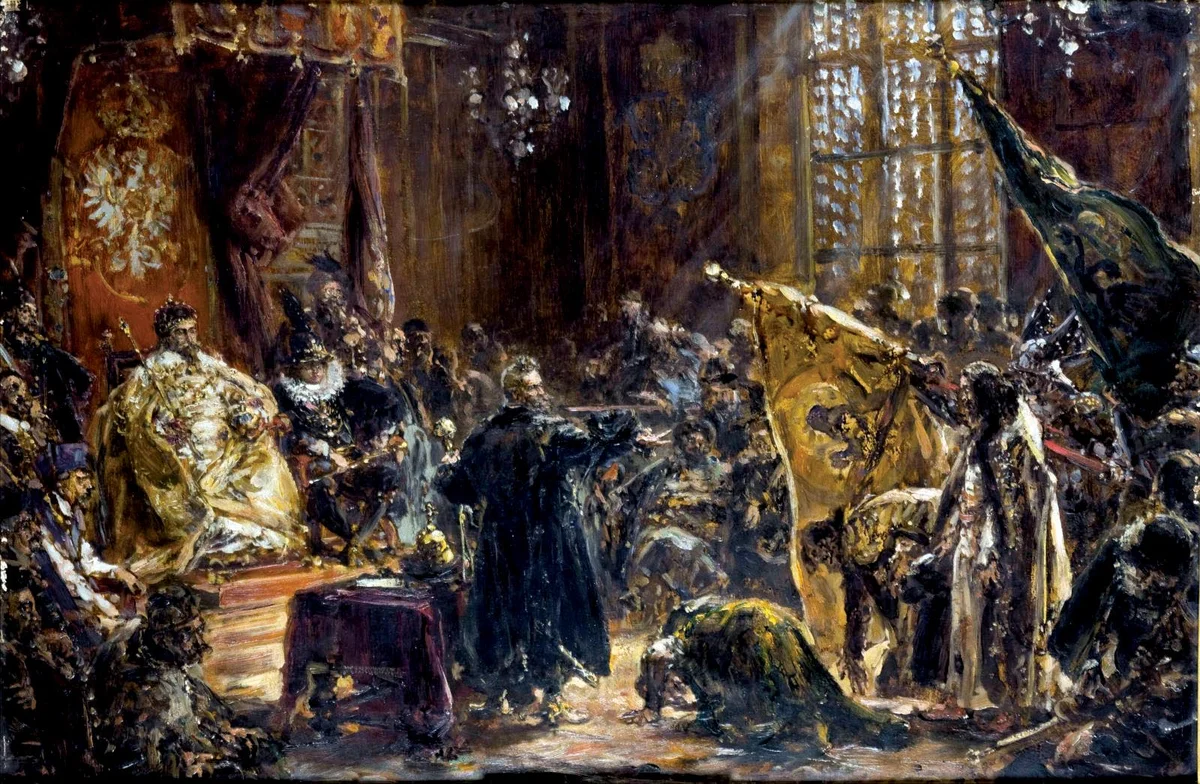
Rus’ really was in a desperate situation then, and in the Kremlin many swore allegiance as tsar to Sigismund’s 16-year-old son Wladyslaw... But in Nizhny Novgorod, the militia of Kuzma Minin was already beginning to assemble. A year later, in August 1612, the militia defeated the Polish army near Moscow, and in November 1612 it completely liberated the capital.