
12 January — the Soviet Union launched a large-scale offensive against Nazi Germany in Eastern Europe.
13 January — the start of the East Prussian Offensive Operation by the Soviet Army in World War II.
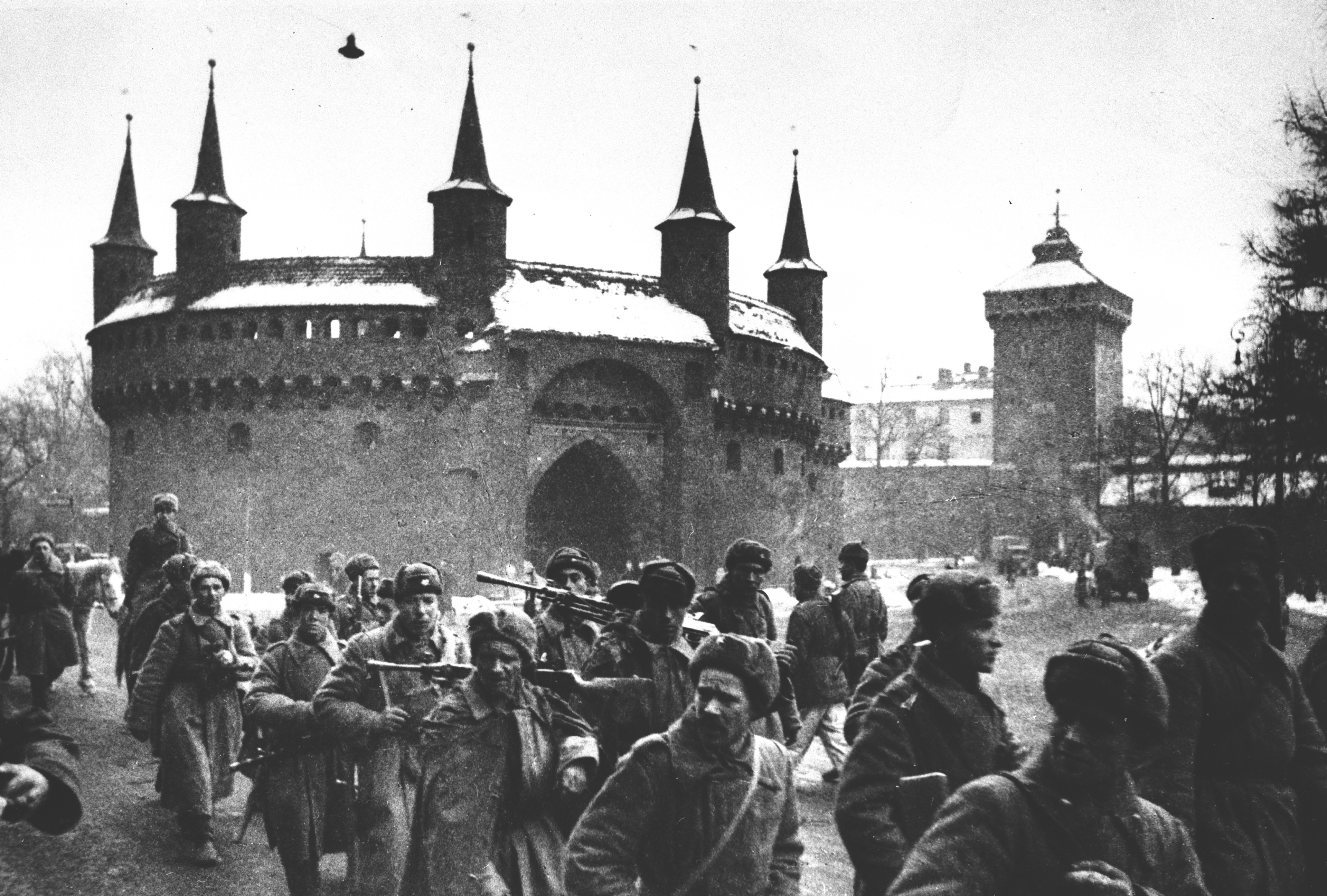
19 January — Soviet troops captured Lodz and Krakow.
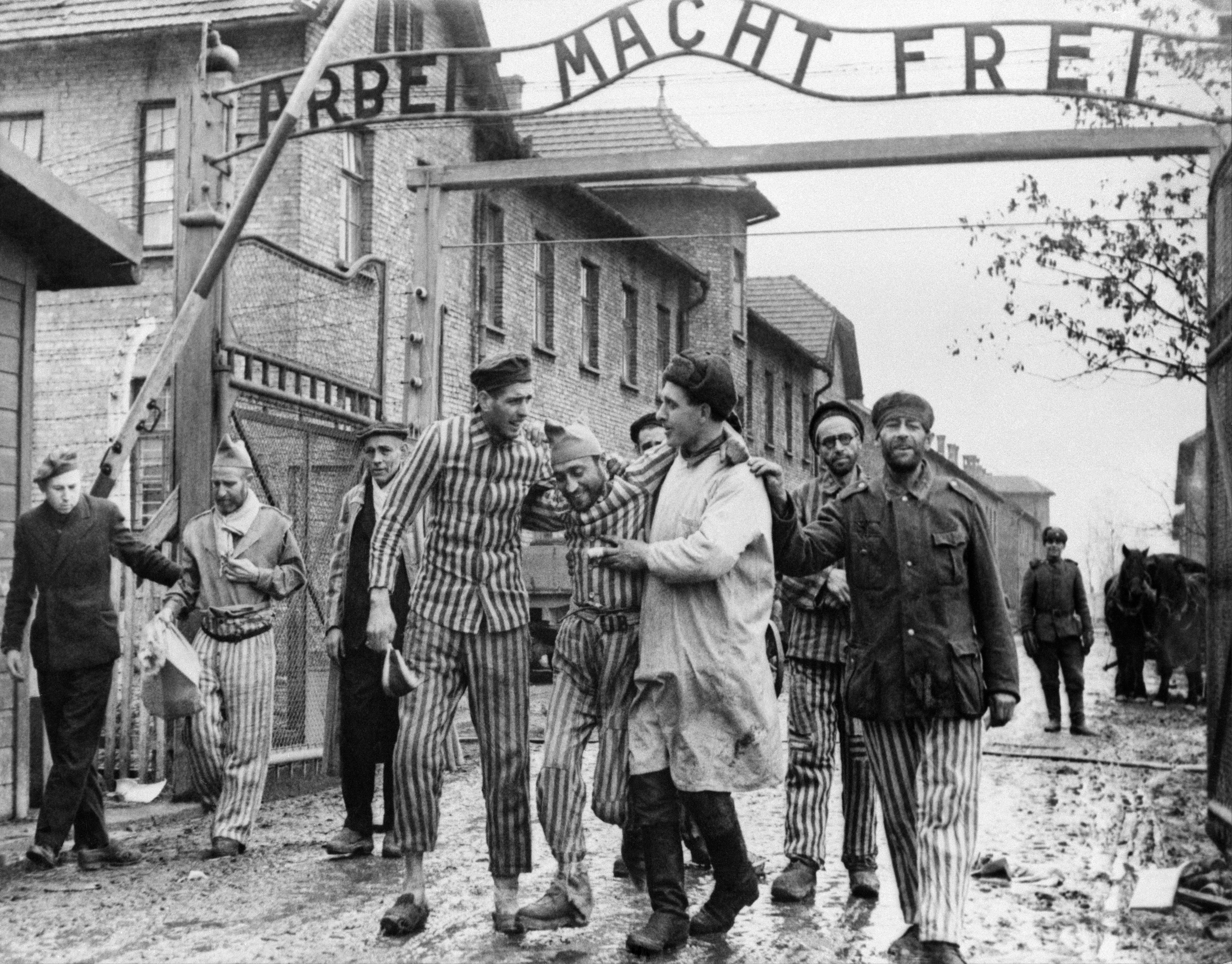
27 January — prisoners of the Nazi concentration camp at Auschwitz (Poland) were liberated.
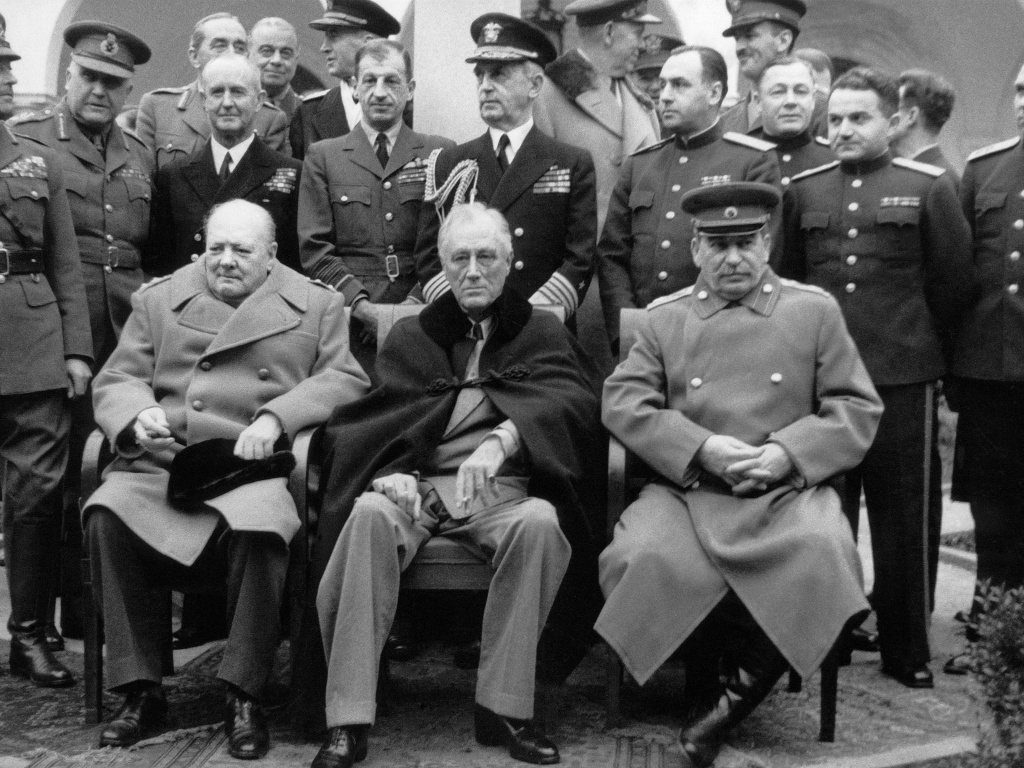
4 February — the Crimean (Yalta) Conference opened at the Livadia Palace.
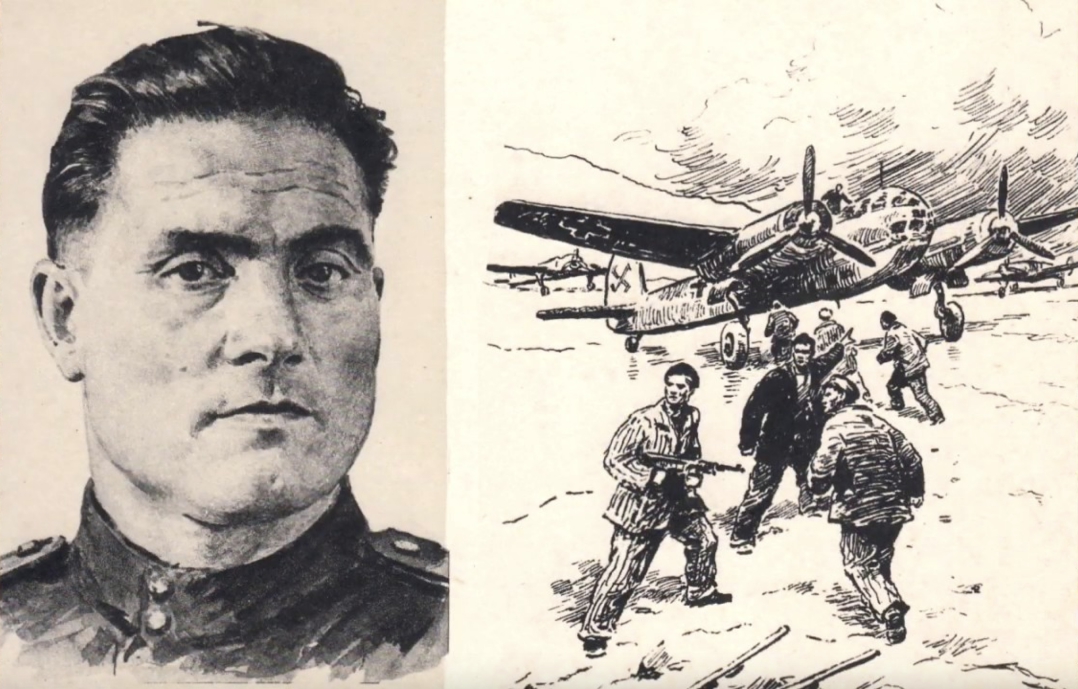
8 February — the escape of Devyatayev’s group from the rocket base on the island of Usedom.
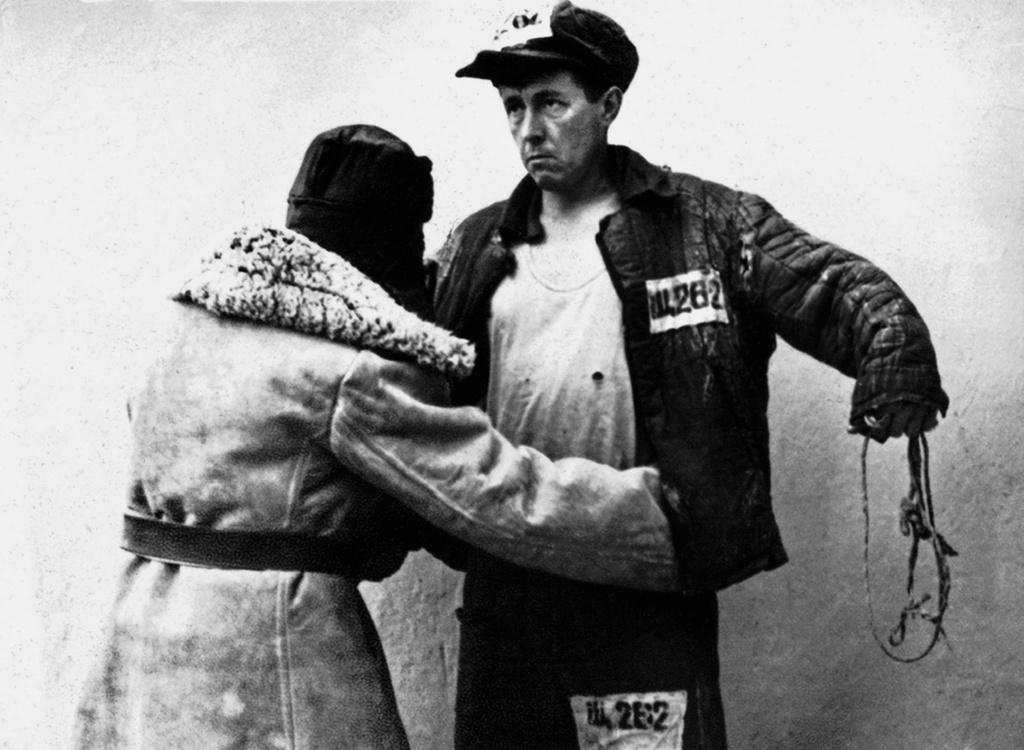
9 February — in East Prussia, artillery battery commander Captain A. I. Solzhenitsyn was arrested for criticizing Lenin and Stalin in coded letters.
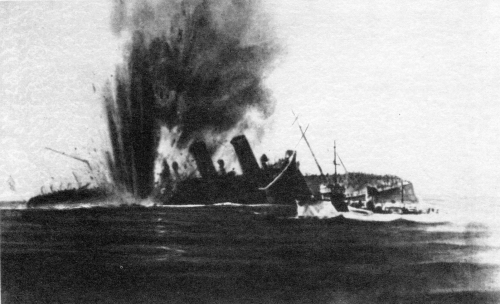
10 February — the transport ship “General von Steuben” was sunk by the S-13 submarine under the command of Alexander Marinesko.
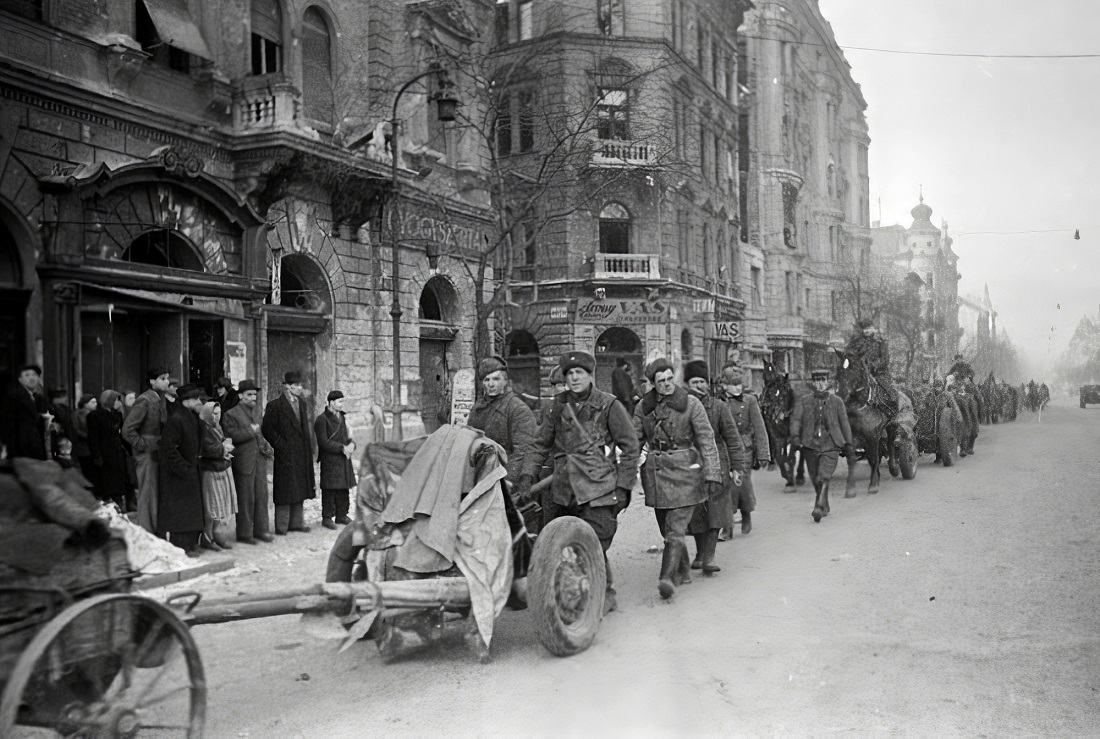
13 February — Soviet troops liberated the Hungarian capital, Budapest.
13 February — World War II: the start of the large-scale bombing of Dresden.
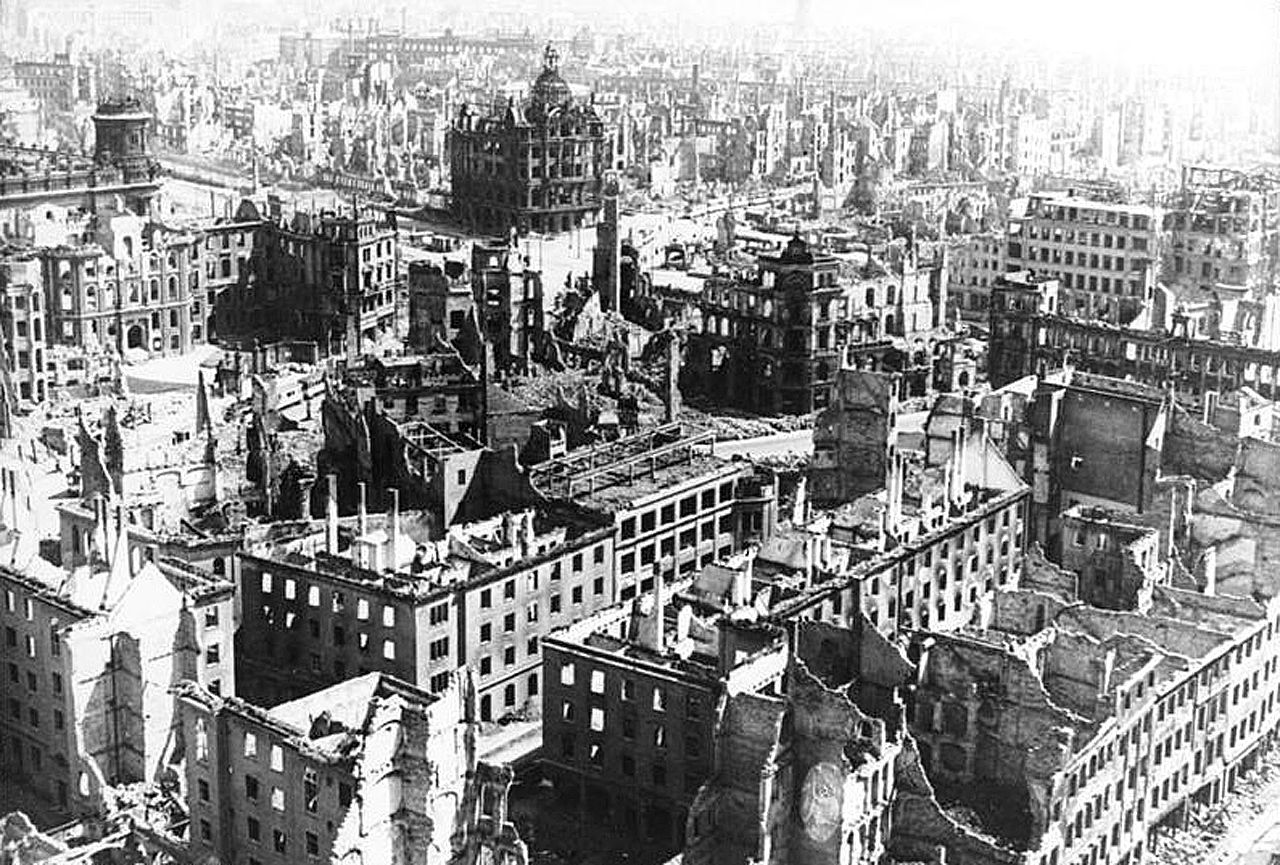
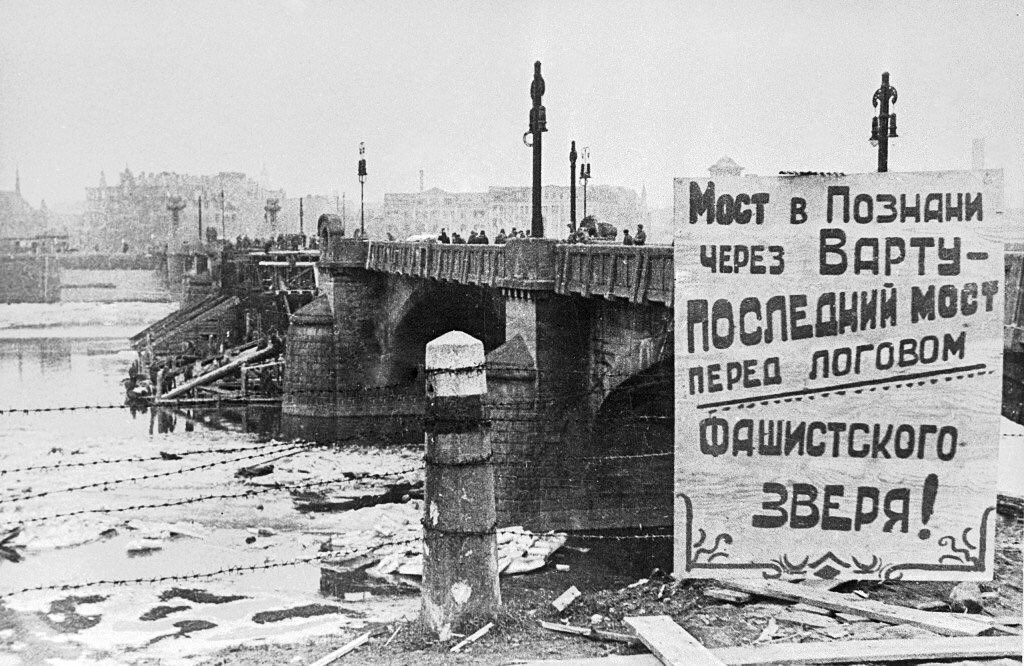
23 February — after a month of fierce fighting, Soviet troops took the Polish city of Poznan.
9 March — the start of Japanese military actions against the French in Vietnam.
16 March — the Royal Air Force destroyed 90% of the “city of a hundred churches,” Wuerzburg (more than Dresden); 5,000 killed in 18 minutes.
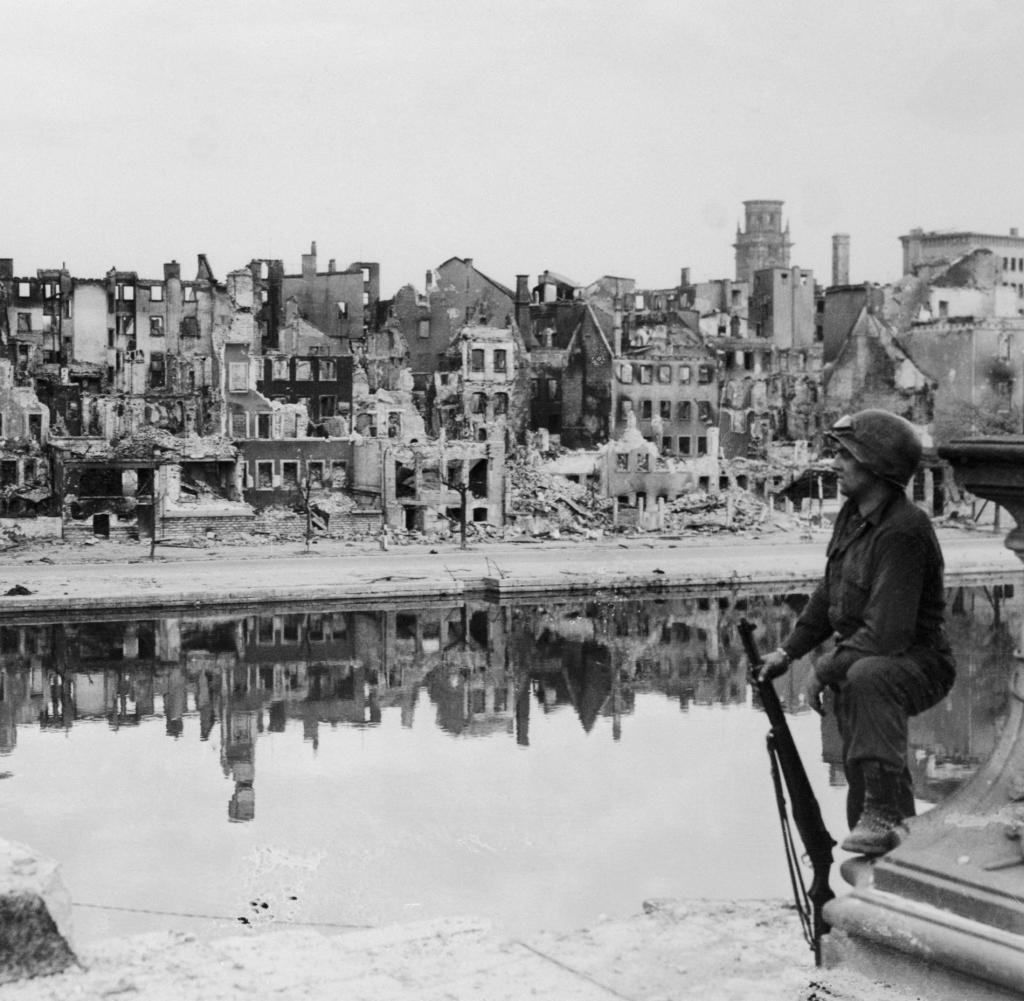
16 March — the start of the Vienna Offensive by the forces of the 3rd and 2nd Ukrainian Fronts.
18 March — Anglo-American aircraft carried out the most powerful raid on Berlin. 1,300 bombers escorted by 750 fighters bombed the Reich capital for two hours. German air defenses could oppose them with only 28 Me-262 jet fighters.
18 March — the Japanese government closed schools, calling up for military service all children older than six.
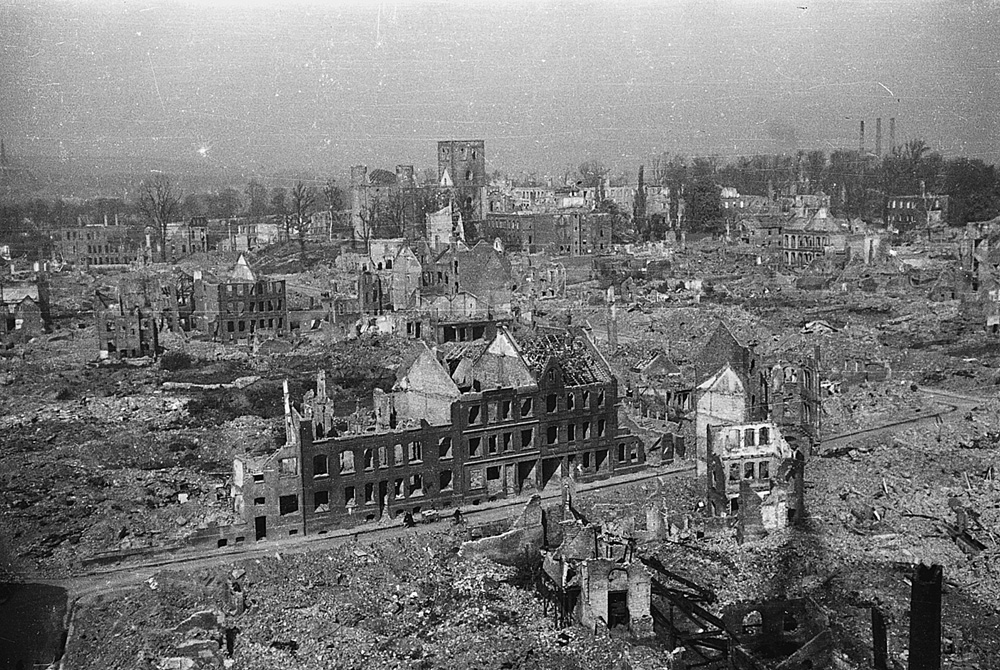
22 March — an Anglo-American strategic air raid was carried out on the German city of Hildesheim, in which civilian deaths exceeded one thousand.
27 March — the last German V-2 ballistic missile fell in the United Kingdom, in the county of Kent.
30 March — German troops were driven out of Gdansk (Poland).
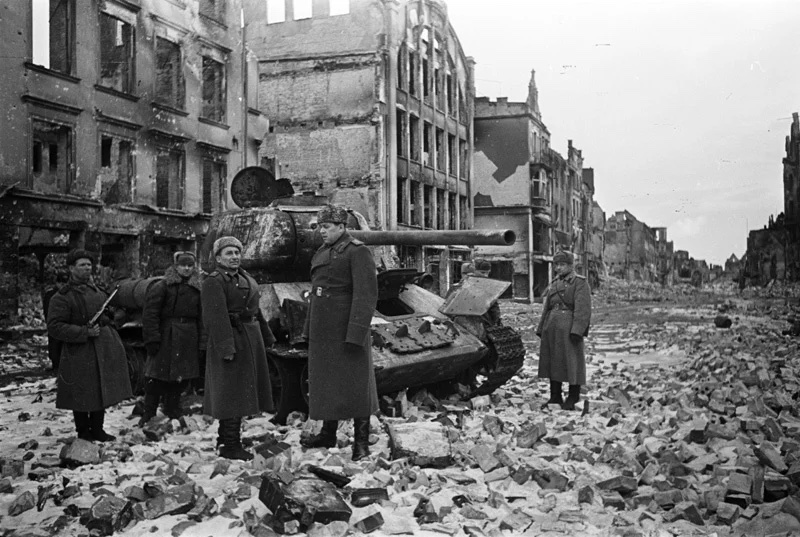
4 April — troops of the 2nd Ukrainian Front, during the Bratislava–Brno Offensive Operation, liberated Bratislava.
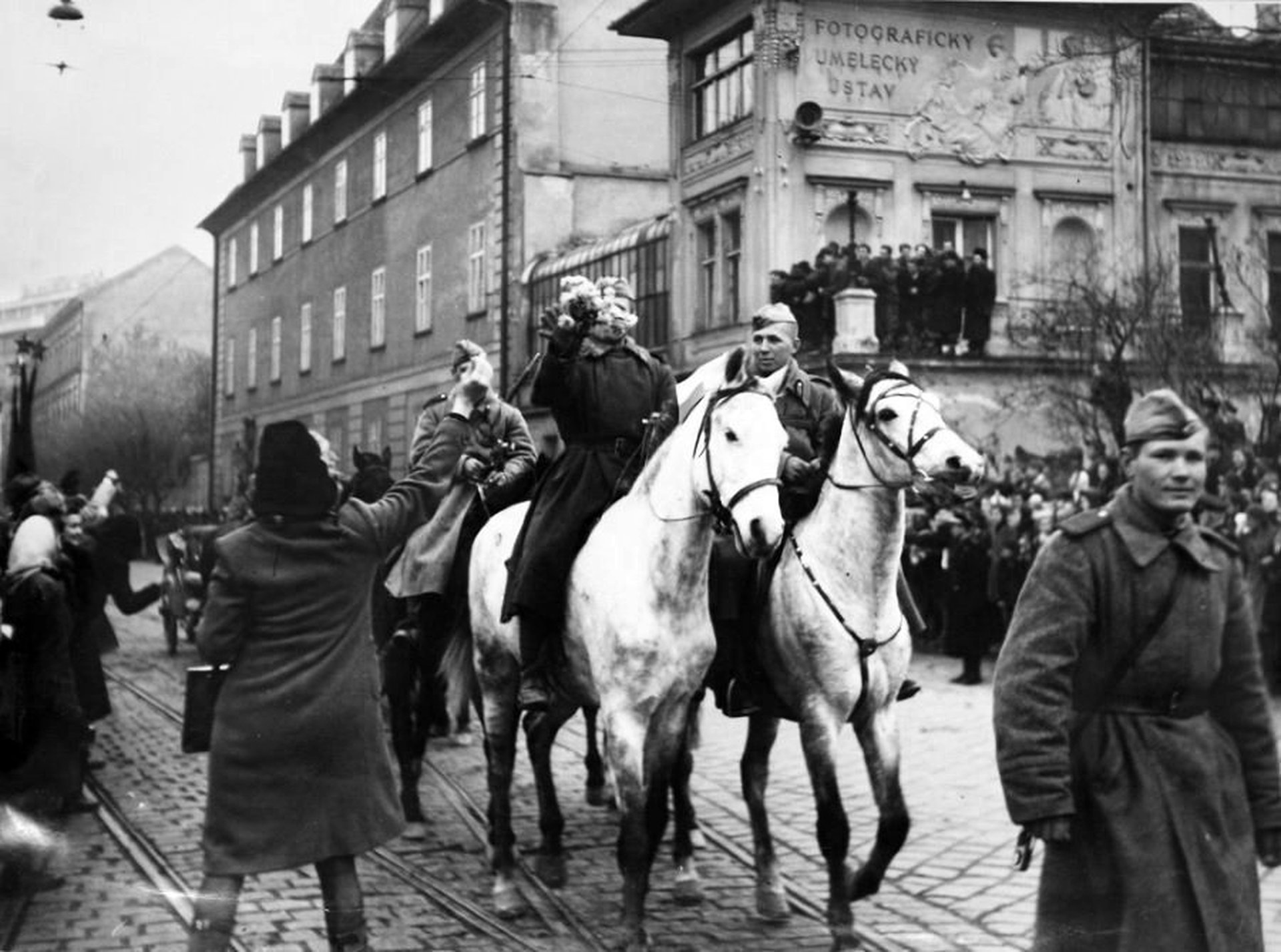
9 April — the final capture of the fortress city of Koenigsberg by Soviet troops. Commandant Otto Lasch (German: Otto von Lasch) signed the act of the city’s capitulation.
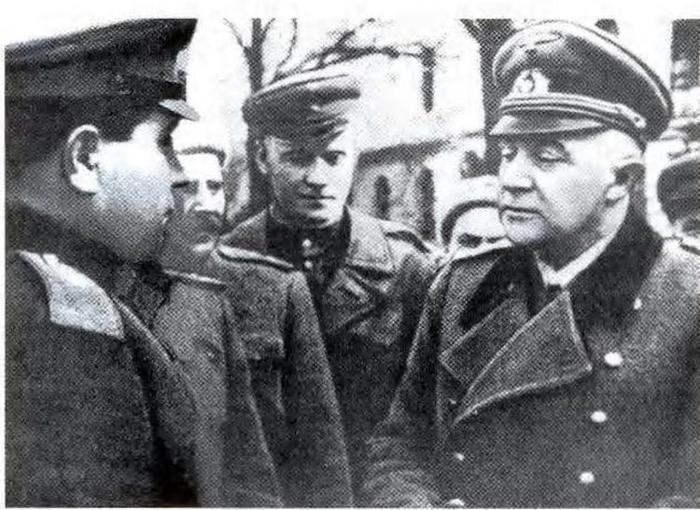
11 April — liberation of the Buchenwald concentration camp.
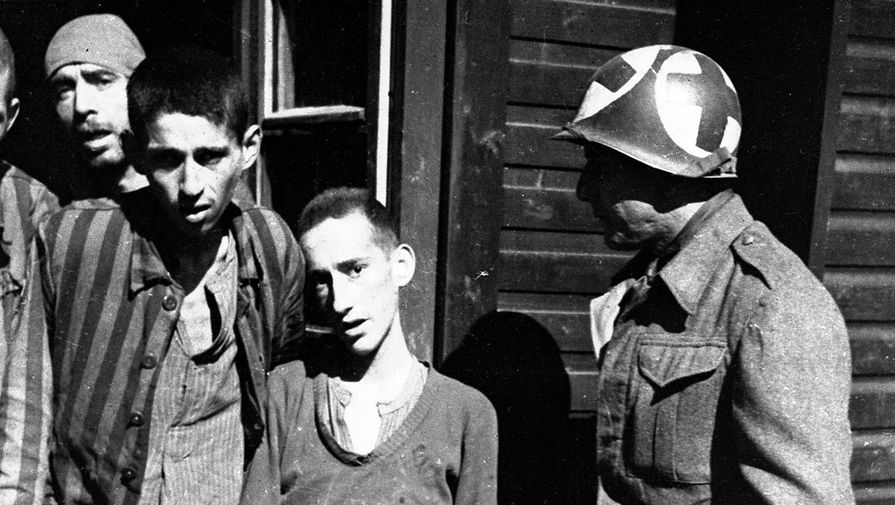
13 April — Vienna was liberated by the 2nd and 3rd Ukrainian Fronts.
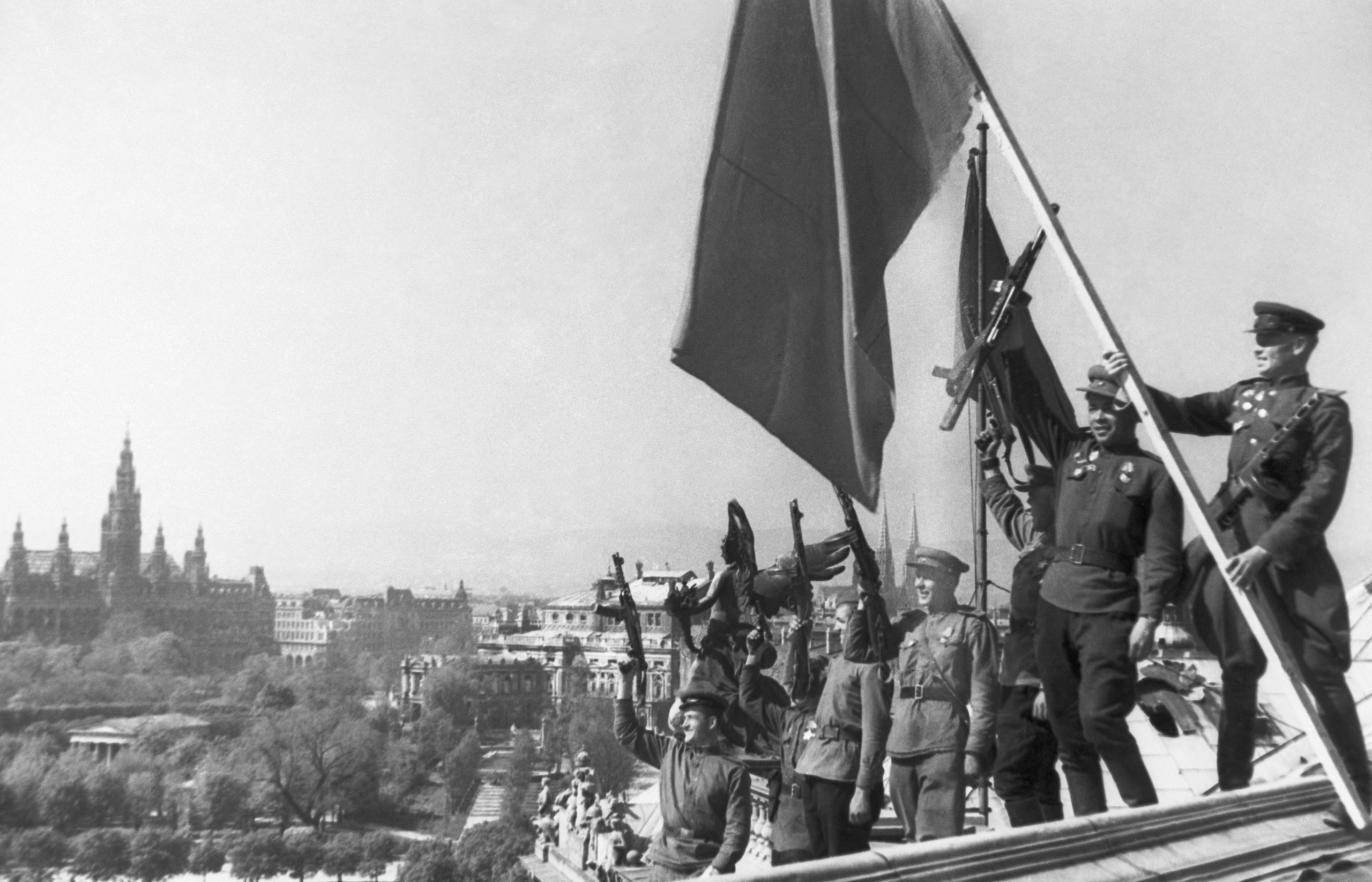
16 April — the German transport ship Goya was sunk by the Soviet submarine L-3. More than 6,000 people died in the sinking, making it one of the largest maritime disasters.
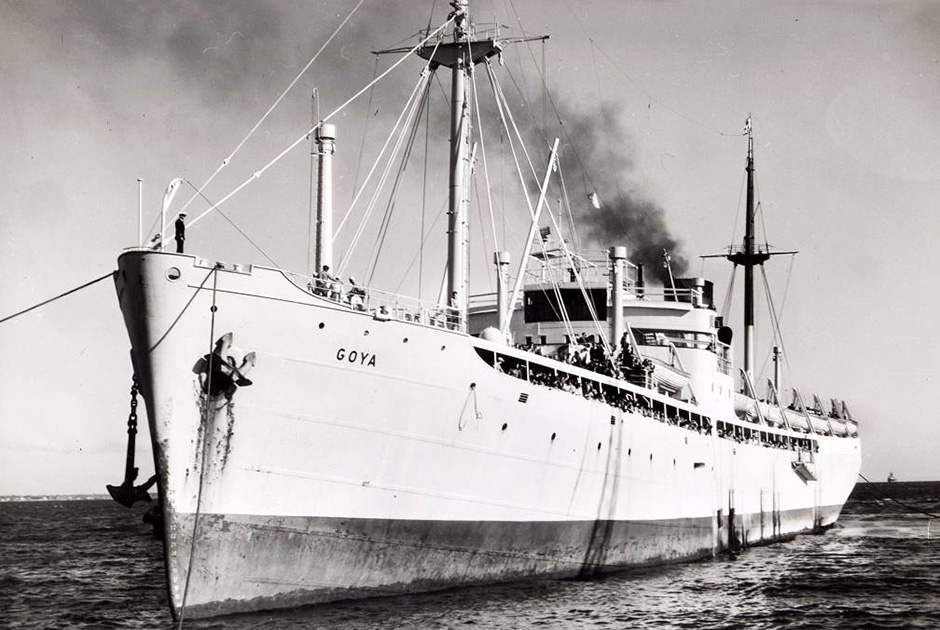
16 April — the start of the Berlin Operation during World War II.
22 April — forward units of the Red Army entered Berlin.
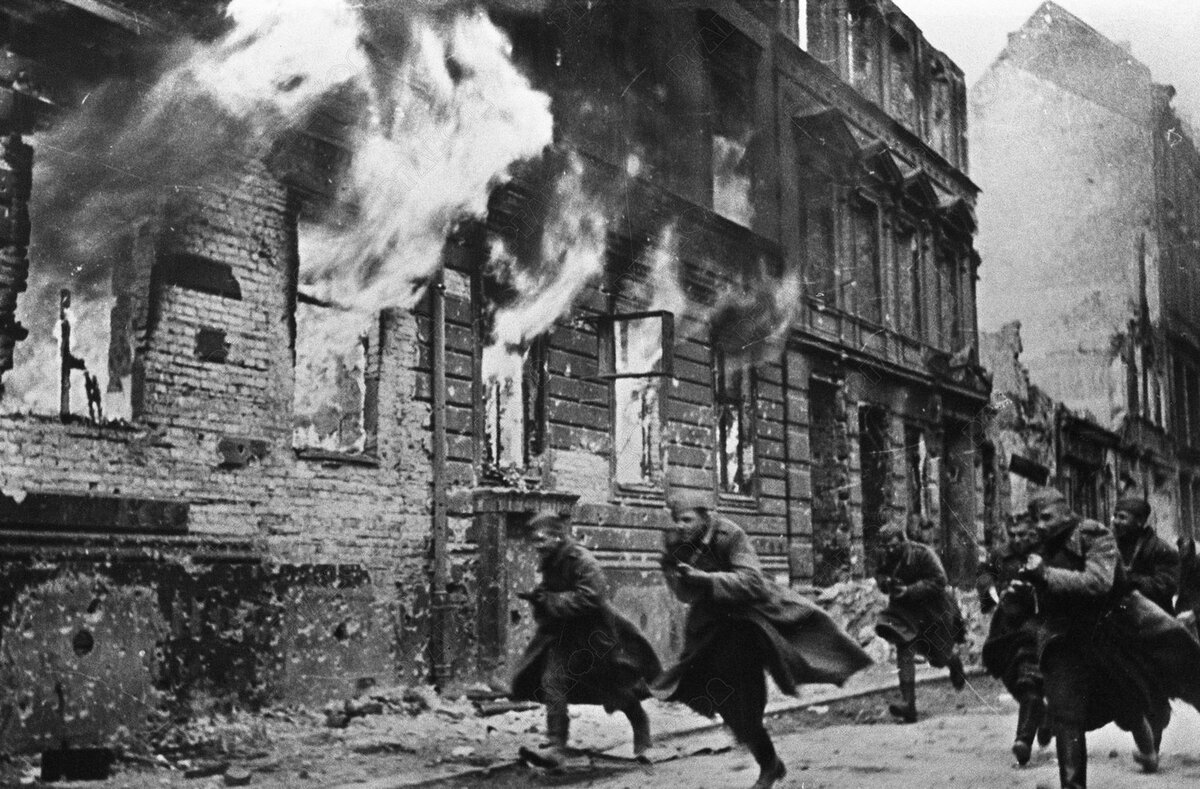
25 April — the start of the San Francisco International Conference of 50 countries to draft the UN Charter.
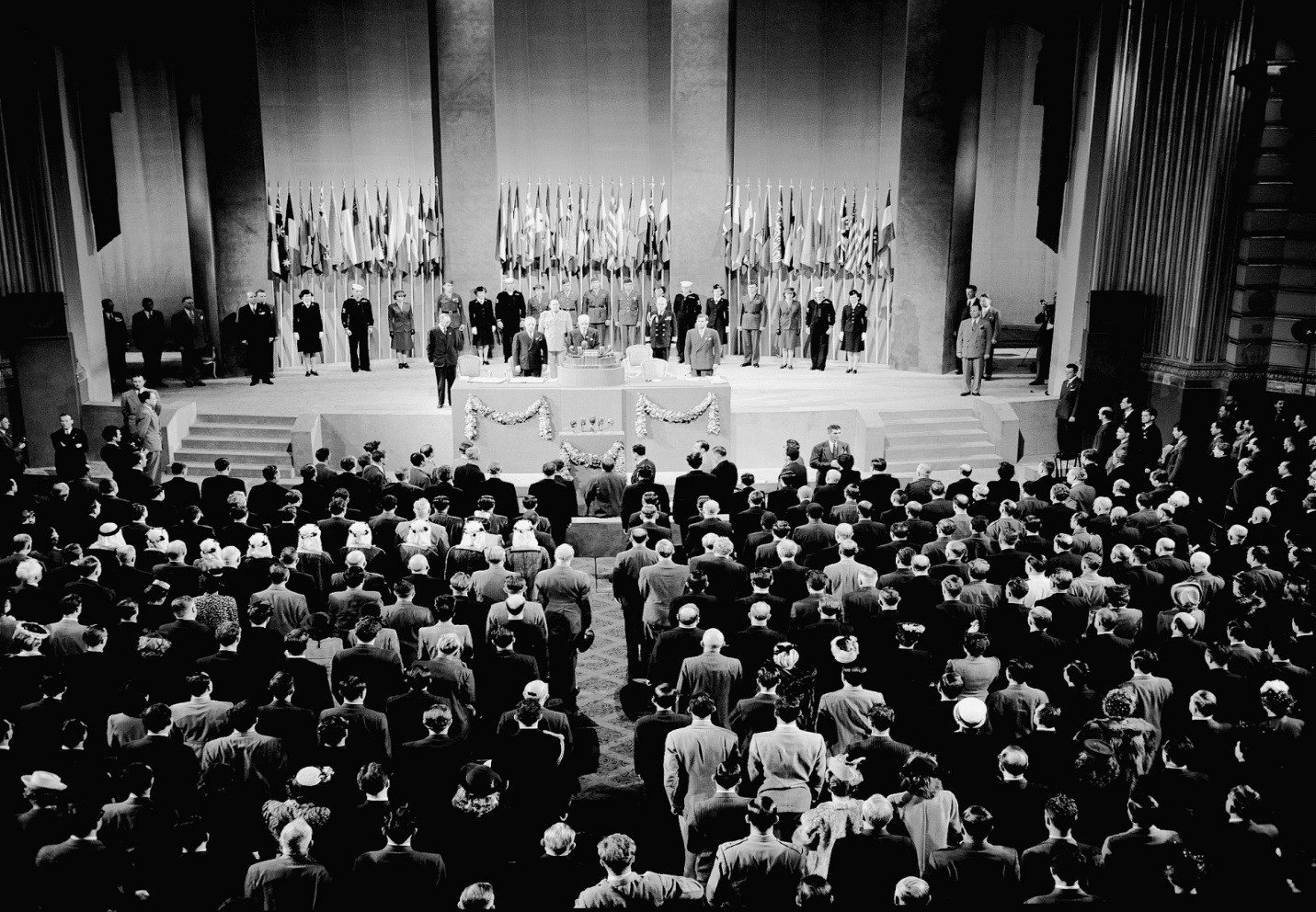
25 April — the meeting of Soviet and American troops on the Elbe.
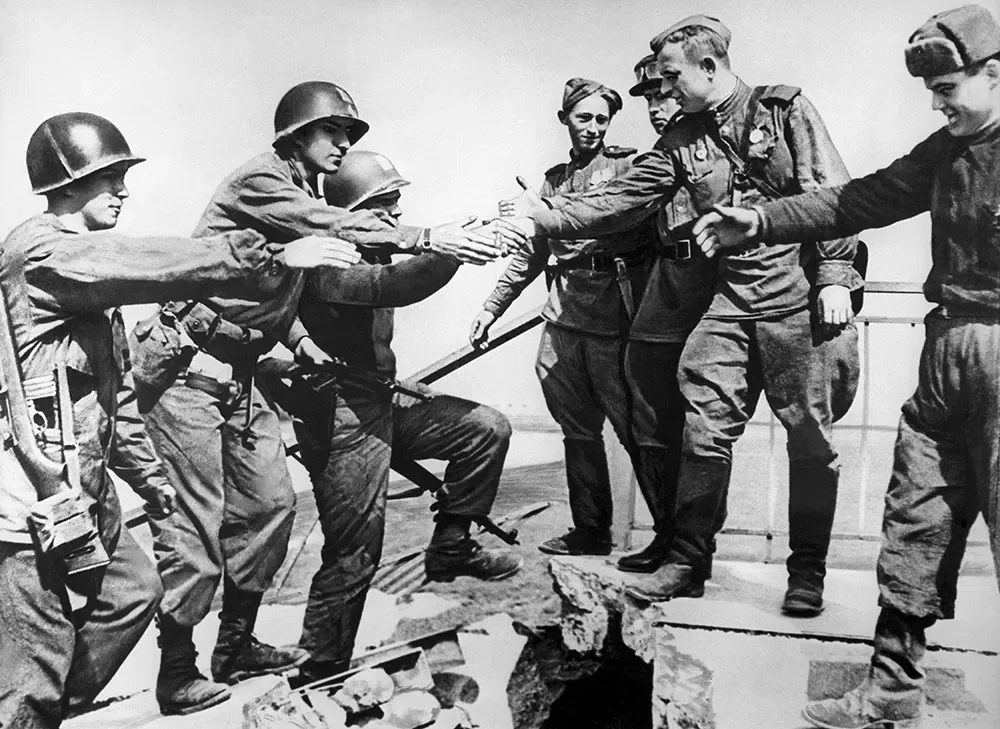
28 April — American troops took Augsburg without a fight.
28 April — Italian dictator Benito Mussolini and his mistress Clara Petacci were executed.
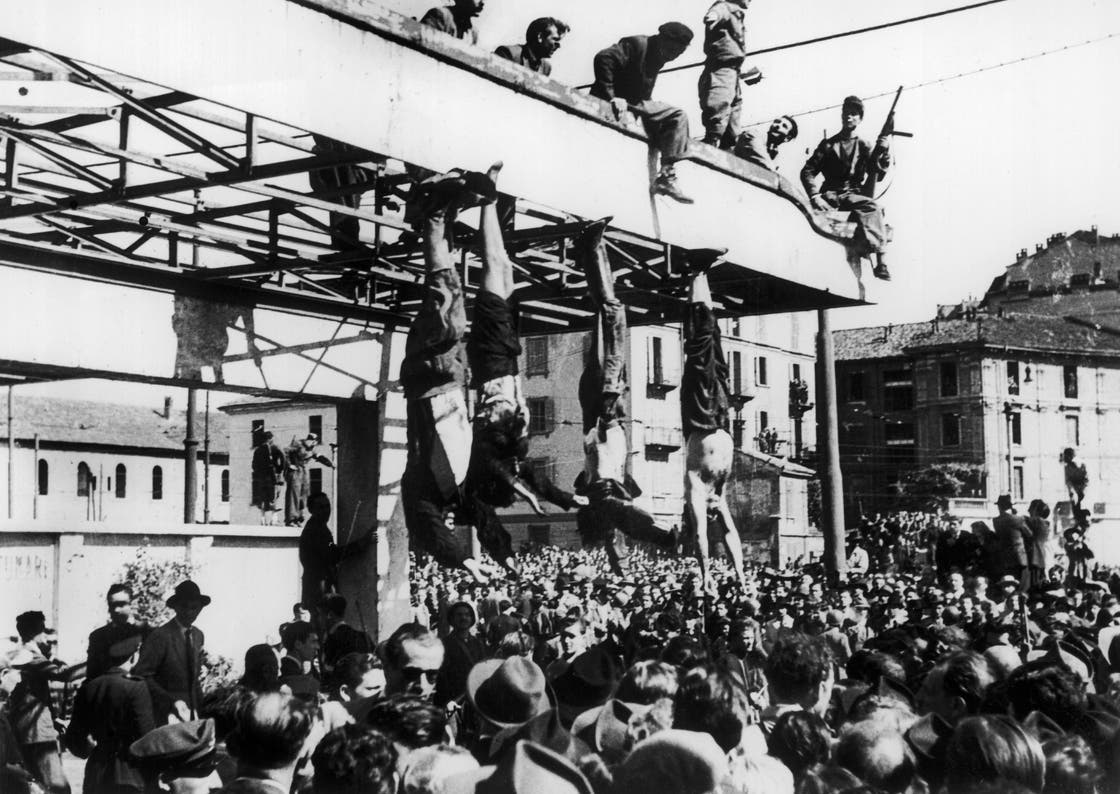
30 April — the start of the Soviet assault on the Reichstag during the Berlin Operation.
30 April — Soviet troops liberated female prisoners of the Ravensbrueck women’s concentration camp.
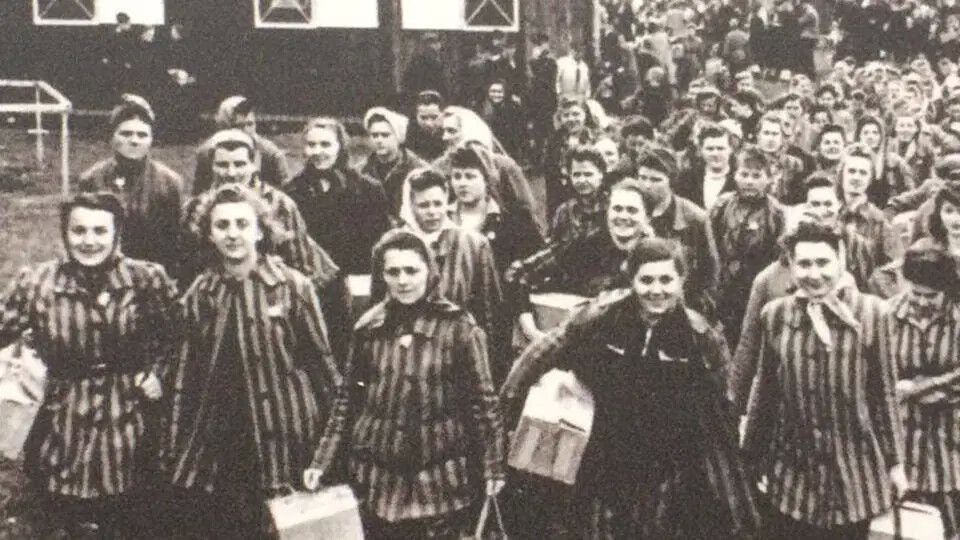
1 May — the Victory Banner was raised over the Reichstag in Berlin.
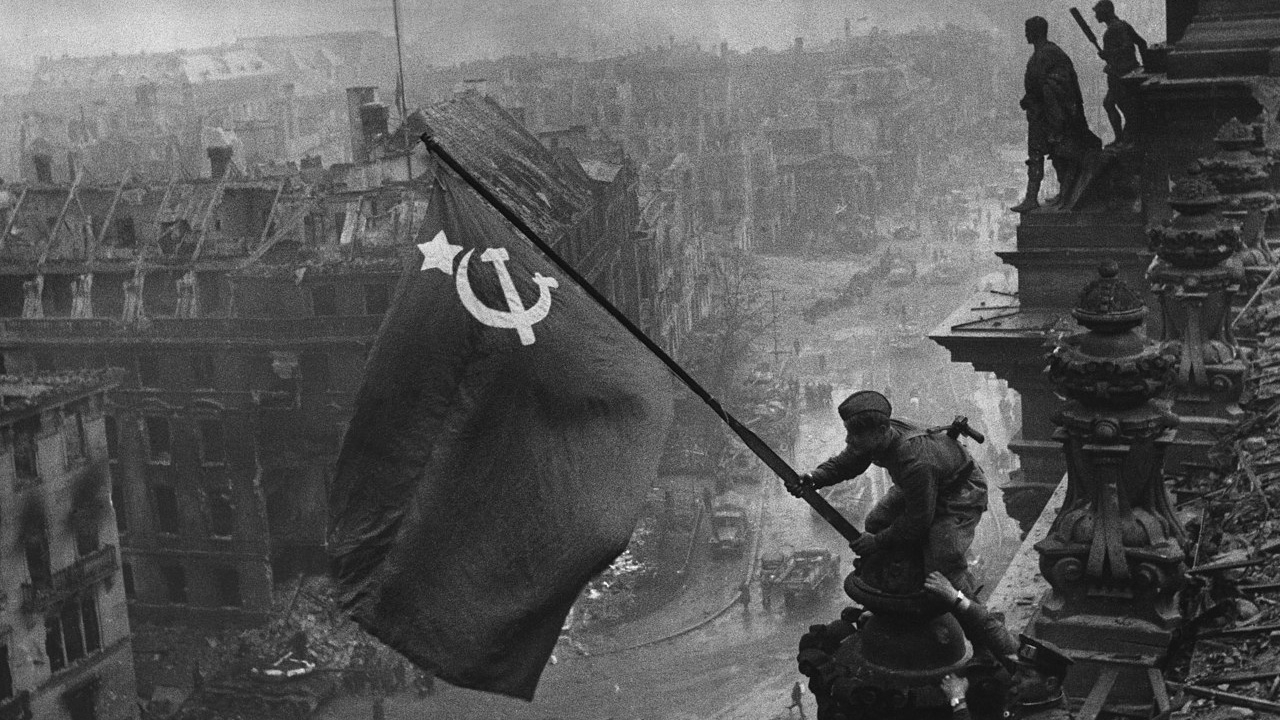
The Victory Banner raised by Berest, Yegorov, and Kantaria was not the first red flag over the Reichstag. On 30 April 1945, Lieutenant Rakhimzhan Koshkarbayev of the 150th Rifle Division of the 3rd Shock Army of the 1st Belorussian Front, who was only 21 at the time, and Private Georgy Bulatov were the first to hoist a battle flag over the Reichstag.
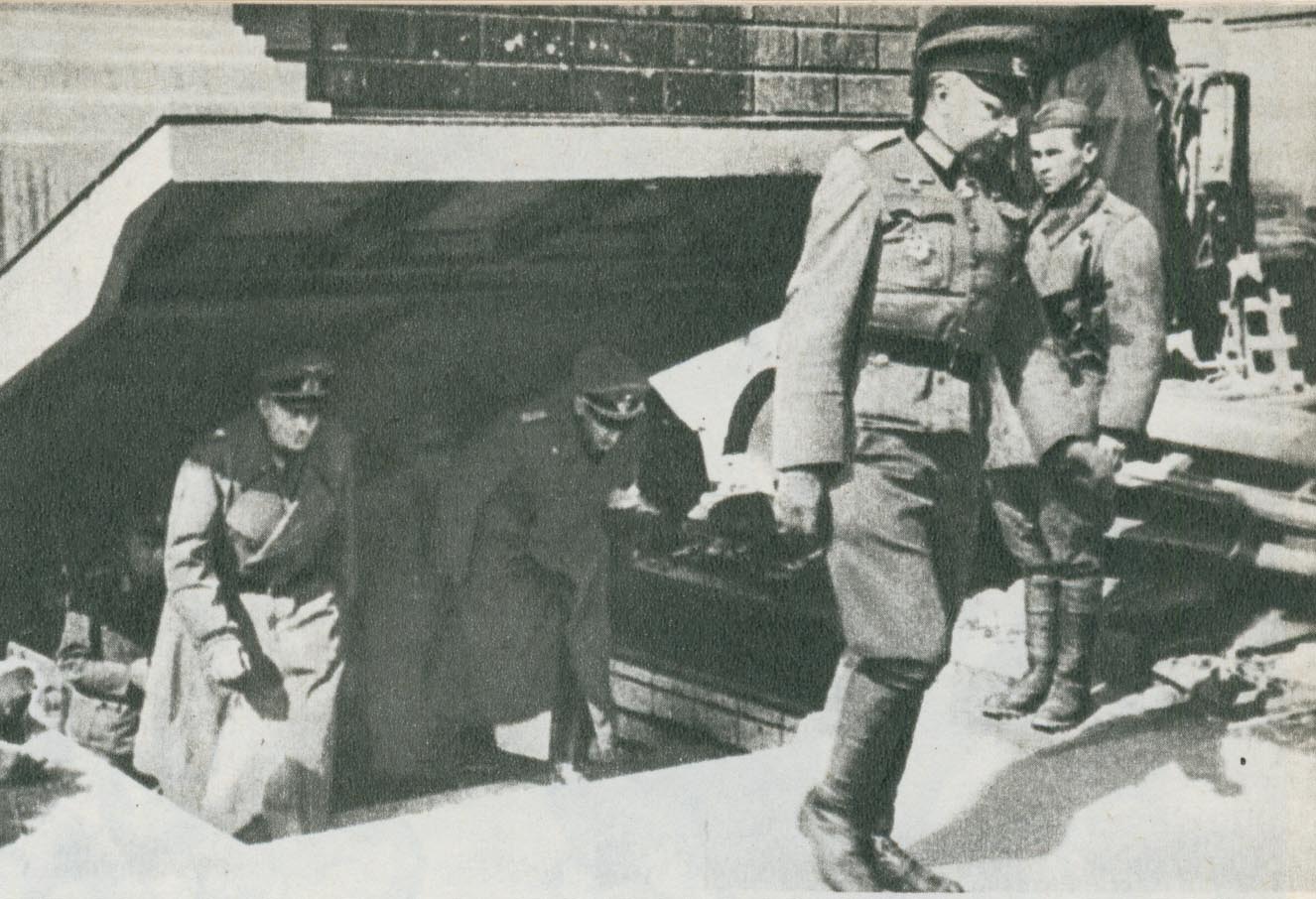
2 May — the commander of Berlin’s defense, Helmuth Weidling, signed the order to capitulate Berlin.
2 May — in the USSR, 7 May was declared Radio Day.
7 May — at 2:41 a.m. in Reims, the act of Germany’s unconditional surrender was signed.
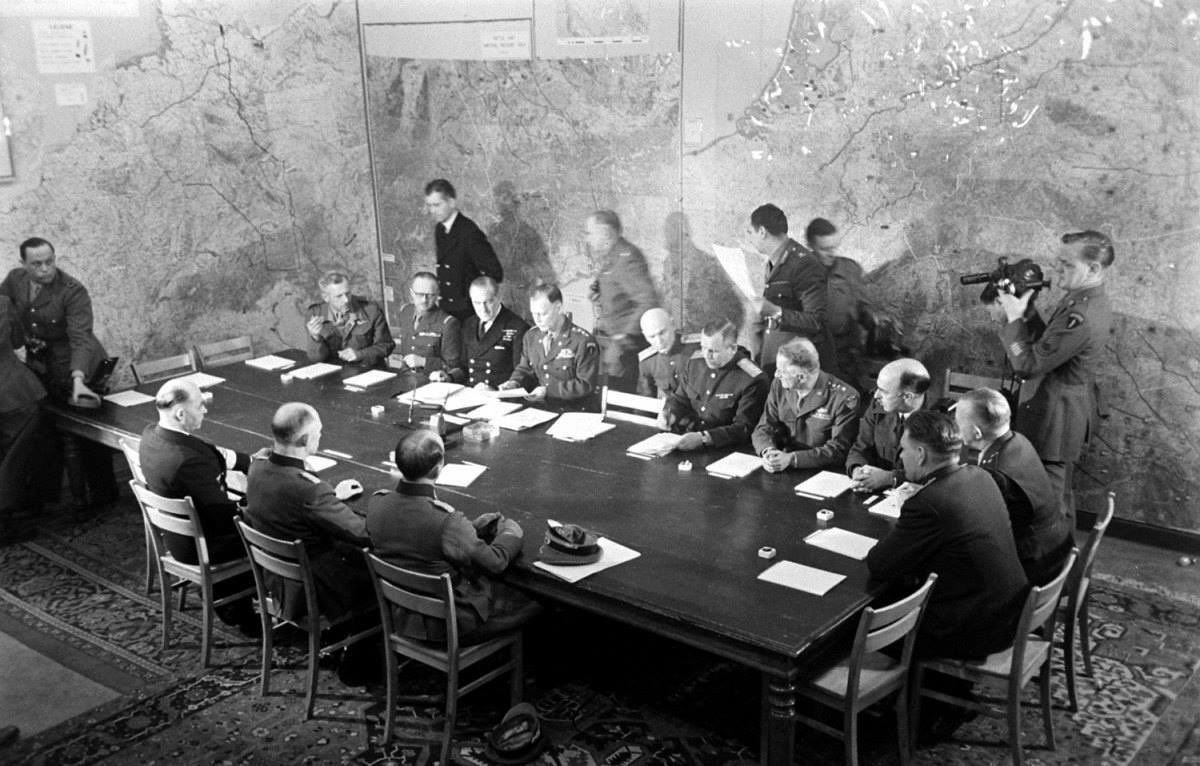
8 May — in Berlin, the act of Germany’s unconditional surrender in World War II was signed.
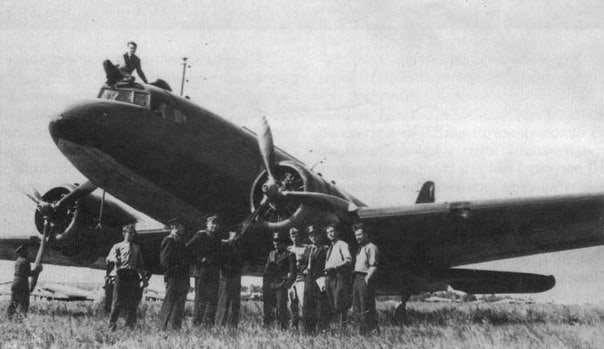
9 May — at the Central Airfield named after M. V. Frunze, a Li-2 aircraft with the crew of A. I. Semenkov landed, delivering to Moscow the act of the unconditional surrender of Nazi Germany.
11 May — the USSR State Defense Committee decided to provide a loan to the Provisional Government of Austria.
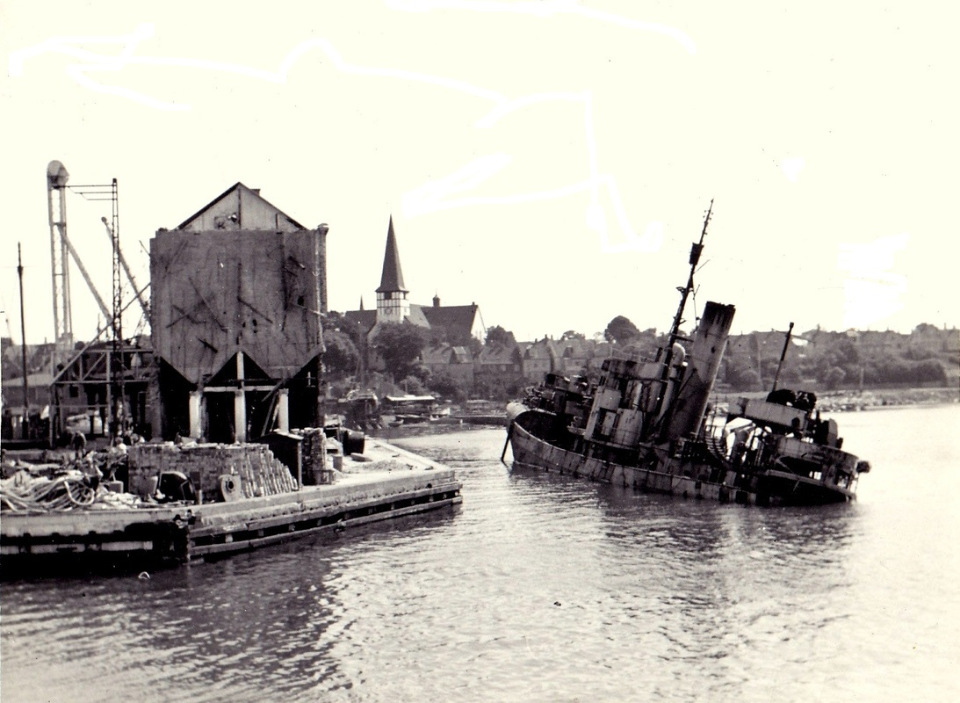
16 May — the German garrison on the island of Bornholm (Denmark) capitulated.
5 June — allied commanders Zhukov, Eisenhower, Montgomery, and de Lattre de Tassigny signed in Berlin the Declaration Regarding the Defeat of Germany and the Assumption of Supreme Authority by the governments of the USSR, the USA, the United Kingdom, and France.
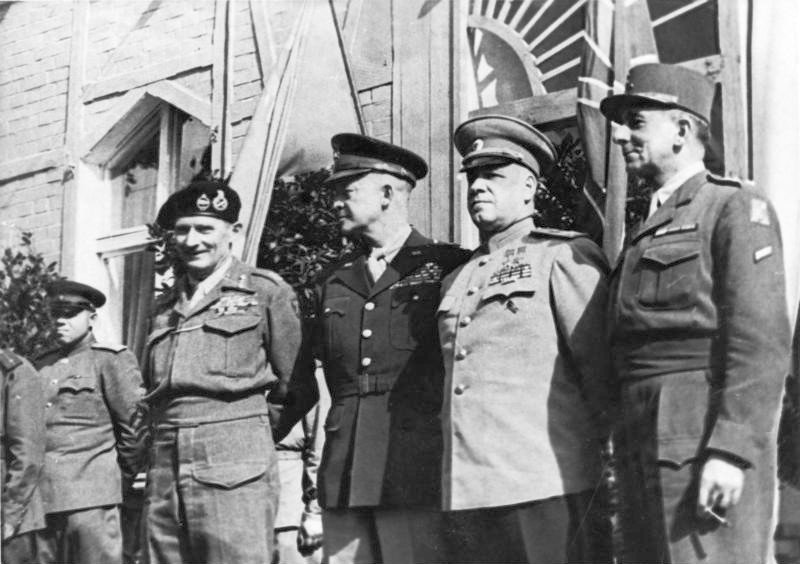
5 June — Berlin was divided.
15 June — Hungary undertook to supply the USSR with goods as compensation for the damage caused by Hungarian military actions against the USSR.
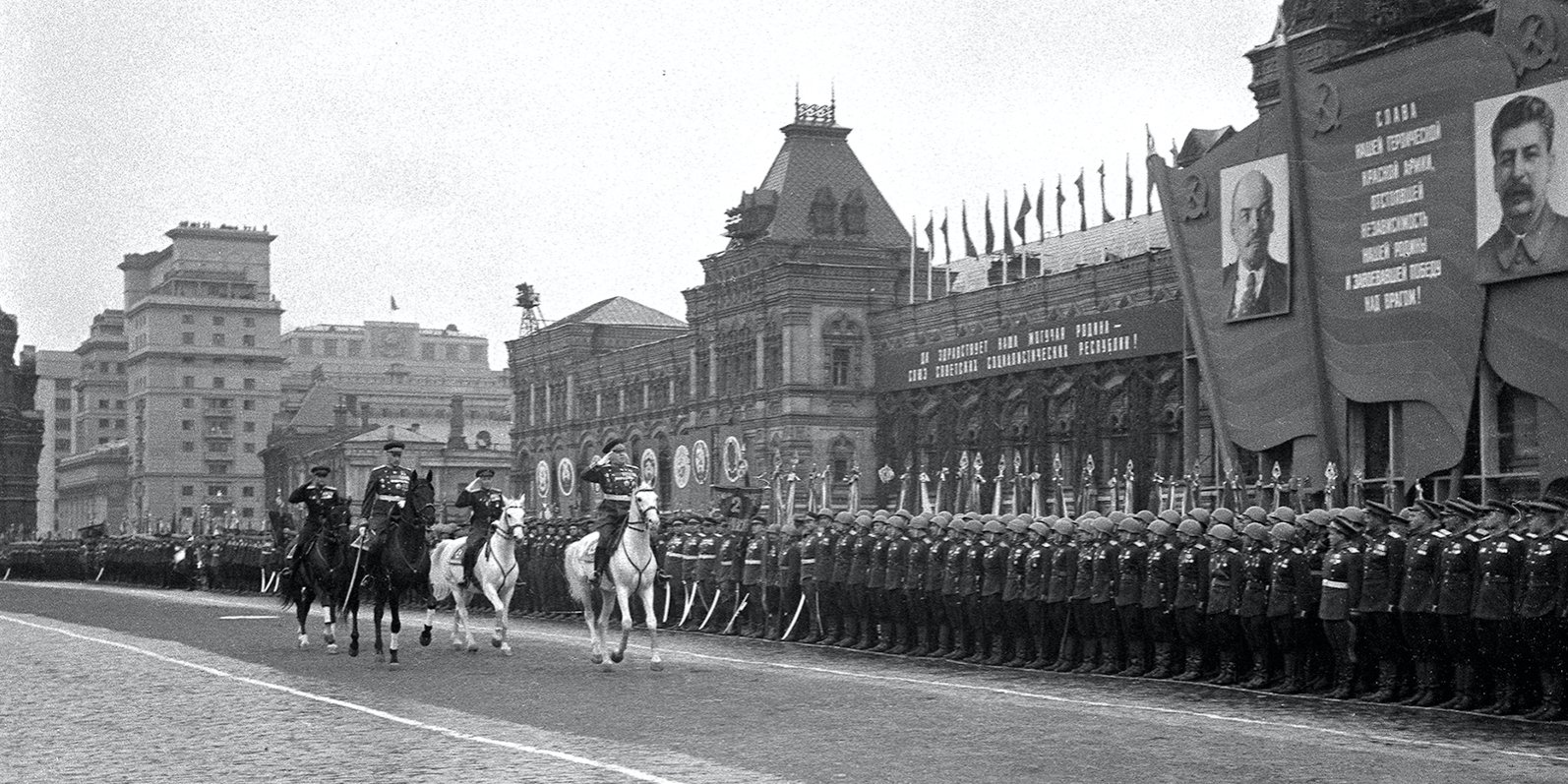
24 June — the Victory Parade on Red Square under the command of Marshal Georgy Zhukov. The climax of the parade was the throwing of fascist standards and banners at the Lenin Mausoleum.
25 June — raising a toast at a Kremlin reception honoring participants of the Victory Parade, Stalin called “simple, ordinary, modest” Soviet people “cogs in the great state machine.”
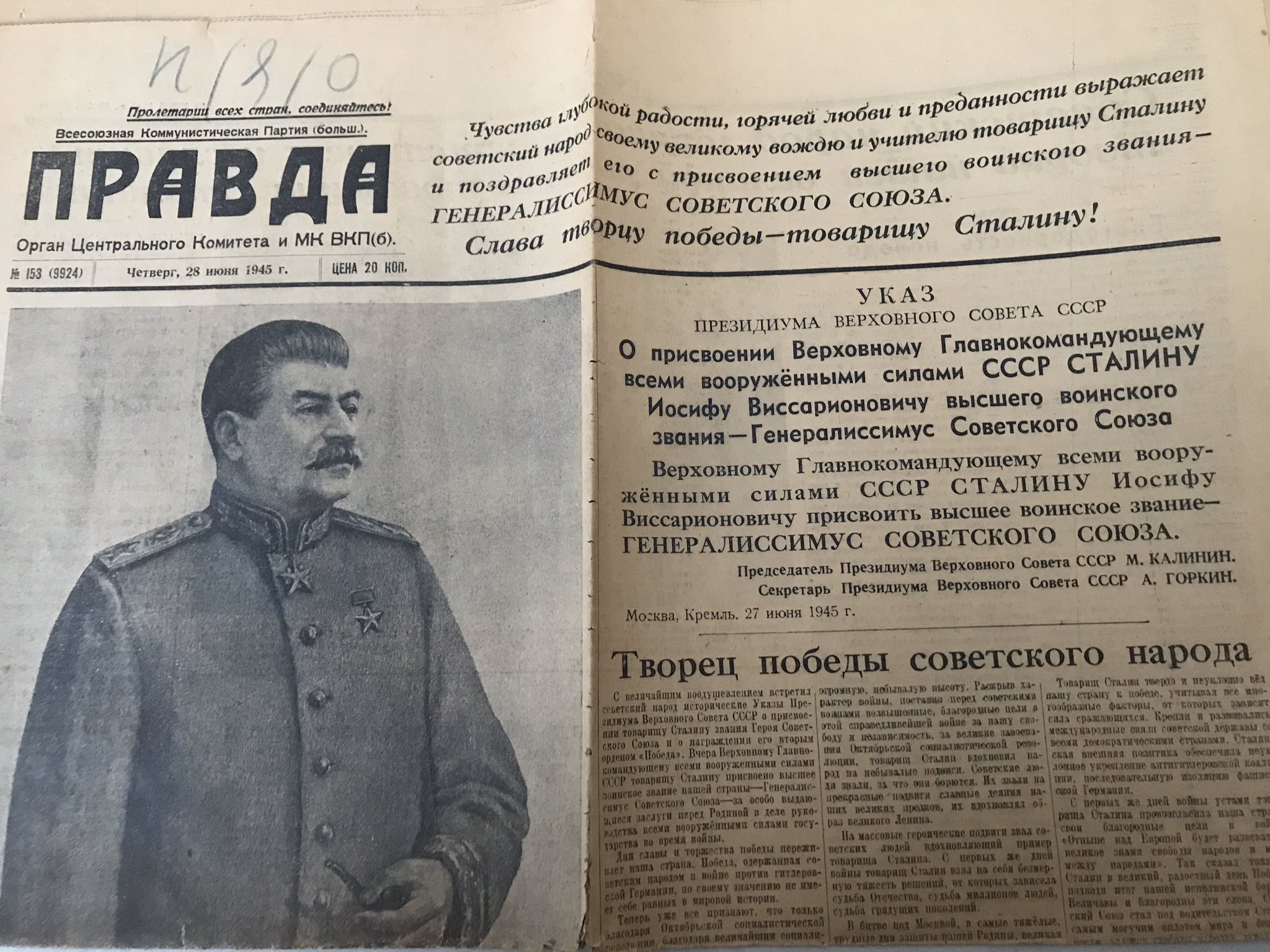
26 June — the rank of Generalissimo of the Soviet Union was established in the USSR. The next day, I. V. Stalin became its first and only holder.
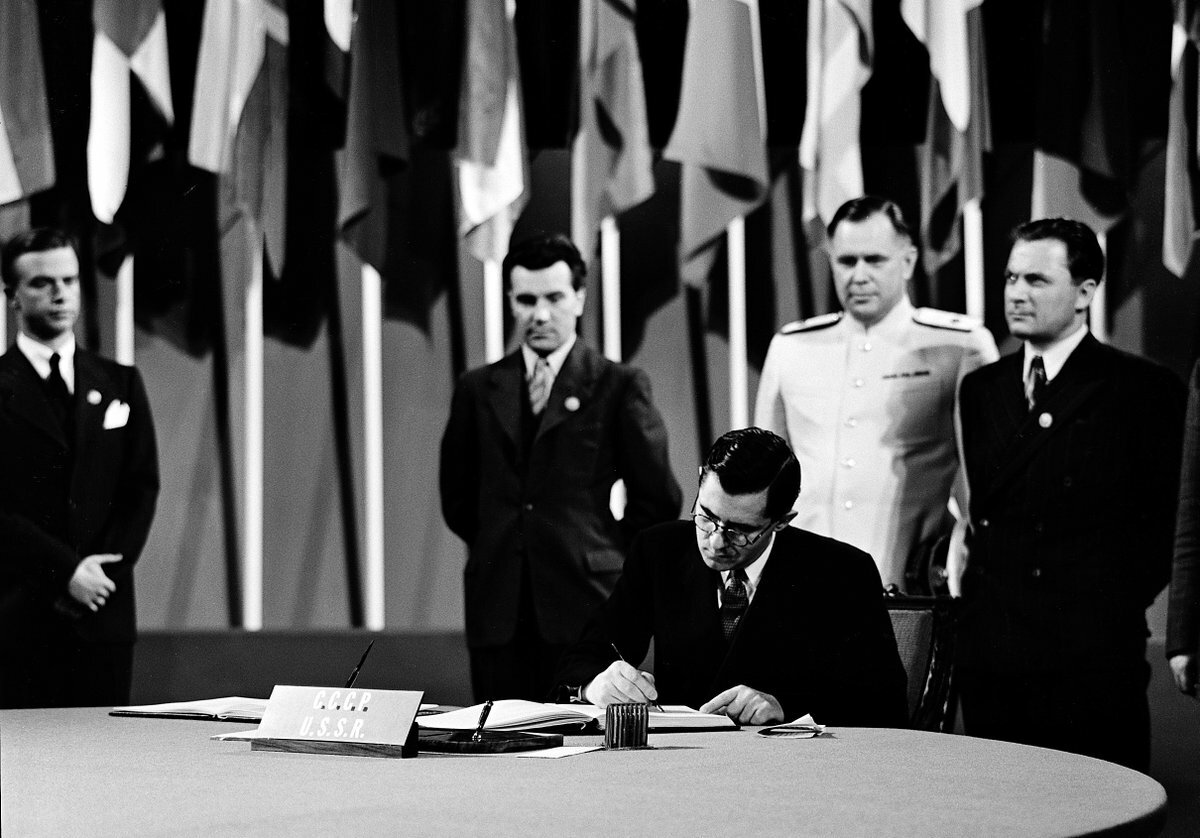
26 June — at the San Francisco Conference, representatives of 50 states signed the Charter of the United Nations (UN).
29 June — the USSR and Czechoslovakia signed a treaty on the accession of Transcarpathian Ukraine to the Ukrainian SSR.
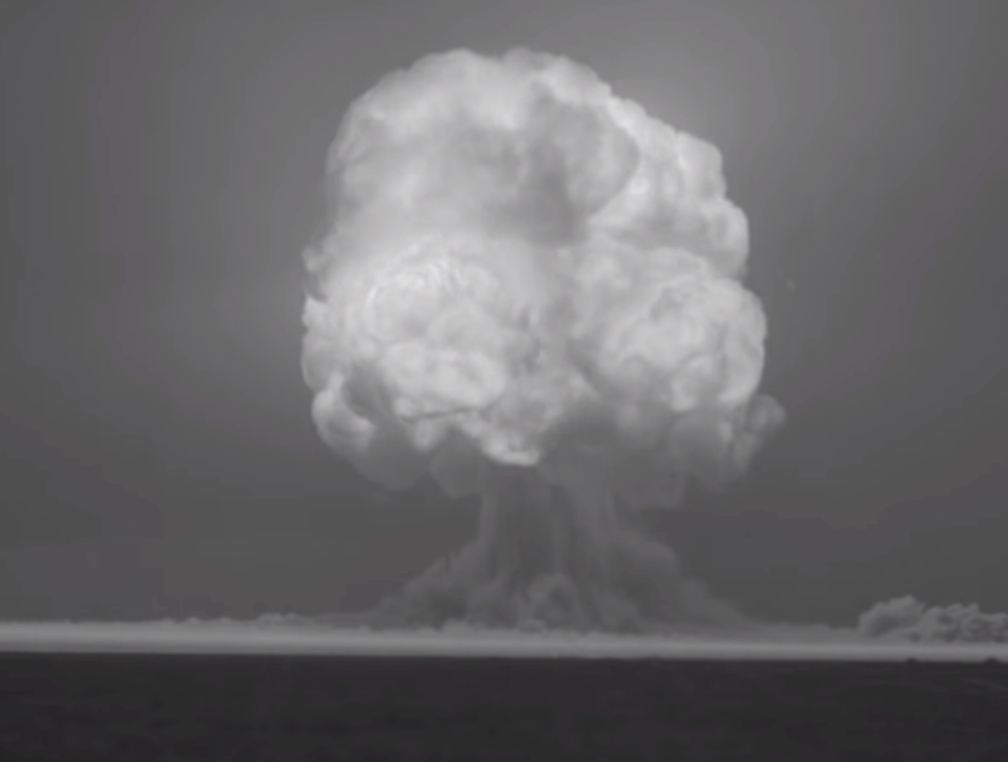
16 July — the first successful test of an atomic bomb at the test site in New Mexico, USA.
26 July — at the Potsdam Conference, a declaration was published on behalf of the heads of government of the USA, the United Kingdom, and China demanding Japan’s unconditional surrender. Japan’s refusal was to entail the “complete destruction of the Japanese armed forces and the utter devastation of the Japanese homeland.” After these demands were rejected by the Japanese government on 28 July, the USSR would join the declaration on 8 August and declare war on Japan. On 14 August, Japan would accept the terms of the declaration. On 2 September 1945, the act of Japan’s surrender would be signed.
27 July — A. Solzhenitsyn was sentenced to 8 years in corrective labor camps for anti-Soviet propaganda.
3 August — all ethnic Germans and Hungarians were deprived of the right to obtain Czechoslovak citizenship.
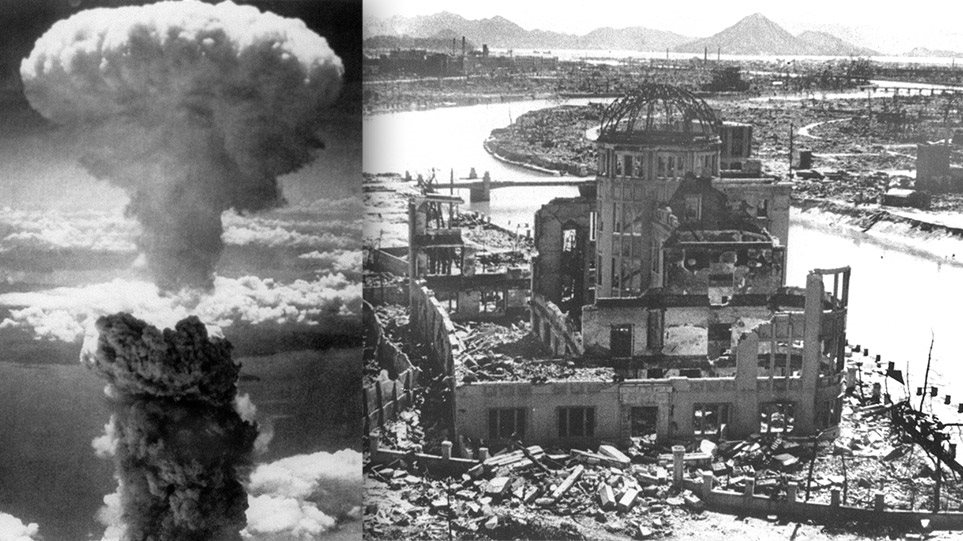
6 August — the American atomic bombing of the Japanese city of Hiroshima.
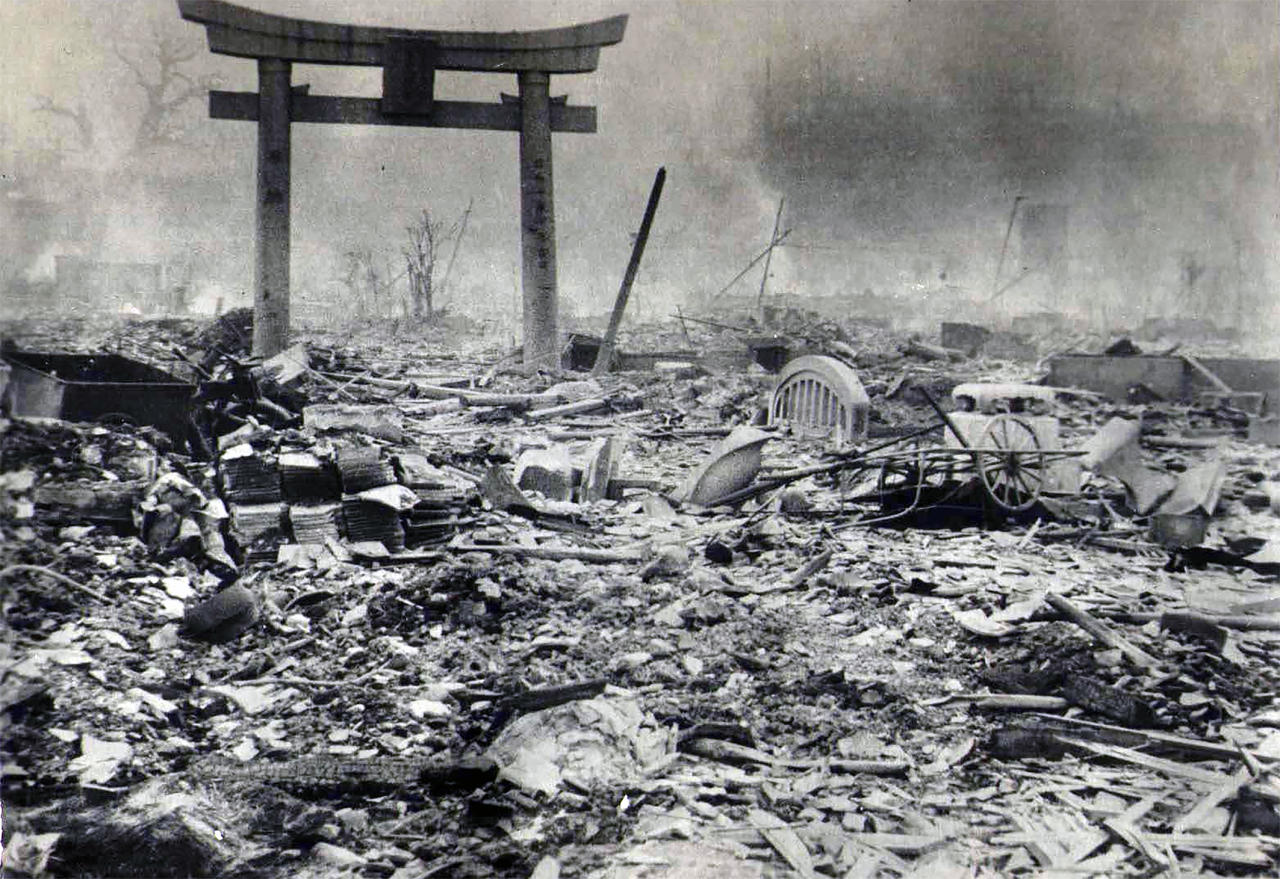
9 August — three days after the atomic bombing of Hiroshima, the Americans dropped a second atomic bomb, nicknamed “Fat Man,” on Nagasaki. 74,000 people were killed.
13 August — the World Zionist Congress demanded permission for one million Jews to enter Palestine.
14 August — Emperor Hirohito issued an edict on Japan’s unconditional surrender.
16 August — in Moscow, the USSR and Poland signed a treaty on the Soviet-Polish border, based on the “Curzon Line” proposed back in 1919–1920.
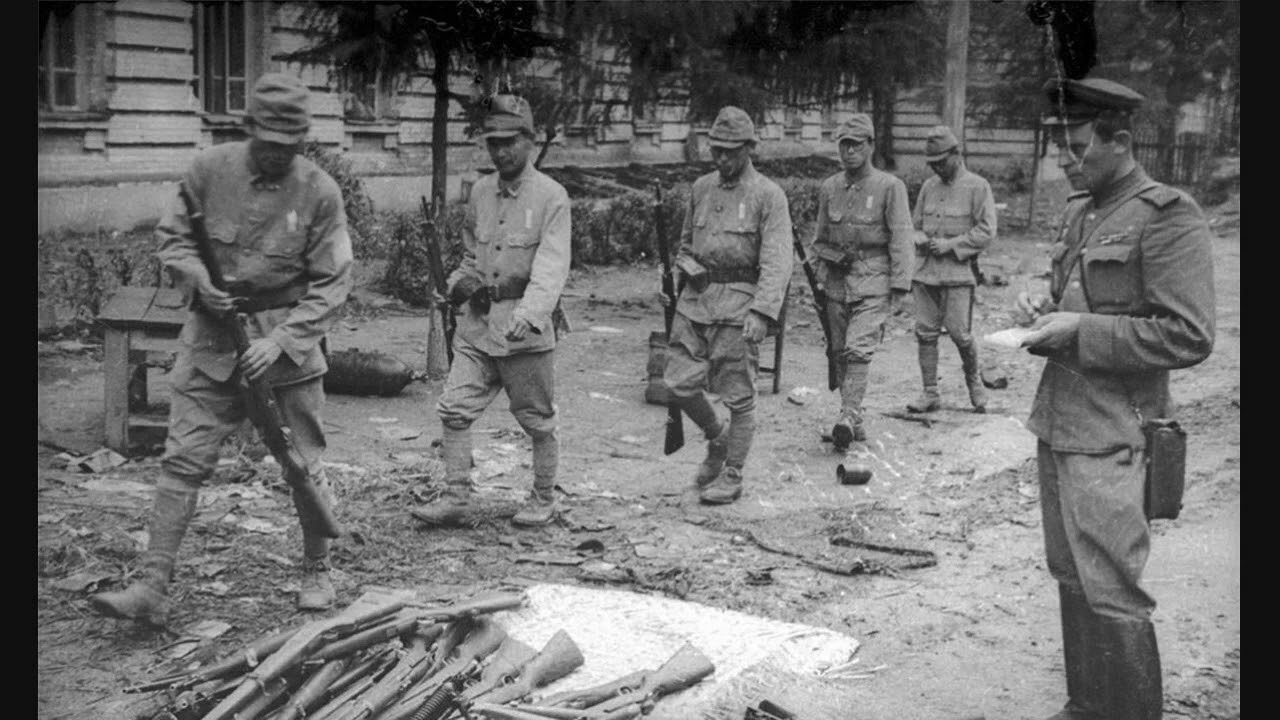
19 August — Japan’s Kwantung Army in Manchuria laid down its arms.
19 August — Vietnamese communists took Hanoi.
19 August — the Presidium of the Supreme Soviet of the USSR ratified the UN Charter.
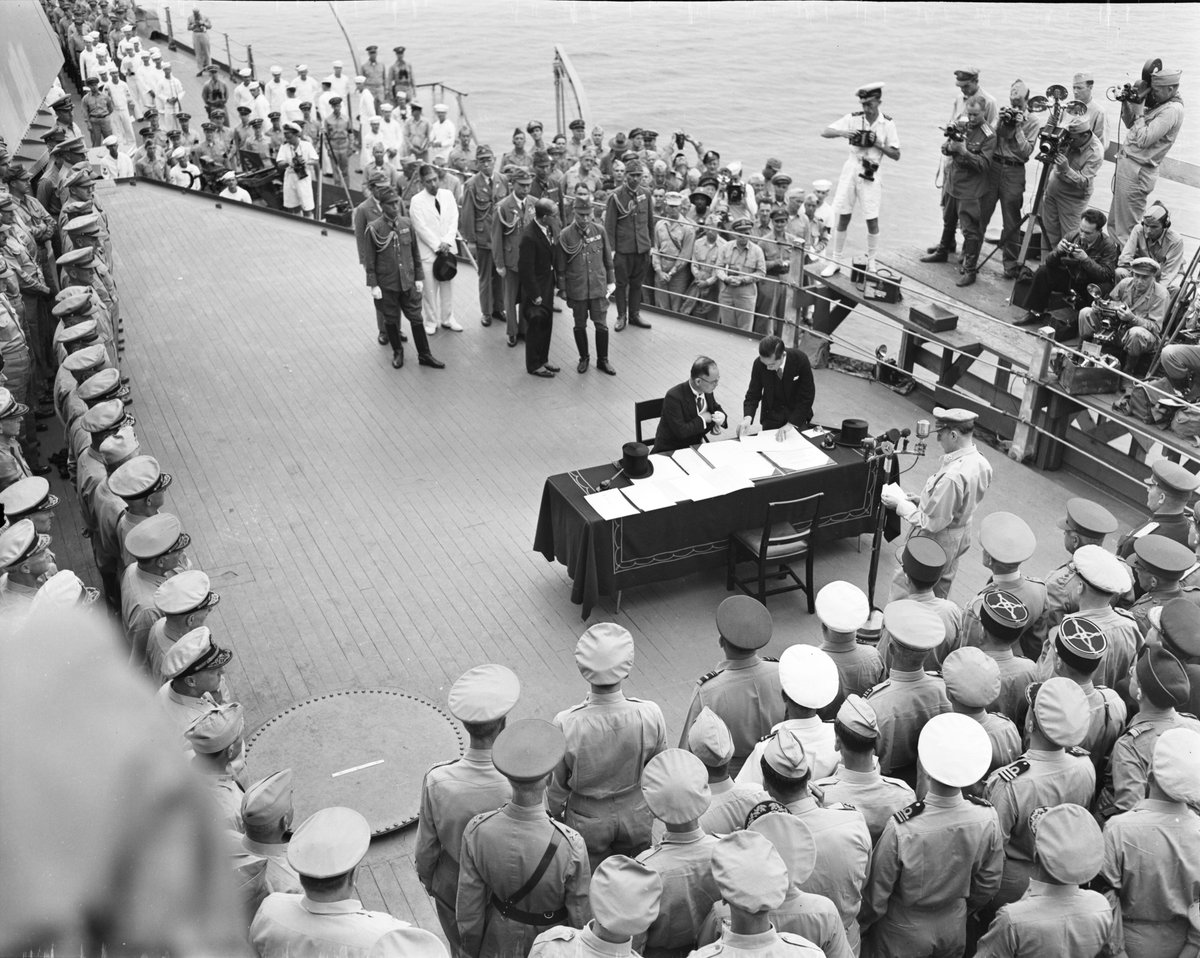
2 September — with Japan’s surrender ceremony aboard the American battleship “Missouri,” World War II ended.
5 September — the first nuclear reaction in Canada was produced in Ontario.
9 September — the end of the Sino-Japanese War (1937–1945).
3 October — at age 10, Elvis Presley took part in a youth talent contest and won second prize. For the song “Old Shep,” he received $5.
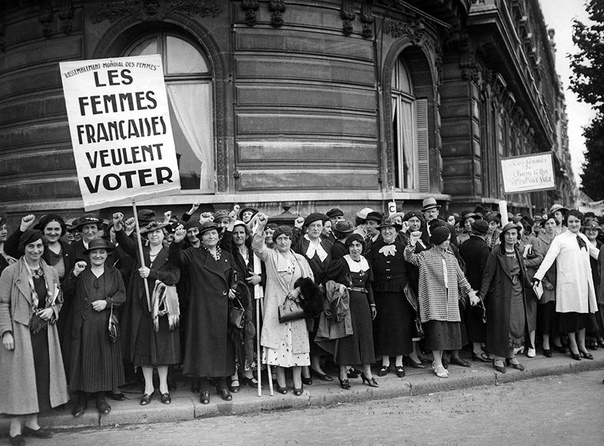
20 October — for the first time, women in France were granted the right to vote.
24 October — major industry and banks were nationalized in Czechoslovakia.
24 October — the Charter of the United Nations entered into force. The UN was created by 51 countries determined to preserve peace through the development of international cooperation and the provision of collective security. Today, the UN has 188 member states.
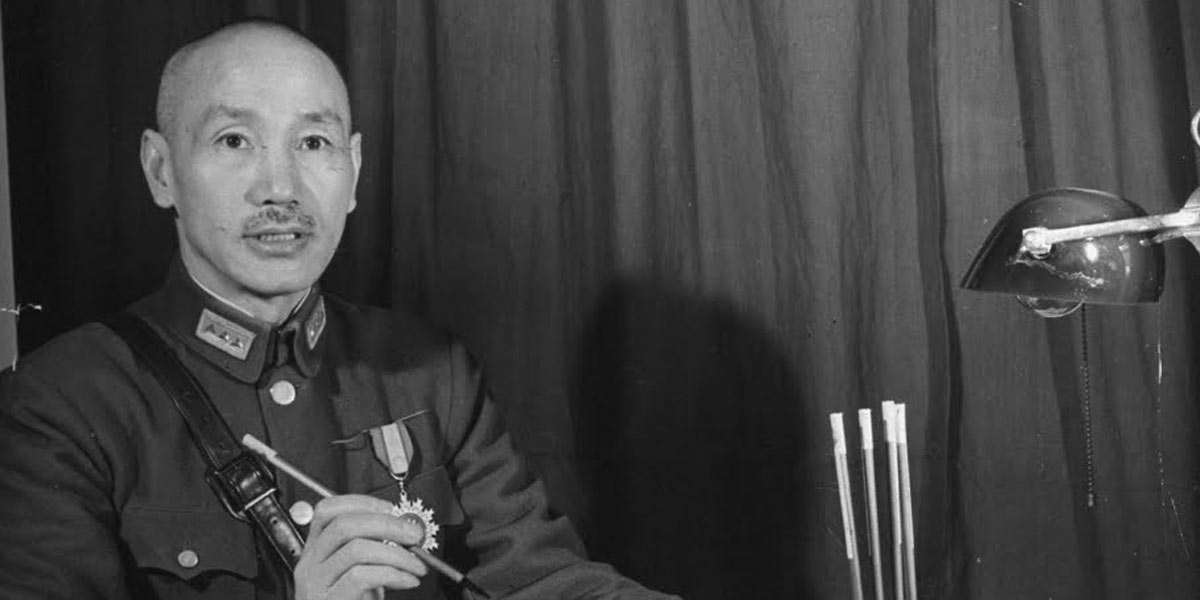
25 October — the Chinese Nationalist government led by Chiang Kai-shek incorporated the island of Taiwan into China; since 1895 it had belonged to Japan.
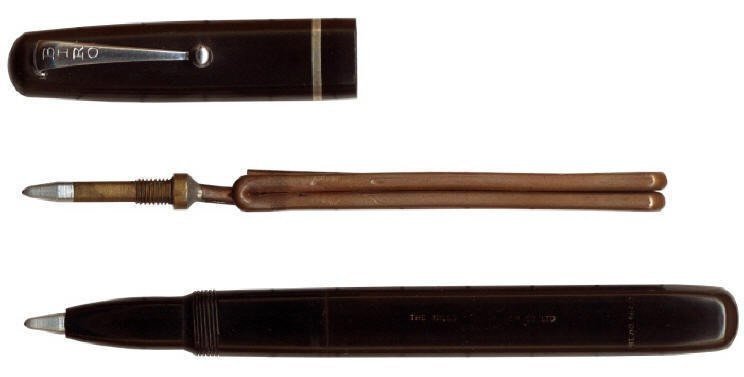
29 October — ballpoint pens went on sale in New York for the first time (57 years after the patent was obtained).
16 November — UNESCO, the United Nations Educational, Scientific and Cultural Organization, was established.
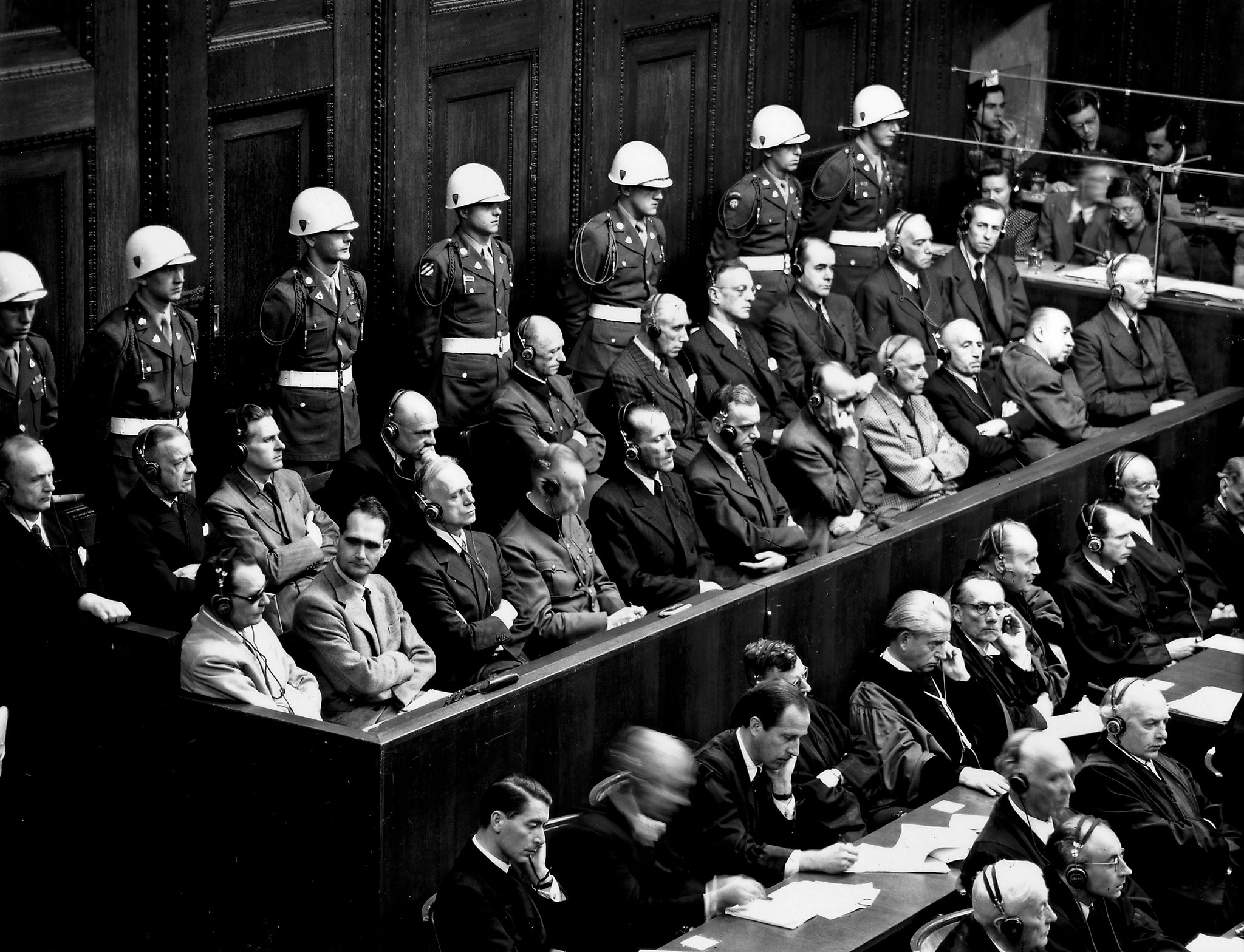
20 November — the start of the Nuremberg Trials—the prosecution of Third Reich war criminals.
29 November — the Constituent Assembly proclaimed the creation of the Federal People’s Republic of Yugoslavia (FPRY).
27 December — the creation of the International Monetary Fund and the International Bank for Reconstruction and Development.