
28 April — in Moscow, on charges of espionage, Professor Lev Landau, a leading Soviet theoretical physicist, was arrested. At the time, Landau headed the Theoretical Department of the Institute for Physical Problems of the USSR Academy of Sciences.
This happened on the fourth day after Landau, together with one of his colleagues, drafted an anti-Stalin leaflet condemning the existing regime of terror; Stalin was called a fascist dictator and compared to Hitler and Mussolini, and it called for the overthrow of Stalin’s regime. The leaflet’s text was handed over to an anti-Stalin student group for distribution by mail ahead of the May Day holidays. But of course, this document ended up in the hands of Soviet state security officers. In addition, the NKVD had plenty of other “materials” on Landau. The “case” also cited his careless remarks and the fact that many of his friends and close acquaintances were already behind bars.
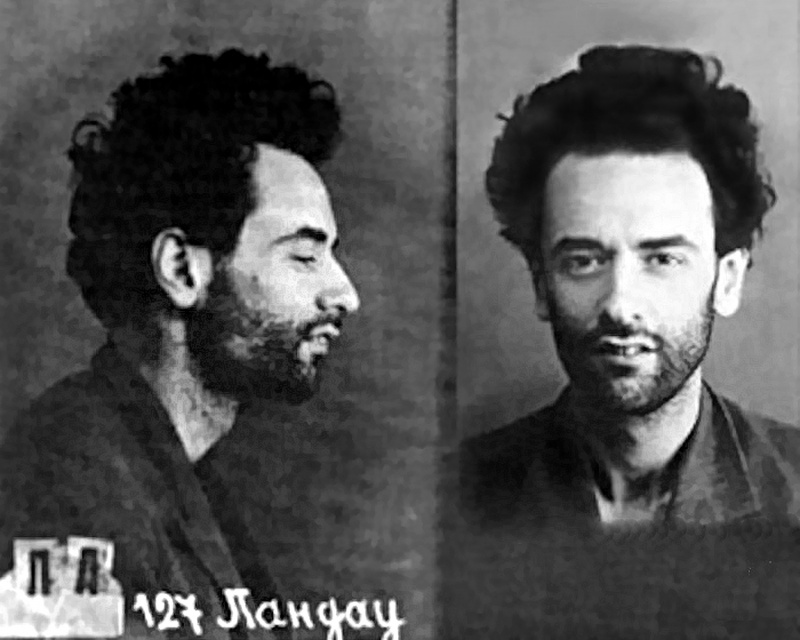
The scientist spent exactly one year in the pre-trial detention facility of Butyrka Prison. Landau was released thanks to the efforts of the IFP director Pyotr Kapitsa, who wrote letters to Stalin and Molotov, as well as the intercession of the great Dane Niels Bohr. The theorist Lev Landau was released “on the surety of Academician Kapitsa.”
In the summer of 1938, the head of the department of rocket aircraft systems at the Moscow Rocket Research Institute (RNII), 31-year-old Sergey Pavlovich Korolev, was arrested under the infamous Article 58 as a participant in a counterrevolutionary Trotskyist organization allegedly operating within the RNII, and also for disrupting the delivery of new weapons models (earlier, in the “RNII case,” Kleymenov, Langemak, and Glushko had been arrested). The session of the Military Collegium of the Supreme Court was presided over by army military jurist Vasily Ulrikh, through whose hands tens of thousands of repressed people passed.
27 September — Sergey Korolev was sentenced to 10 years’ imprisonment and sent to Kolyma.
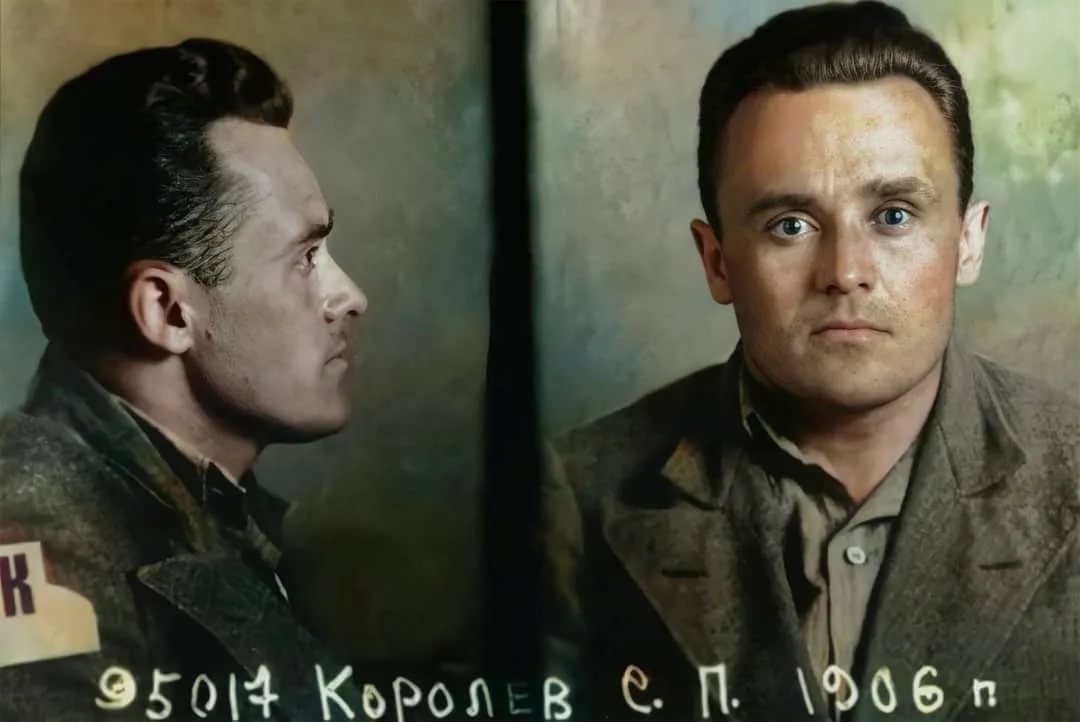
In the autumn of 1940, he was transferred to a new place of confinement—the Moscow NKVD special prison—where, under the leadership of A. N. Tupolev, who was also imprisoned, he took an active part in creating the Pe-2 and Tu-2 bombers, and at the same time developed projects for a guided aerial torpedo and a new variant of a rocket interceptor.
This led to Korolev’s transfer in 1942 to another prison-type design bureau at the Kazan aircraft plant, where work was being carried out on new types of rocket engines for use in aviation. Korolev devoted himself to this work with his characteristic enthusiasm.
He was released in 1944 and rehabilitated in April 1957.
But the arrest and time spent in the GULAG forever infected Korolev with a pessimistic attitude toward the surrounding reality. According to the recollections of people who knew him well, Sergey Pavlovich’s favorite saying was: “They’ll bump you off without an obituary.”