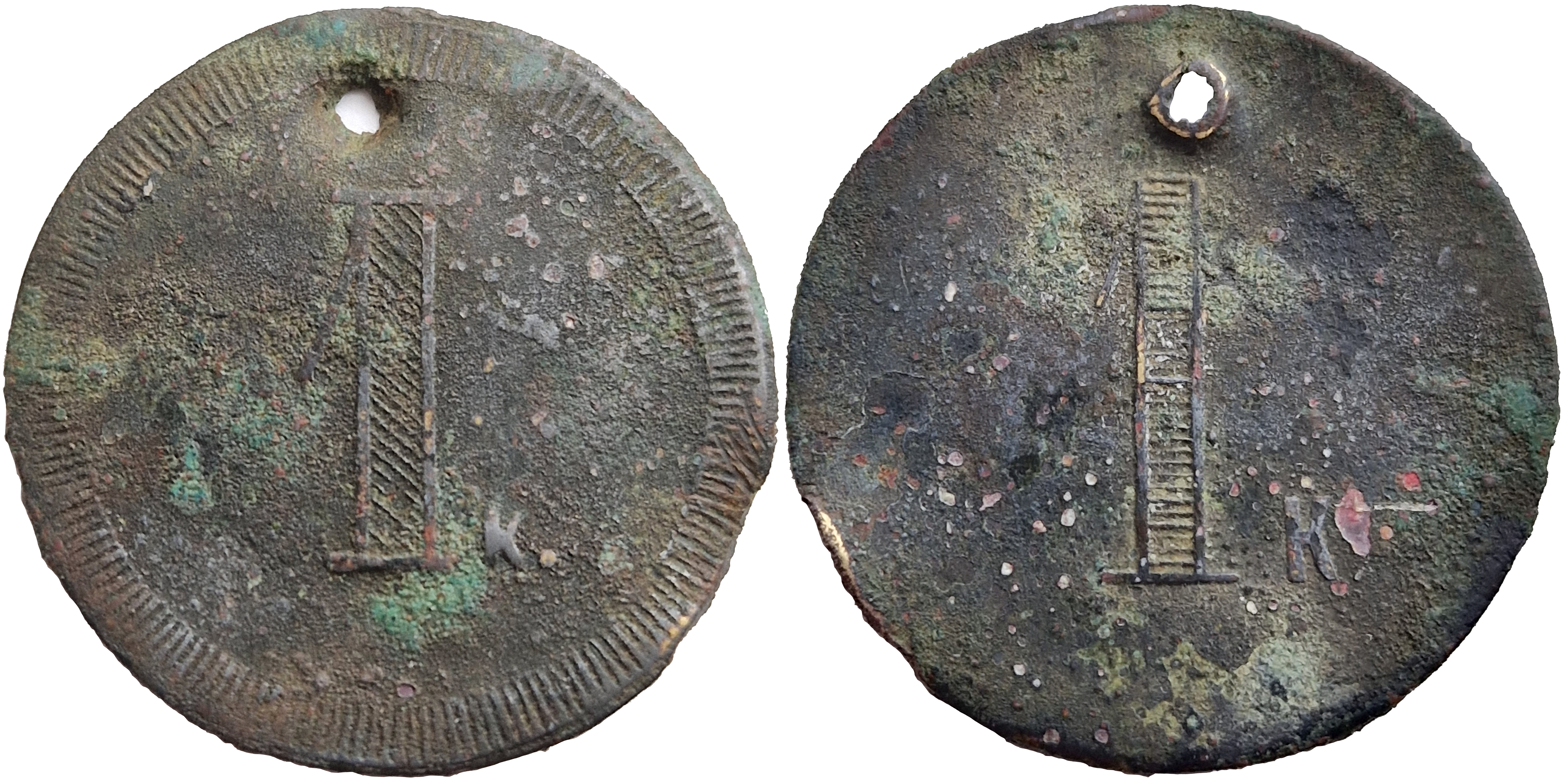
Restaurant and tavern tokens served as surrogate means of payment in numerous drinking establishments of major cities in pre-revolutionary Russia. Coin-like tokens were an attribute of everyday life in metropolitan and provincial restaurants, taverns, cafes, canteens, and buffets. The issuance of tokens was linked to the desire of owners of factories, plants, and other enterprises to increase their profits. Workers and employees received part of their wages in tokens and spent them in shops owned by the firms. Restaurant and tavern tokens appeared in Russia in 1875 and became widespread in large industrial cities. The so-called tavern checks performed a purely official, accounting function. They were intended for internal settlement between the establishment’s staff and the cash desk. Tavern checks, having become a fashion trend and a marker of prosperity and prestige among restaurant owners, became firmly embedded in Russian everyday life and gained nationwide distribution. Such tokens were issued by restaurants, clubs, buffets, taverns, cafes, and other drinking establishments.
Tavern token 1 Kopeck.