
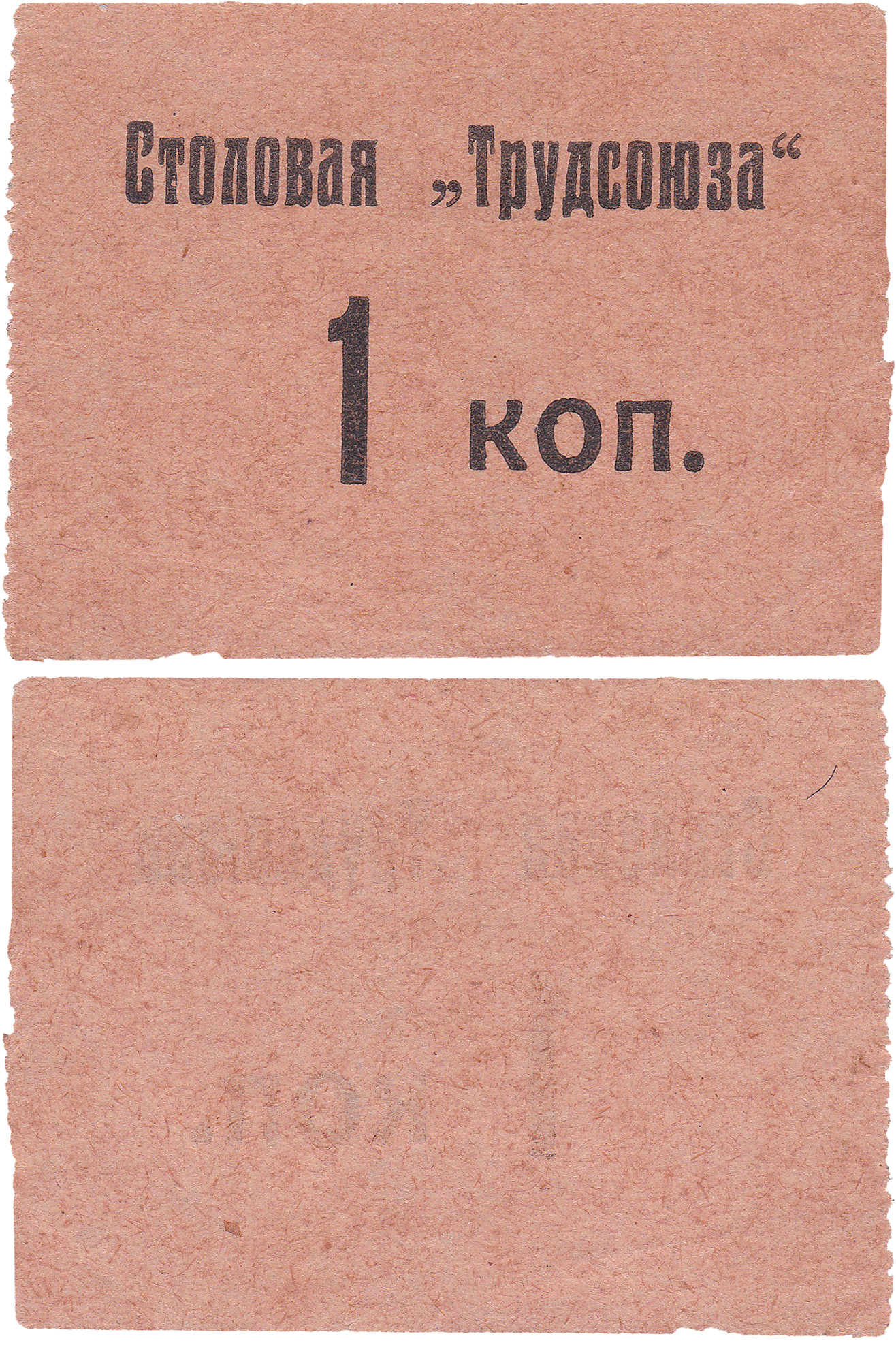
Union of Agricultural Cooperation of the Northwestern Region “Trudsoyuz” of the People’s Commissariat of Agriculture, Leningrad.
In the Northwest, an extensive network of agricultural cooperation took shape. At first, its center was Trudsoyuz, whose office was located in Leningrad on Ligovsky Prospekt. In 1926 this organization was liquidated, and its functions were transferred to the specialized Milk Union and Flax Union. In the pre-October period, a significant share of dairy products came to the capital from Baltic landlords’ estates. The “Landlord” society opposed the establishment of agricultural cooperatives in the Petrograd and neighboring provinces. The situation changed, and in 1925 alone, within the borders of the former capital province, there were about one and a half hundred dairy associations. Their spread met the needs of rural residents. Peasants living within a radius of 25 versts from Leningrad kept 88,000 cows and could annually send 8 million vedros of milk to the city.
Delivering it became the problem. At the beginning of 1922, Trudsoyuz sold only two milk churns a day; they were delivered to the Moskovsky railway station, and the public immediately lined up in a queue. Three years later, sales of cooperative milk had grown thousands of times over. The Central Dairy of Trudsoyuz on Ligovsky Prospekt served as the main dairy headquarters. Twice a day, morning and evening, up to 3,000 vedros of the product (part of what was purchased from peasants) were brought here from all cooperative collection points of Leningrad Province. A laboratory was located there as well. The milk was sold pure, whereas from private traders it was often diluted with water and impurities. By 1926, milk consumption in Leningrad exceeded the prewar level.
In 1923, a sweeping inspection of Soviet importers began to check their compliance with legislation on the state monopoly in trade. All organizations were required to conclude contracts with foreign firms only through Soviet trade missions in the relevant countries. But the Petrograd cooperative consumer society “Trudsoyuz,” although it had a license to purchase products from “Valio,” signed a contract with Finnish partners directly, bypassing the USSR trade mission in Finland. Moreover, payment for the shipment was not processed through banks as required. Instead, Trudsoyuz employees paid in unrecorded cash—simply carried cash to the Finnish consulate in Petrograd to be passed on to Valio.
In the prosecutor’s view, these actions fell under Article 136 of the RSFSR Criminal Code of that time, and the case was taken up by the republic’s прокуратура. Besides Trudsoyuz managers, Finnish diplomats and Valio employees became involved in the case. However, normal relations between the USSR and neighboring countries were then a great rarity, and apparently in Moscow they decided to let the matter quietly fade away. Still, after that, the very name of the association disappeared from the reports of Soviet foreign-trade agencies for many years, and Soviet citizens saw Finnish butter only decades later, after World War II, in “Osobtorg” shops that sold goods received from defeated countries as reparations.