
The year began with mass strikes by workers in Petrograd. As early as February, the largest military factories of the capital were drawn into the strike; up to 200,000 workers took part in the movement. On February 27, soldiers of the Volynsky Regiment mutinied, and on the same day more than 60,000 soldiers of the Petrograd garrison joined them. This growing revolutionary movement was led by Bolsheviks released from prisons. On February 28, the rebels seized power in Petrograd.
The first open action by the Gatchina Bolsheviks took place during the days of the February bourgeois-democratic revolution, on March 1, 1917. Under the leadership of N.Ya. Kuzmin, an uprising was raised in the Reserve Aviation Battalion. It was supported by workers and railwaymen, employees and students, as well as part of the intelligentsia.
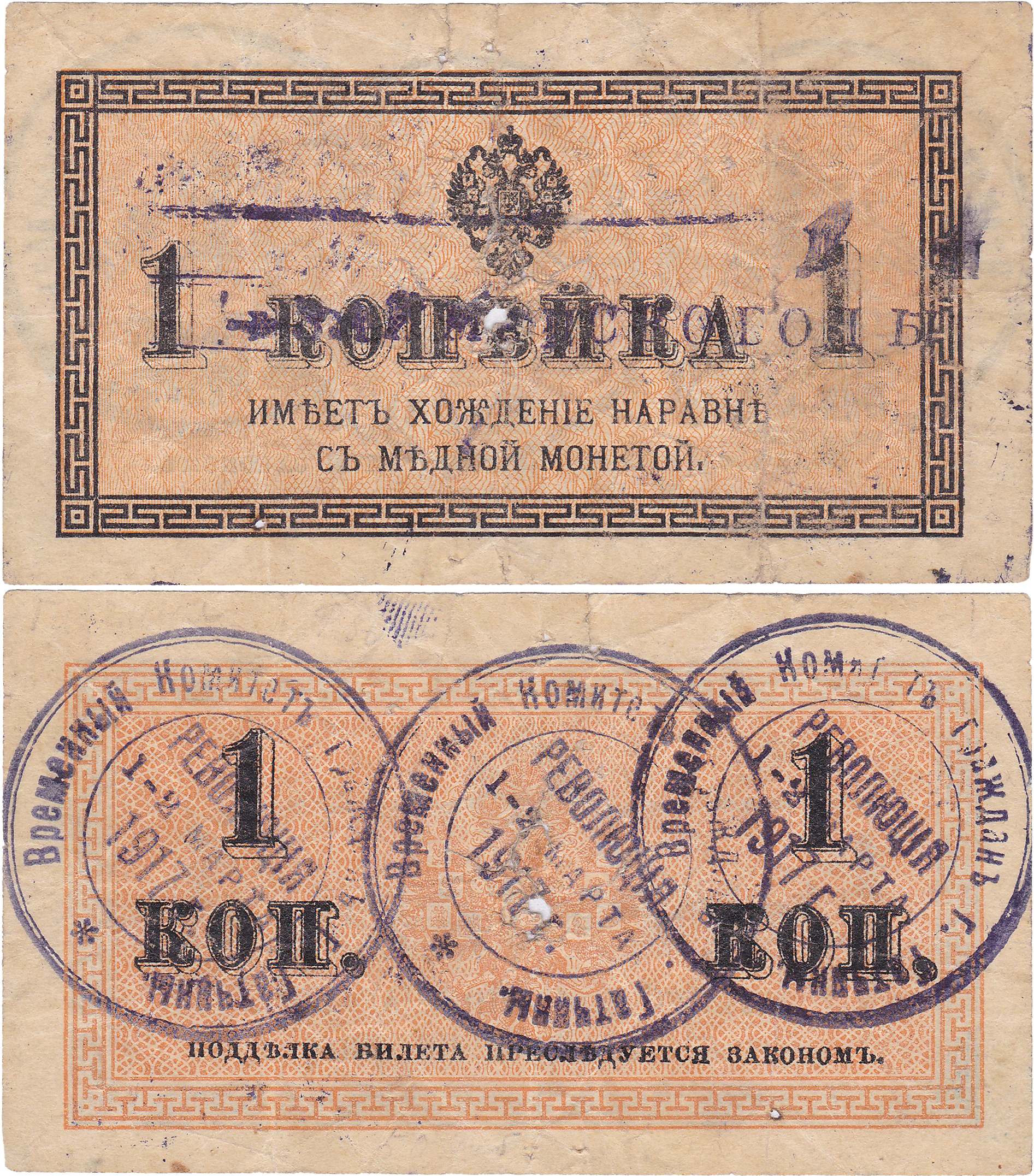
As a result of the uprising, the palace administration was abolished; it was replaced by the Gatchina District Committee of the Petrograd Soviet (later called the City Council of Workers' and Soldiers' Deputies). At the same time, alongside the Soviet, there emerged the so-called Provisional Committee of Citizens of the city of Gatchina, which included representatives of the local bourgeoisie and officials.
March 2 — Emperor Nicholas II abdicated the Throne in favor of his son Alexei, with Grand Duke Mikhail Alexandrovich serving as regent.
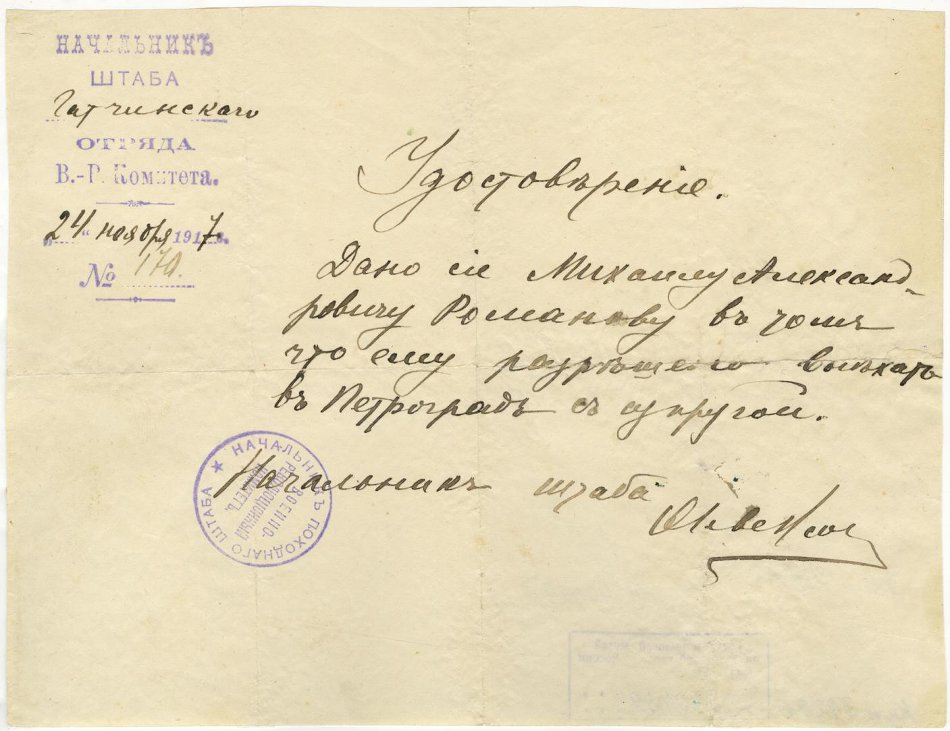
November 24 — the chief of staff of the Gatchina detachment of the Military Revolutionary Committee issued a pass certificate to the Grand Duke, Nicholas II's brother, Mikhail Alexandrovich Romanov, for departure to Petrograd.
In February 1918, Mikhail Alexandrovich Romanov was arrested in Gatchina and taken to Perm, where he was brutally murdered late in the evening on June 12, 1918.