
The Tashkent tram system is the oldest in Central Asia. It was opened on December 29, 1912.
The history of the Tashkent tram begins in 1896, when the Tashkent city administration signed a contract with the Belgian joint-stock company "Tashkent Tram" for the construction and operation of a tramway in Tashkent under a concession arrangement.
Construction of the first line began in 1897. On September 5, 1908, a new agreement on tram operation was concluded between the city and the joint-stock company "Tashkent Tram." The agreement provided for the electrification of both horsecar lines and the expansion of the electric tram network to 30 versts. To operate the electric tram, the Belgian company ordered 80 cars from the "Rateno" factory in Belgium. Each car had 40 seats. In 1913, two freight cars arrived for carrying goods. Electricity for the tram was supplied by a diesel power station built near the Chicken Bazaar. The tram depot was located on Mariinskaya Street, now Nukusskaya Street.
Electric tram service opened on December 29, 1912 on Route No. 1 "Voskresensky Bazaar — Church of Saint Sergius" (railway station). After the horsecar system was abolished, Tashkent’s tram network began to develop rapidly. On July 5, 1913, the fourth tram line opened. On December 13, 1915, the fifth tram line opened—from Kukeldash via Iski Juva to the Takhtapul Gates. By 1916, 50 motor cars, 25 trailer cars, and two service cars were in operation in Tashkent.
On September 10, 1918, tram service stopped due to a shortage of fuel for the diesel power station and the poor condition of most cars. This happened because specialists from Belgium had left. On December 10, 1918, the Tashkent tram was nationalized by decree of the Turkestan Central Executive Committee and transferred to the jurisdiction of the Supreme Council of the National Economy. Irregular tram service in Tashkent resumed in 1920.
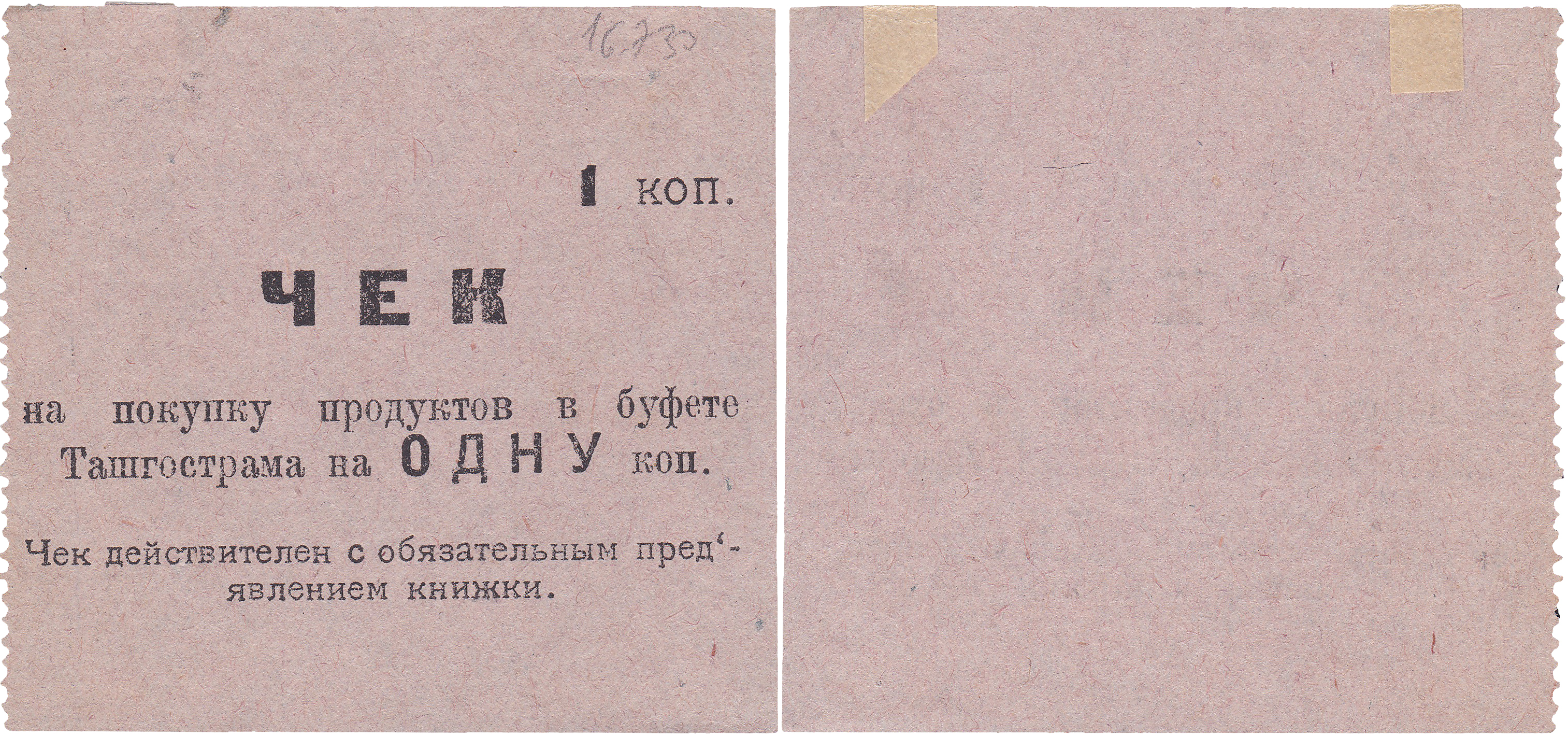
To restore normal tram operation, in September 1921 the "Tashgostram" trust was established; by that time, a significant portion of the Belgian cars had already been repaired. Regular tram service resumed on September 22, 1921. By the end of 1924, the "Tashgostram" trust had 50 motor cars, 20 trailer cars, 2 service cars, and 5 freight platforms; 45 motor cars and 18 trailer cars ran on the lines. Thus, by early 1925, tram service had been fully restored after a period of two wars. In May 1926, the Tashkent tram power supply was switched to electricity from the new Bozsuv Hydroelectric Power Plant, and the "Tashgostram" trust was reorganized into "Tashgestram," which combined the tramway and the power station. Expansion of the Tashkent tram network continued.