
10 February — the animated series about the relationship between Tom the cat and Jerry the mouse first appeared on screen, created by animators William Hanna and Joseph Barbera, who later founded the Hanna-Barbera studio.
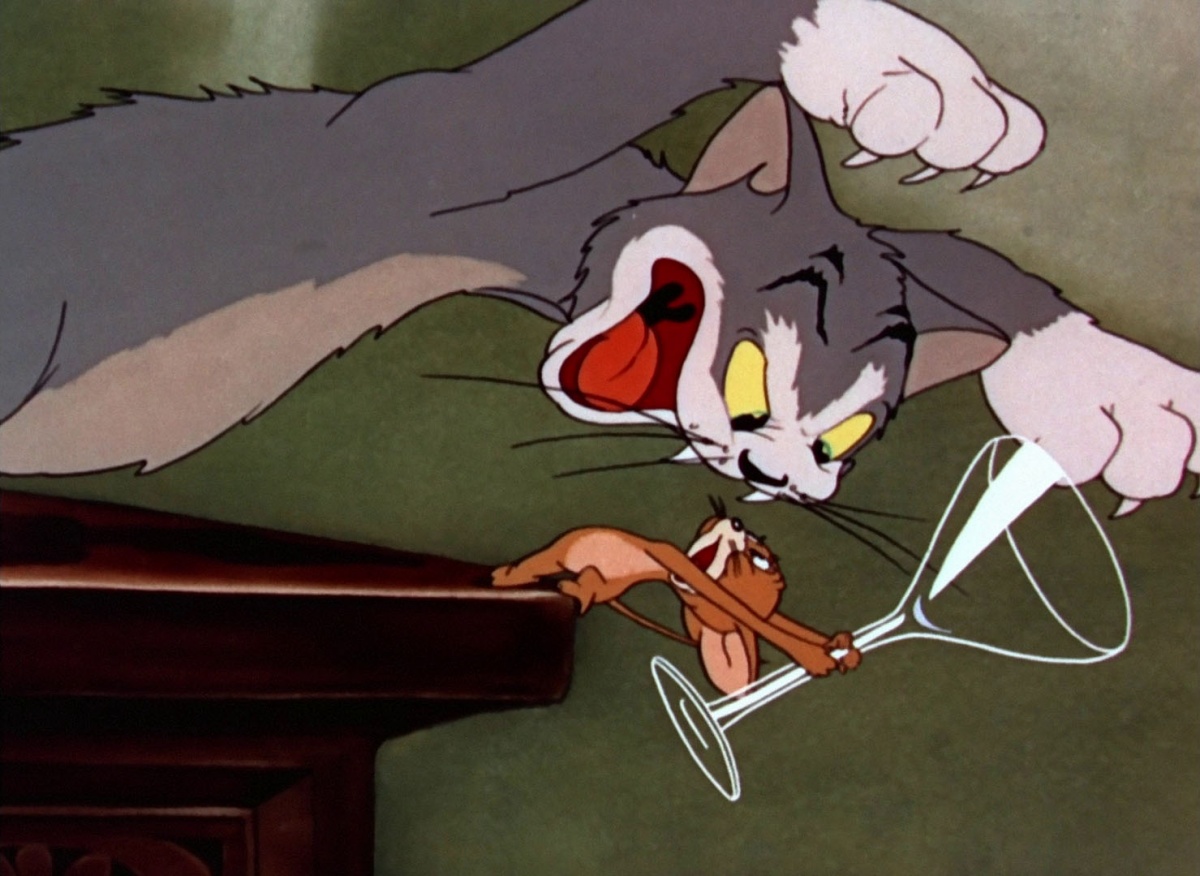
The series was produced by the Hollywood studio MGM from 1940 until the animation division was shut down in 1958.
In 1961, MGM sold the production rights to the Prague studio Rembrandt Films, headed by Gene Deitch. Rembrandt Films released 13 episodes, considered the worst in the cartoon’s entire history.
In 1963, production returned to Hollywood, to Chuck Jones’s studio “Sib Tower 12 Productions,” and lasted until 1967. Later, Tom and Jerry reappeared in animated series produced by Hanna-Barbera (1975–1977; 1990–1993) and Filmation Studios (1980–1982).
The original Hanna-Barbera cartoons from 1940–1958 are regarded as the most outstanding and have won seven Academy Awards.

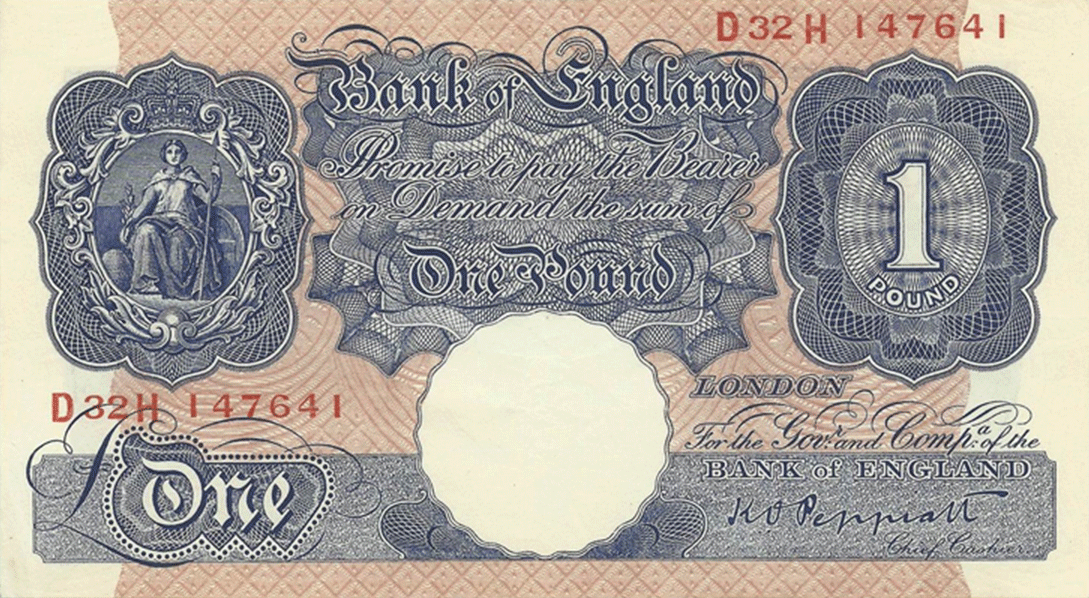
29 March — the Bank of England issued the first banknotes with a new, high level of anti-counterfeiting protection.
From that moment, a thin metal thread began to be embedded in the paper used to print banknotes. This happened on the eve of Hitler’s operation to flood Britain with counterfeit paper money. The counterfeits were introduced to throw Britain’s economy into chaos ahead of the “Battle of Britain.” Fake pounds were printed by prisoners in the Sachsenhausen and Auschwitz concentration camps. The quality of the fakes was extremely high; the banknotes were absolutely indistinguishable from real money.
But the plan failed: all of their output ended up in Allied hands. The first protected notes were in denominations of 1 pound sterling and 10 shillings. These notes also had changes in design elements and color: the one-pound note shifted from greenish to bluish-pink, and the 10-shilling note changed from reddish-brown to pinkish-lilac. At the same time, the Bank withdrew from circulation banknotes with denominations above 5 pounds.
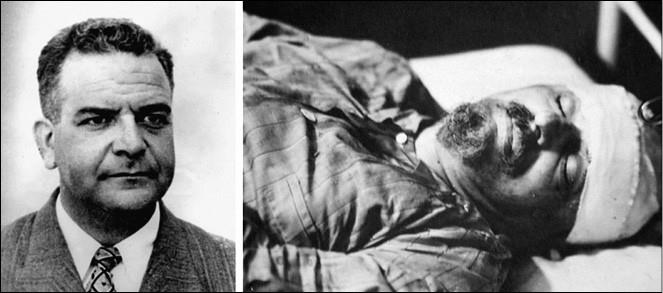
21 August — the assassination of Trotsky. In the 1930s, Stalin instructed the NKVD to prepare and carry out the killing of Trotsky, who had found refuge in Mexico. Several attempts and raids, including the shooting of Trotsky’s fortified estate in Coyoacan (near Mexico City), failed. Then an NKVD agent, the Spanish communist Ramon Mercader, was ordered to infiltrate Trotsky’s home and kill him. Becoming the lover of one of the famous political exile’s associates, and after a personal acquaintance and several harmless meetings with his victim, he managed to get into Trotsky’s study at the estate and deliver a fatal blow to the head with an ice axe.
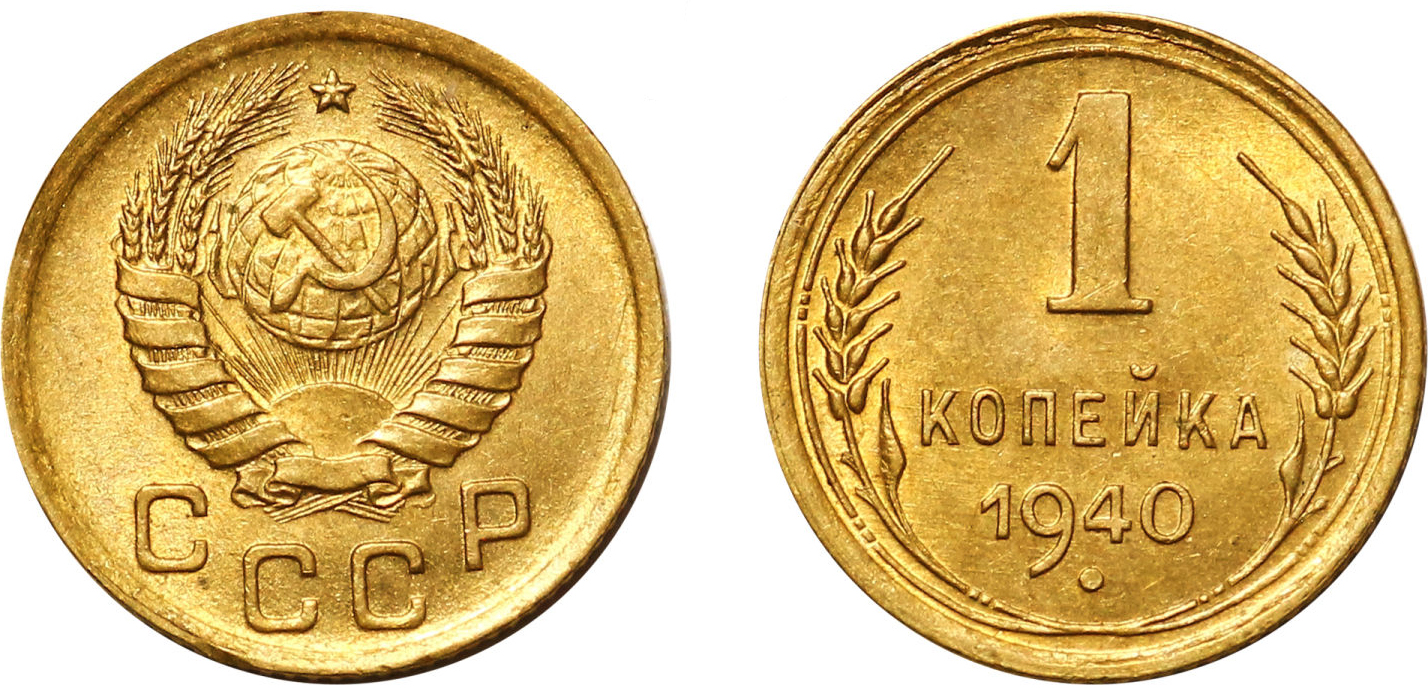
26 June — a Decree of the Presidium of the Supreme Soviet of the USSR was issued, “On the transition to an eight-hour working day, a seven-day working week, and the prohibition of unauthorized leaving of work.” 17 July — a Decree “On prohibiting unauthorized leaving of work by tractor drivers and combine operators working at machine-tractor stations.”
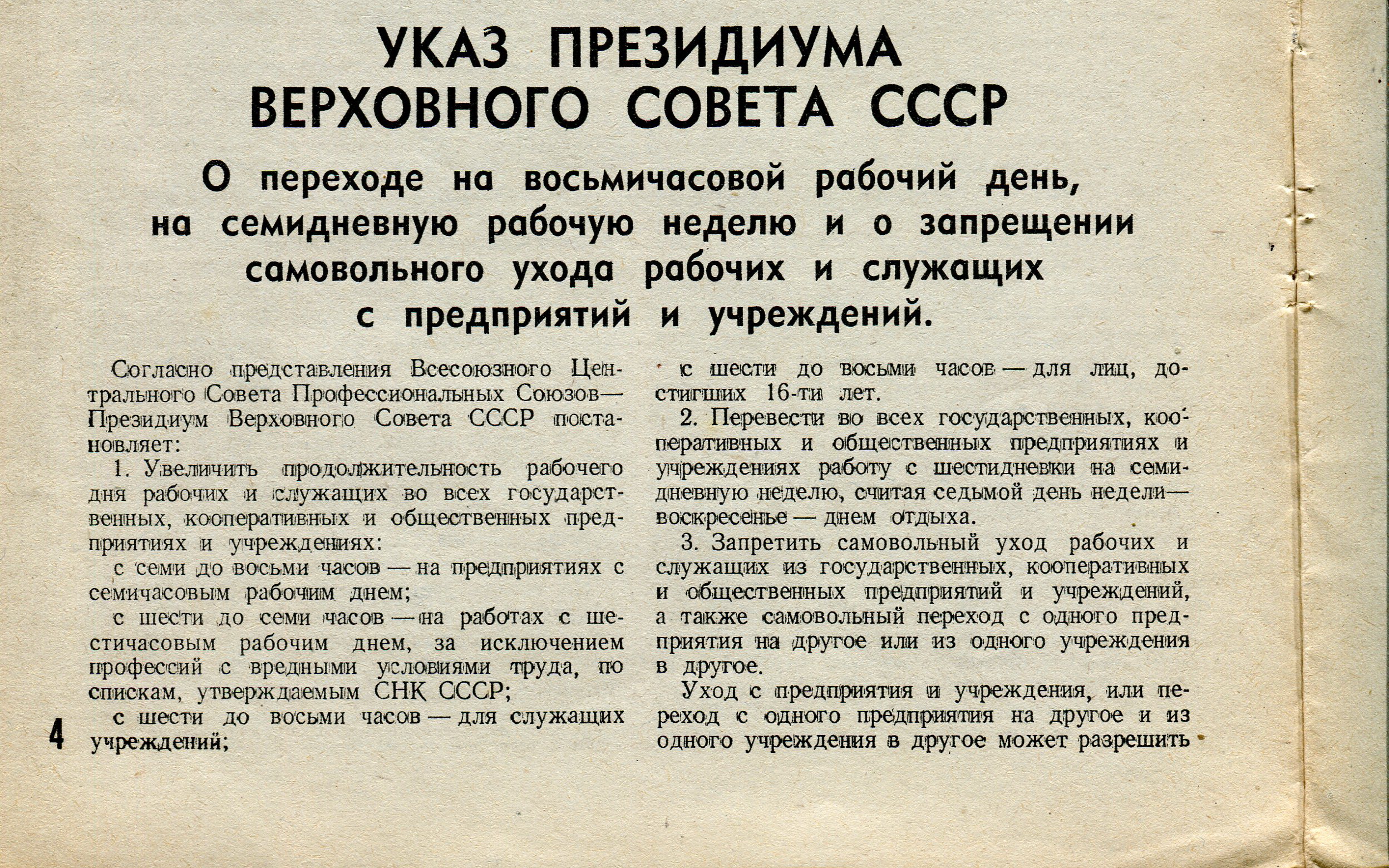
According to the decrees, workers and employees who left state, cooperative, or public enterprises or institutions without authorization, as well as those who moved from one enterprise to another without authorization, were brought to trial and could face imprisonment for a term of 2 to 4 months. For absenteeism without a valid reason, workers and employees were punished with corrective labor at their workplace for up to 6 months, with up to 25% deducted from their wages.
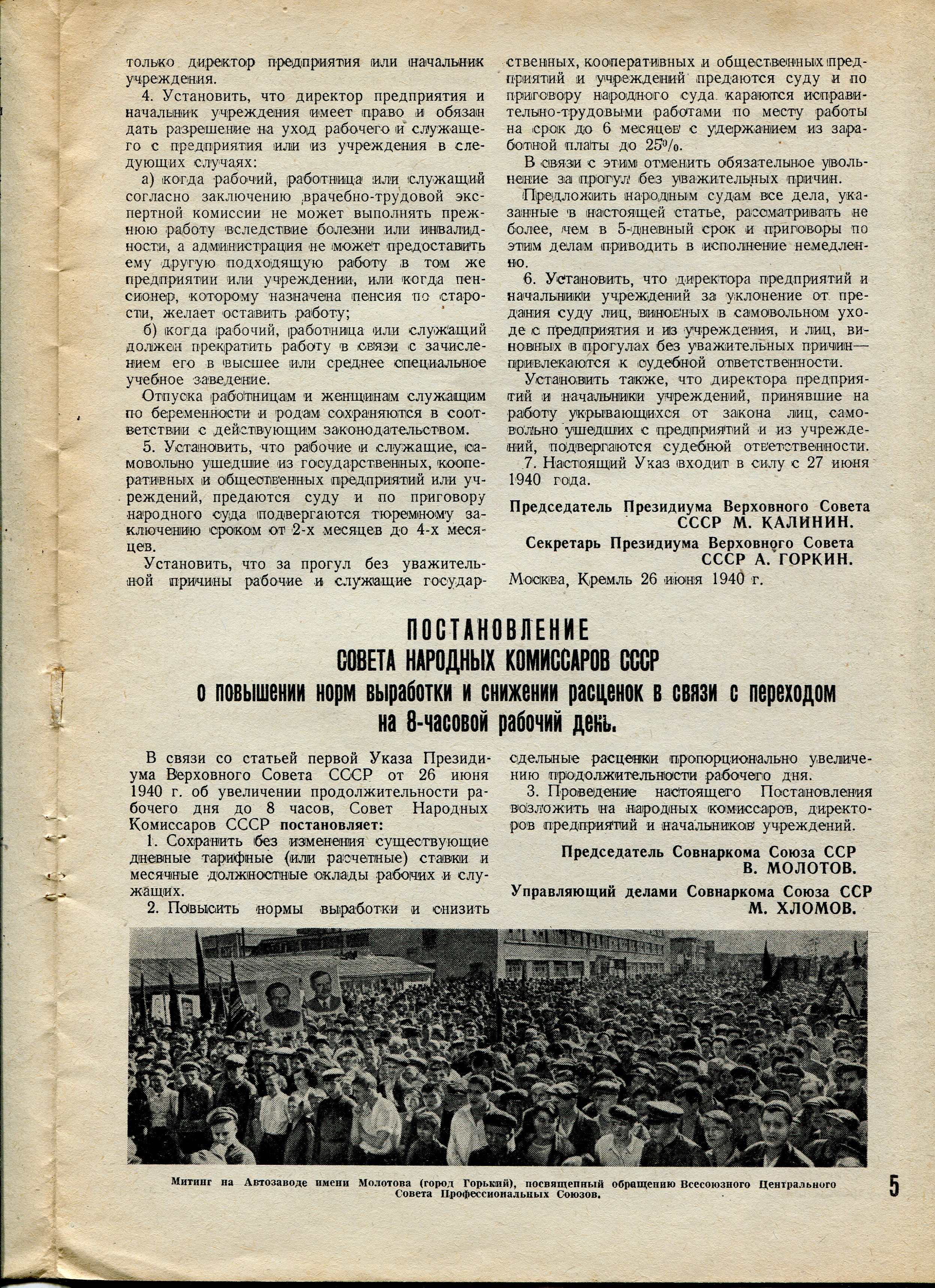
Thus, the state effectively tied workers and employees to enterprises. Production quotas were raised, piece rates were lowered, and failure by collective farm workers to meet the minimum required workdays could lead to criminal prosecution. Nevertheless, the country’s leadership’s attempts to achieve its goals by fostering mass enthusiasm while also using intimidation did not produce the desired result. The three-year plan of the third five-year plan was not fulfilled, and under the Decree of 26 June 1940, more than 3 million people were convicted.