
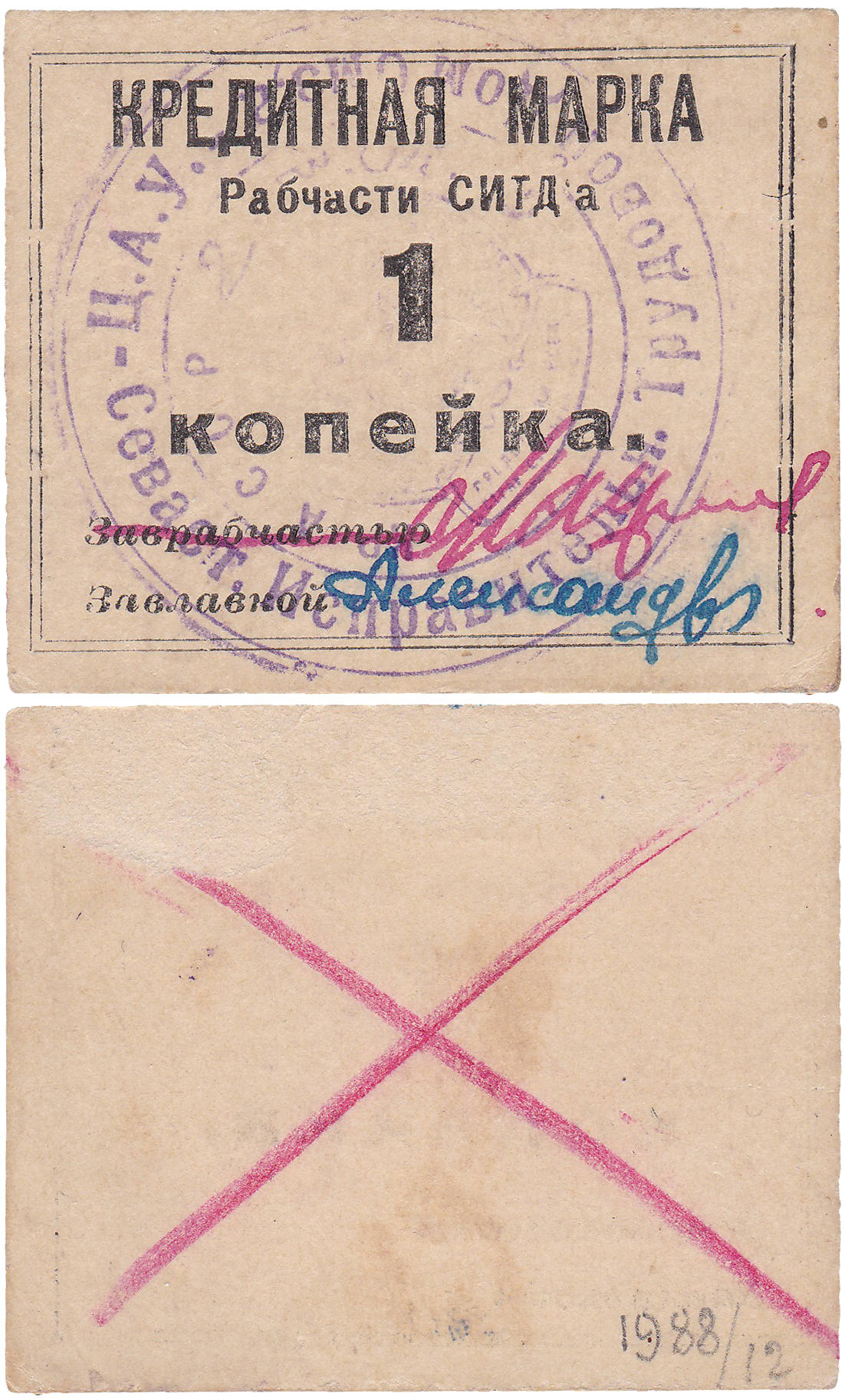
Text on the stamp: "C.A.U. Sevast. Corrective Labor House of the Omz’a"
C.A.U. – Central Administrative Directorate
Omz – Department of Places of Detention
A corrective labor house was a type of corrective labor institution, reorganized from general places of confinement during the reform of deprivation-of-liberty institutions in the RSFSR in 1922–25. Under the 1924 Corrective Labor Code of the RSFSR, it was the main type of place of detention used to apply corrective measures.
Corrective labor houses were intended for deprivation of liberty for a term exceeding 6 months. Most prisoners were held in them. Persons who did not pose a particular danger to the state, and those for whom a regime of strict isolation was not предусмотрен, were subject to assignment to corrective labor houses. The regime in such institutions was considered general and was based on compulsory inmate labor and cultural-educational work. In addition, the principles of a progressive system of serving a sentence were implemented there. These consisted of the fact that, depending on the degree of correction (work achievements, good behavior, etc.), inmates were granted various privileges and transferred from a lower to a higher category. Convicts of the middle and highest categories had the right to leave: the middle category—7 days after 2 months in that category; the highest—14 days after 1 month in that category.