
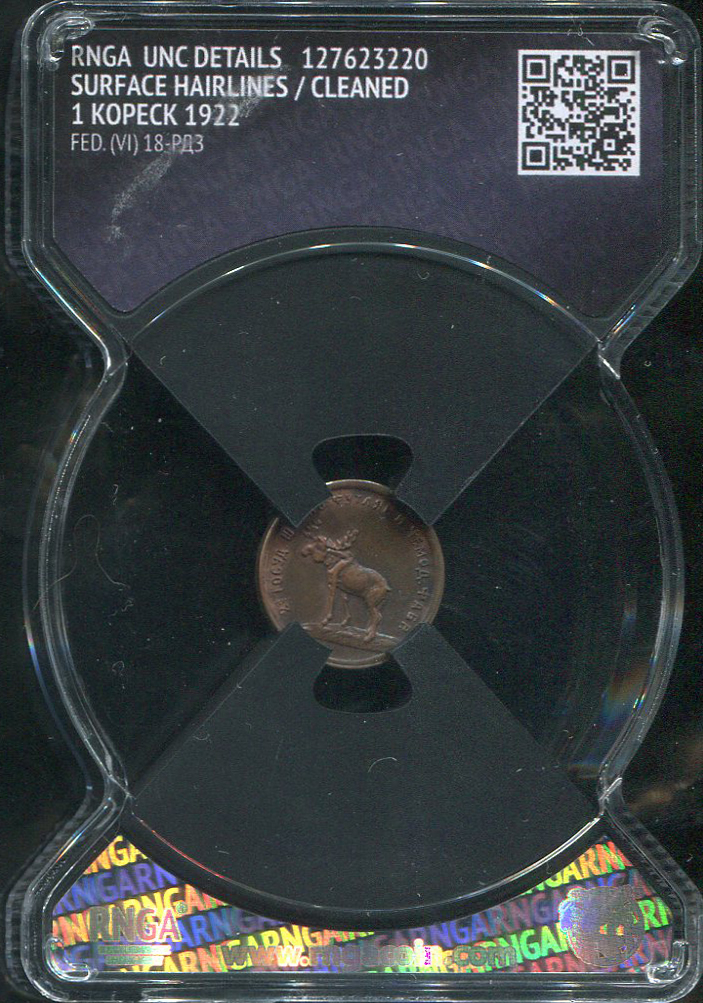
In 1879, Swiss entrepreneur Samuil Samuilovich Bekhli founded the First Russian Album and Fancy-Goods Factory in St. Petersburg. At first, the factory produced photo albums—elegant ones, covered in expensive leather with gold embossing. Later, the product range expanded: the factory began making suitcases, travel bags, and wallets. The refinement and high quality of its products allowed S. S. Bekhli to become a “Supplier to the Court of His Imperial Majesty”.
After the 1917 revolution, the S. S. Bekhli factory was shut down, nationalized, and continued operating under a different name—“2nd State Harness-Case-and-Suitcase Factory named after August Bebel”.
In the first years after the revolution, the economic situation was extremely difficult. Soviet banknotes were depreciating at tremendous speed, food prices were rising, and the population was becoming critically impoverished. The shortage of money caused unrest among workers.
The exchange rate of Soviet money could be stabilized only by issuing a hard ruble—made of gold or silver. Yes, from 1921 the Petrograd Mint began producing silver coinage, but it was not released into circulation—an adequate reserve first had to be accumulated.
It was precisely this feverish state of the Soviet economy that led to the appearance of so-called ersatz money (metal vouchers, payment tokens, or tokens) issued by various enterprises, including the “2nd State Harness-Case-and-Suitcase Factory named after A. Bebel”. However, setting up the production of such monetary signs at the factory was technically impossible, so their manufacture was commissioned from the 1st State Factory of Gold, Silver, and Bronze Articles of the “Tremass” trust (the former “Eduard” factory, founded in 1895 by E. F. Ditwald).
At the “Tremass” factory, a series of payment tokens was produced in denominations from 1 kopeck to 5 rubles.
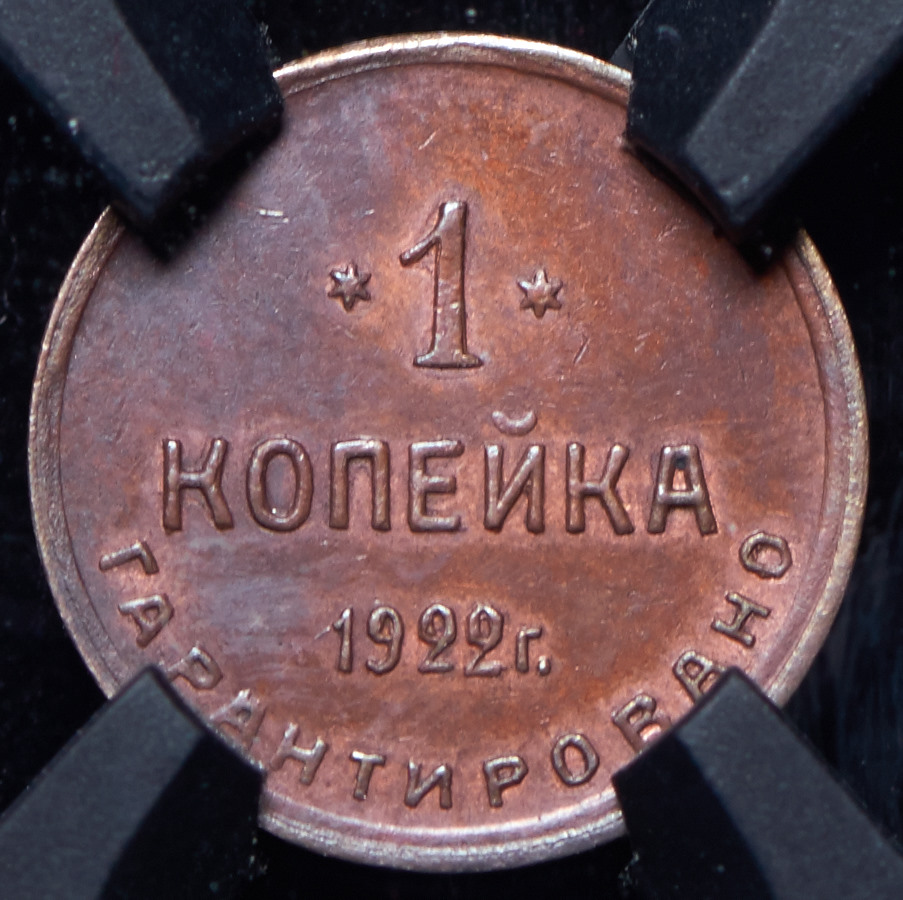
Each one bore the pre-revolutionary emblem of the Bekhli factory—a proudly standing moose.
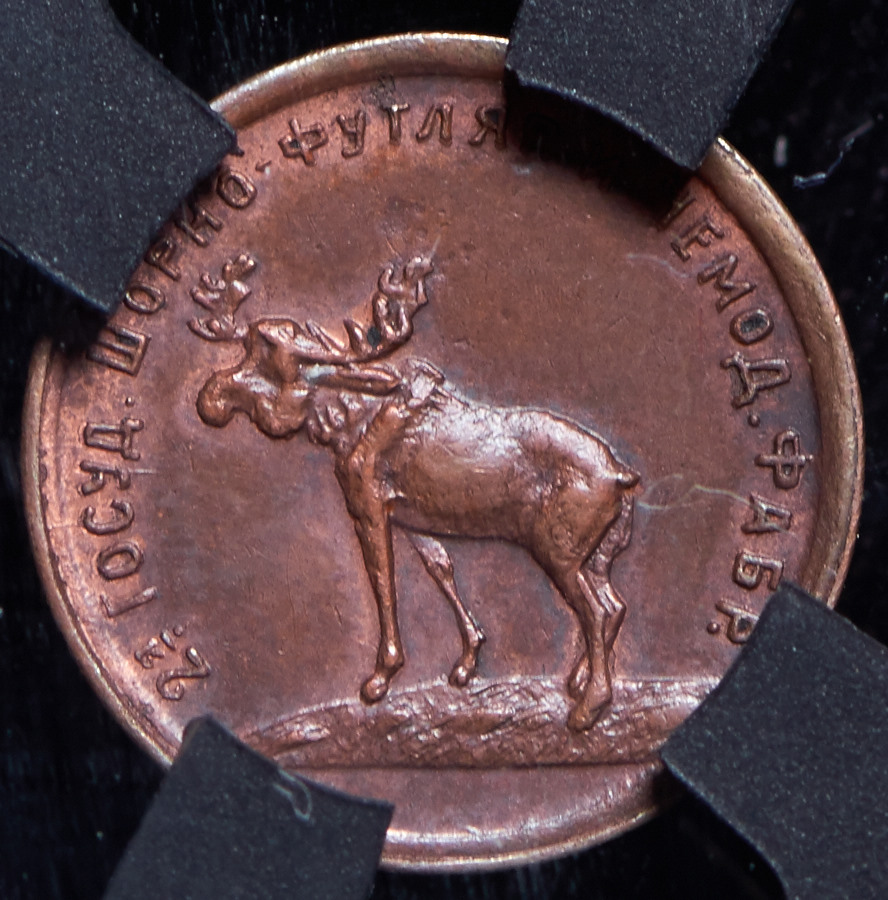
The factory’s tokens were made of copper and aluminum—metals that were not precious, yet the factory’s money proved more resistant to inflation than the rubles of the Soviet government.
The reason was that the factory’s products were of high quality and in no way inferior to foreign equivalents, which in turn guaranteed the ability to find barter partners—both among food producers and among producers of everyday consumer goods.
Employees could buy the goods obtained through barter in the factory’s own store, paying with payment tokens featuring the “proud moose”. It was also possible to use the factory’s own motorized flour mill and barbershop; the factory also had its own tailor. The factory’s money could also be exchanged for Soviet rubles.
Only after the completion of the monetary reform and the release into circulation of a large quantity of silver coin did the USSR government prohibit enterprises and other private persons from issuing monetary substitutes (Decree of the Council of Labor and Defense of February 29, 1924). This put an end to the production and circulation of the harness-and-suitcase factory’s “money”. All tokens accumulated by the factory’s workers were exchanged for the new Soviet money.
The experience of the 2nd State Harness-Case-and-Suitcase Factory attracted the interest of V. V. Tarnovsky, Deputy Head of the North-Western Office of Gosbank, who persuaded the Bolsheviks to carry out their monetary reform of 1922–1924 following the model and example of this factory’s monetary system.
In 1925, a decision of the Council of Labor and Defense appeared prohibiting organizations and enterprises from having their own monetary signs. After that, an exchange was carried out at the harness-and-suitcase factory, converting its money into the new nationwide money (chervontsy). Factory workers presented their savings for exchange in amounts up to 120 rubles, since the factory ruble corresponded to the gold ruble.