
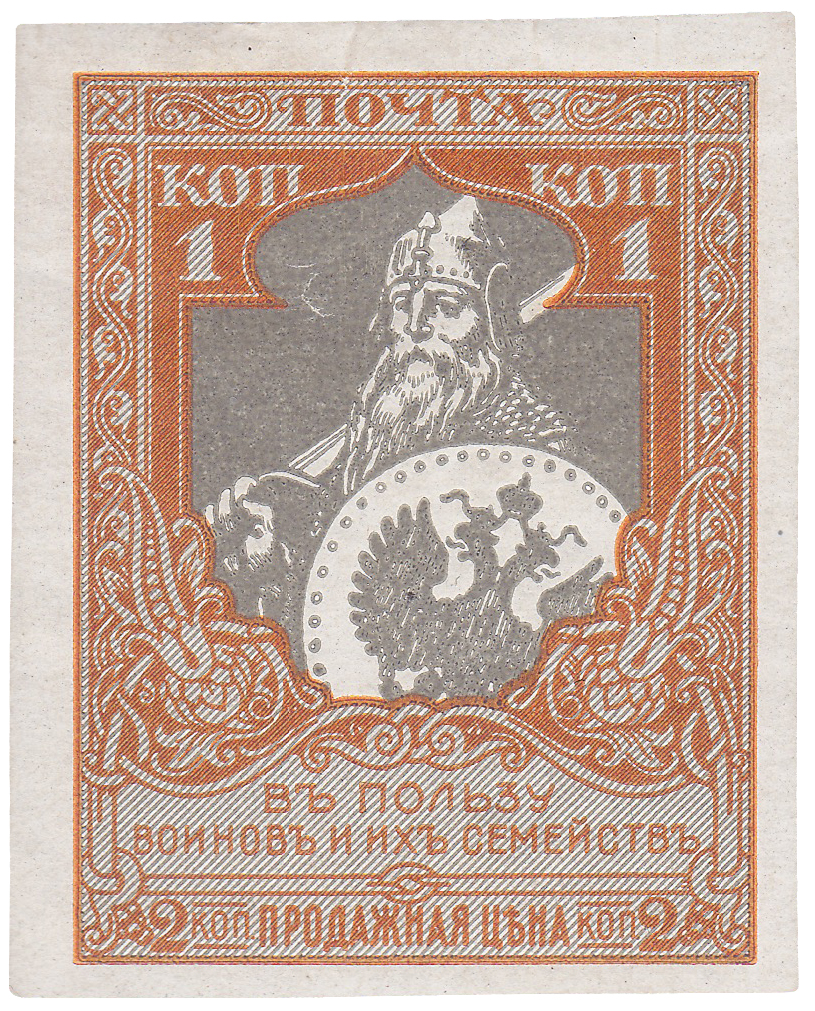
Twenty-second nationwide charitable issue. Imperforate.
In 1915, the series of postal-charity stamps issued in 1914 in aid of the orphans of active-duty army soldiers was repeated, in somewhat altered colors on white paper. In 1915 and 1916, EZGB produced 9,070 thousand stamps on white paper and 210 thousand specimens. In December 1914, due to a shortage of colored paper at EZGB and the inconveniences associated with its production, the Imperial Women’s Patriotic Society gave its consent for EZGB to issue patriotic stamps on plain, uncolored white paper. All four denominations of the stamps on white paper were approved by the Society on December 18, 1914.
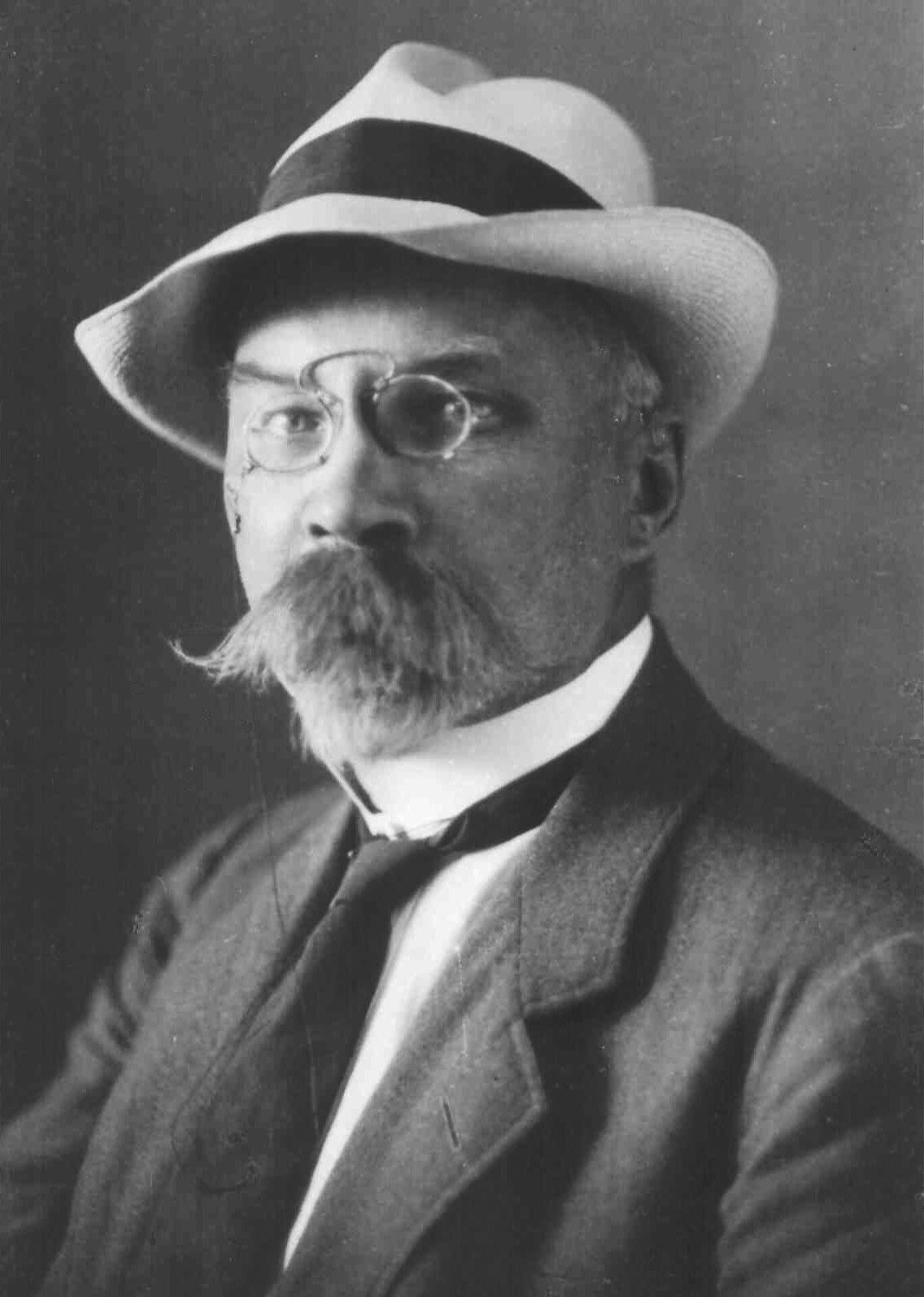
Postal-charity stamps for the benefit of soldiers and their families. Artist Richard Germanovich Zarrin (Zarrinsh) was the designer of almost all Russian banknotes of the early 20th century and of the first Soviet postage stamp.
On September 2, 1914, the head of GUPiT, V. Pokhvisnev, submitted a report to the Minister of the Interior, in which he noted that the Imperial Women’s Patriotic Society had already issued during the war with Japan “patriotic postage stamps, the proceeds from which went to the benefit of the orphans of the active army.” Having listed the conditions under which they were issued and certain changes in the current situation, the head of GUPiT concluded: “...taking into account that the right to issue patriotic stamps had once already been granted to the Imperial Women’s Patriotic Society, I would deem it... permissible to allow the issue of the said stamps, granting this right now as well to the Society.” Minister N. Maklakov agreed with this proposal.
The stamp design was developed with the participation of EZGB.
On September 18, 1914, the Main Directorate of Posts and Telegraphs notified in advance the postal and postal-telegraph offices of the empire about the issue of “patriotic” stamps in denominations of 1, 3, 7, and 10 kopecks, and reported that:
- the retail price of the stamps is set with a surcharge over face value of 1 kopeck for each stamp;
- postal and telegraph fees which, under the rules in force, are payable with stamps may be paid with patriotic stamps, and their face value, not their retail price, is taken into account for settlement;
- the purchase of patriotic stamps and the payment of postal items with them is not mandatory for anyone and is left to the discretion of senders.
The stamps of the Imperial Women’s Patriotic Society were officially used as postage stamps during 1914–1917. During this period, they could be used to pay for all types of postal correspondence.
The sale of patriotic stamps was ordered to cease on November 19, 1917 (order of the Ministry of Posts and Telegraphs No. 62338 of August 19, 1917).
However, these stamps remained in postal circulation for quite a long time thereafter.