
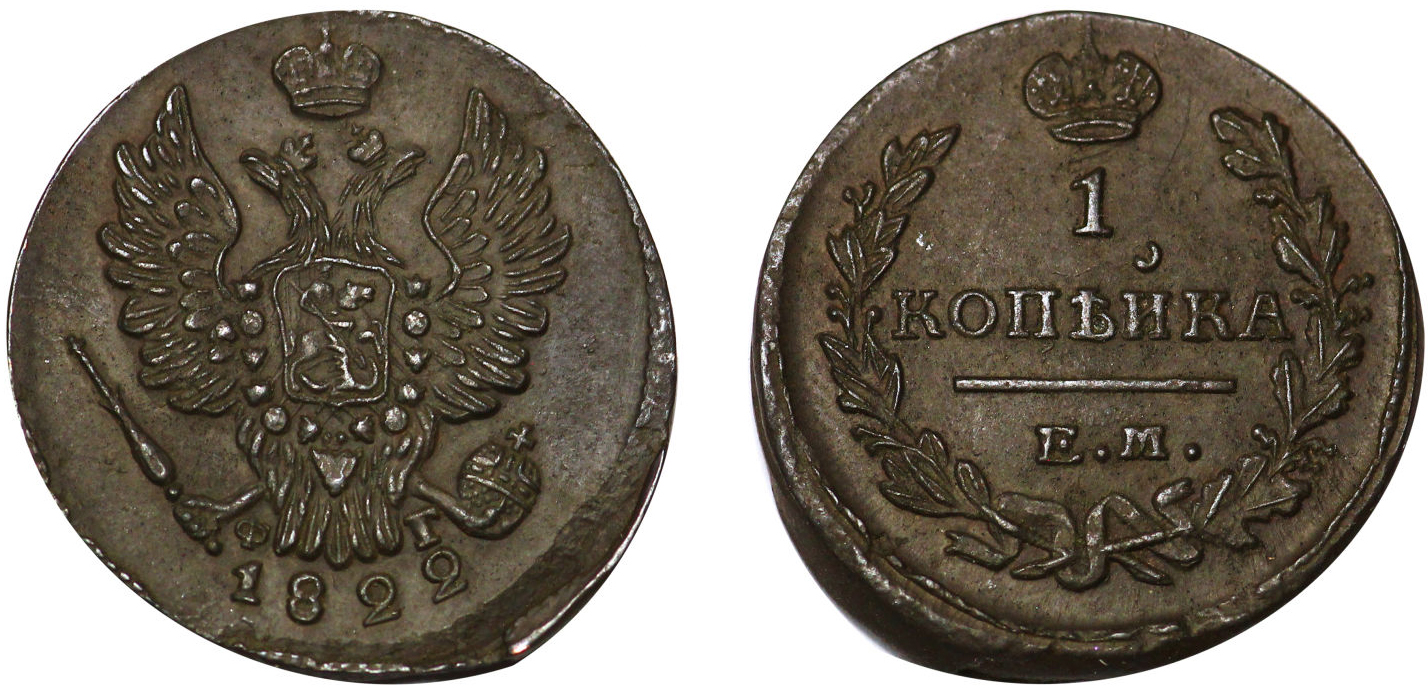
The treasury is nearly bankrupt. No loans can be raised on even remotely tolerable terms. The exchange rate of paper money is not rising, despite the fact that in the last years of Guryev’s administration the assignation debt fell from 800 to 595 million rubles. This was achieved at the cost of interest-bearing loans contracted on very harsh terms. Kankrin believes that debts should not be redeemed in this way; instead, one should strive to take no new loans and issue no new assignations.
Alexander became convinced that it was impossible to keep Guryev as minister of finance. The secret of Guryev’s influence lay in his ability to win over all the powers that be by handing out large sums of money under plausible pretexts, thanks to which he remained minister for a full 11 years. Belarus is suffering famine. Guryev, having significantly cut the sums allocated for starving peasants, decided to release 700,000 rubles to purchase an estate from an important landowner who, Kankrin said, needed money. When this came to light, Guryev lost his post, which Alexander, on Arakcheev’s advice, offered to Kankrin.
In Moscow, on the site of the Neglinnaya River, enclosed in an underground collector, the Middle Alexander Garden was laid out, 382 m long from the Trinity Gate to the Borovitsky Gate. Near the middle Arsenal Tower, to a design by architect O. I. Bove, the grotto “Ruins” was built.
In January, Grand Duke Konstantin Pavlovich renounced the throne and gave written assurance to that effect.
F. I. Tyutchev entered the Ministry of Foreign Affairs and went abroad, having received an appointment to a modest post at the Russian embassy in Munich, the capital of the Kingdom of Bavaria. There he would personally meet Goethe, Heine, and other German luminaries. He would also serve in Turin and would live abroad for twenty-two years.
On 2 August, the sloops “Blagonamerenny” and “Otkrytie” arrived in Kronstadt, having traveled the route Petropavlovsk-Kamchatsky – Hawaiian Islands – Cape Horn – Rio de Janeiro – Kronstadt.
9 March — Charles Graham of New York received a patent for artificial teeth.
9 June — In the USA, Charles Graham patented an artificial jaw.
19 July — French scientist Joseph Niépce produced the world’s first photograph.
14 August — A decree was issued banning secret societies in Russia, closing Masonic lodges, and requiring all officials to sign a statement that they did not belong to secret societies.
27 September — Jean-François Champollion announced the decipherment of the Rosetta Stone.
14 October — Victor Hugo married Adèle Foucher.
26 October — At the age of 17, Hans Christian Andersen enrolled in school in order to obtain an education.
27 December — Louis Pasteur was born, a French scientist, one of the founders of medical microbiology, immunology, and stereochemistry. He discovered fermentation and vaccination.