In March 1916, in Yekaterinodar, in the workers’ district of Dubinka, the consumers’ society “Osnova” was established. Five months later, “Osnova” had united 380 members.
In the spring of 1920, the Batalpashinsk and Maikop unions of consumers’ societies voluntarily merged with the Kuban Union of Consumers’ Societies. As a result, the Kubsoyuz included 349 consumers’ societies with 317,000 shareholders.
The Central Workers’ Cooperative was reorganized, incorporating the “Osnova” society and 13 urban general-civil cooperatives from Novorossiysk, Anapa, Krasnodar, and others.
As of January 1, 1924, the chervonets exchange rate had reached 30,000 rubles in 1923 treasury notes. The parallel circulation in the country of two currencies—one depreciating and one more stable—carried a number of negative consequences. It adversely affected the situation of workers and peasants. Wages received by working people, due to the presence of a depreciating currency, rapidly lost value. A number of enterprises and organizations began issuing their own money denominated in chervonets or gold.
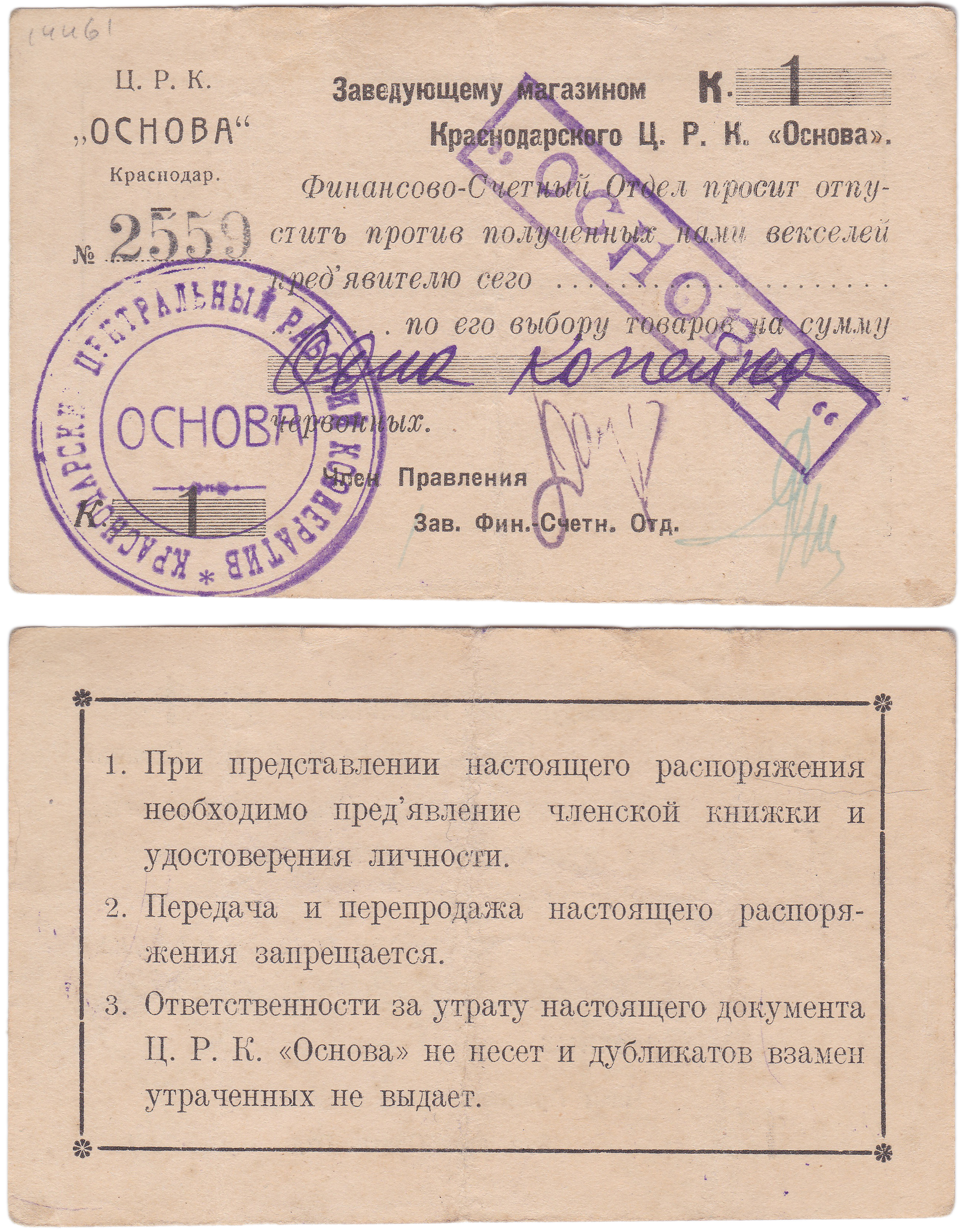
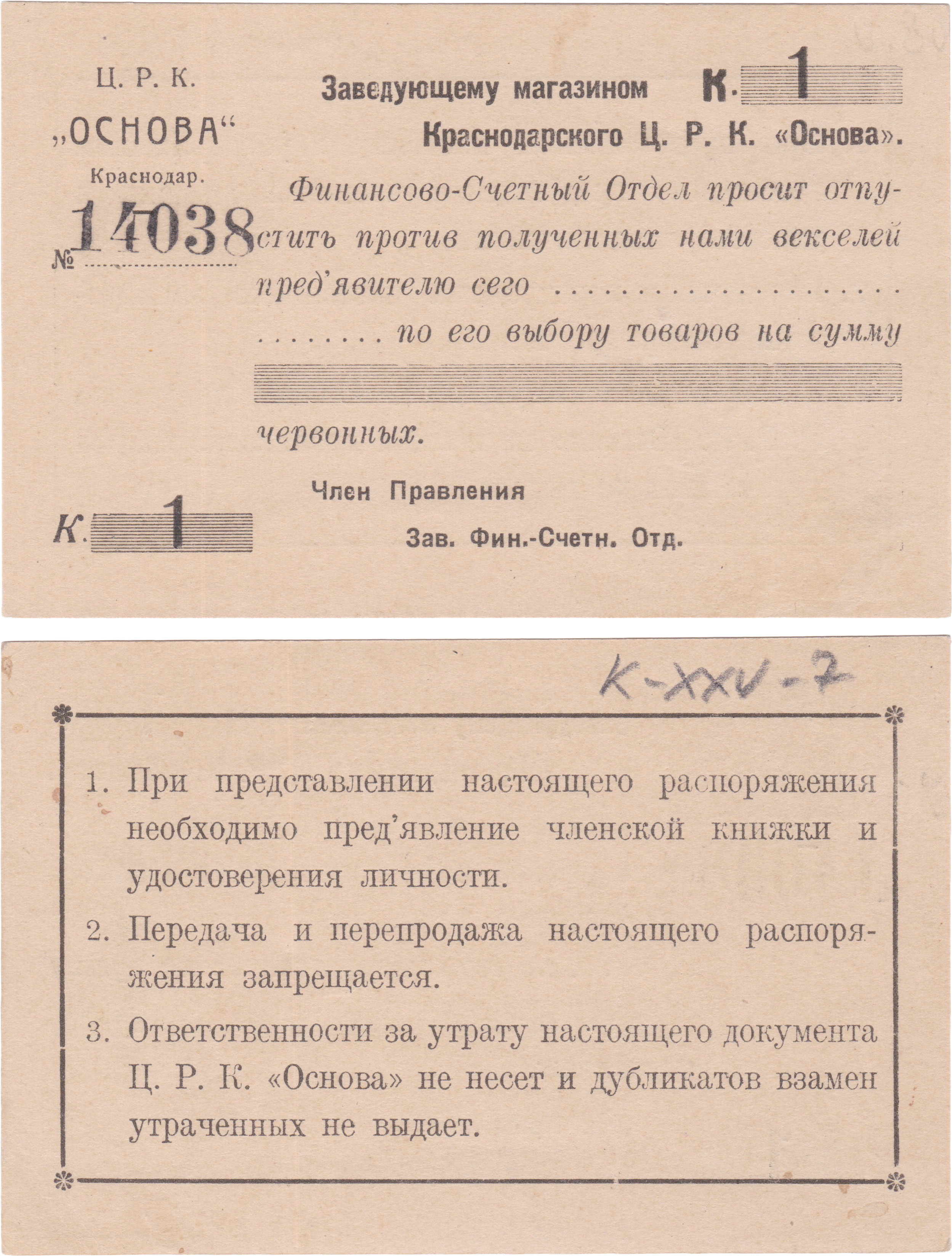
In 1923, the Central Workers’ Cooperative “Osnova” in Krasnodar issued its own “orders” in chervonets denomination, ranging from 1 kopek to 10 rubles.
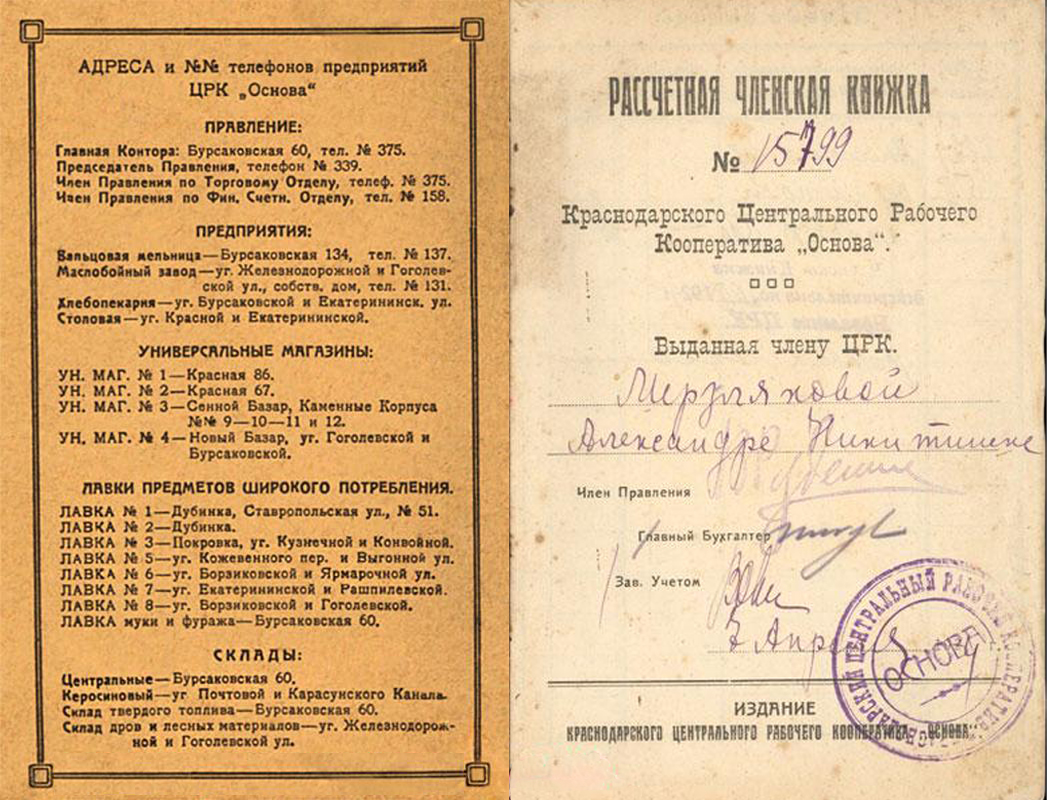
On September 29, 1935, all property in Krasnodar that had previously belonged to Kubsoyuz (branch) and the Central Workers’ Cooperative “Osnova” was transferred to various city organizations.
Order to the store manager to release goods in the amount of 1 Kopeck chervonny 1923.
Krasnodar Central District Club “Osnova”.