
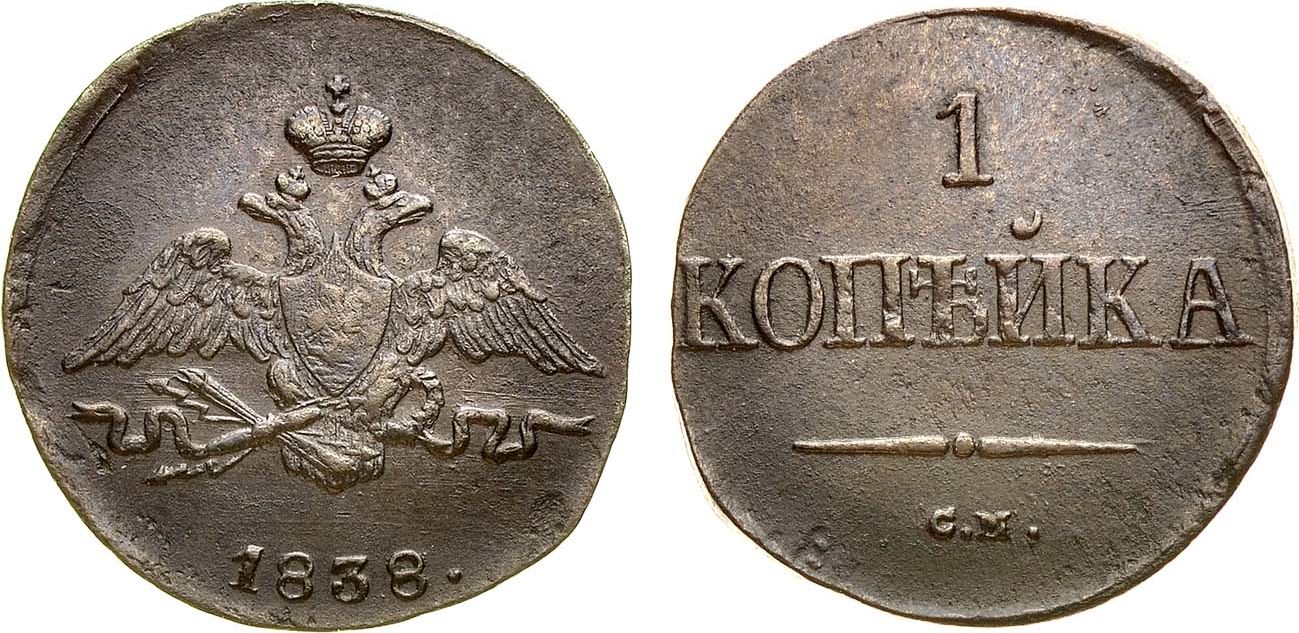
There are several exchange rates for the paper ruble. The bill-of-exchange rate is set by bill transactions with foreign merchants. Under the tax (state) rate, government institutions accept assignations. The common (popular) rate is set arbitrarily in private deals and fluctuates constantly. The public, in search of more stable money, began introducing foreign coin into circulation under the name “lobanchiki” or “yefimki.” A special class of traders buys them abroad and imports them into Russia.
Russians can hardly imagine that in France a person of the highest rank could be sent to prison for debts. In Russia one would not find a single merchant, not a single supplier, who would dare to refuse credit for an unlimited term. Many Russians possessing immeasurable wealth would be utterly ruined if they ever tried somehow to settle with all their creditors.
January 6 — in the town of Morristown (New Jersey), in the workshops of the Speedwell ironworks, Samuel Morse and Alfred Vail demonstrated their telegraph apparatus for the first time.
February 11 — horse-drawn trains begin running on the railway from Saint Petersburg to Tsarskoye Selo.
April 22 — for the first time a steamship crossed the Atlantic Ocean. The English ship “Sirius” arrived in New York Harbor. It took 18 days and 10 hours for the voyage and beat its competitor by only a few hours—the steamship “Great Western,” which put to sea four days later. In 1819 the American ship “Savannah” crossed the ocean as well, but on it steam engines were an auxiliary means and most of the passage was made under sail.
The First Anglo-Afghan War began.
July 30 — a rain of frogs fell on London.
In the April issue of the literary supplement to “Russkiy Invalid,” “A Song about Tsar Ivan Vasilyevich, the Young Oprichnik, and the Daring Merchant Kalashnikov” was printed without the author’s name. Lermontov had long ago written it out of boredom, to entertain himself during an illness that did not allow him to leave his room, but the censorship would not permit its publication. Then V. A. Zhukovsky interceded—and it came out. Belinsky sees the most important merit of this truly folk work in its connection with the topical problems of the time.
N. A. Nekrasov, sent by his father to Petersburg for military service against the young man’s will, enrolled at the university. The enraged father abruptly broke with him, and the youth found himself in hopeless need. To earn money, he prepares boys for military schools in all Russian subjects.
In May — for 2,500 rubles, the landowner Engelhardt granted freedom to Taras Shevchenko. The money was obtained by Karl Bryullov for a portrait of Vasily Zhukovsky painted by him, which was purchased by the Empress.
October 25 — Georges Bizet was born, a French composer, author of the opera “Carmen.”