
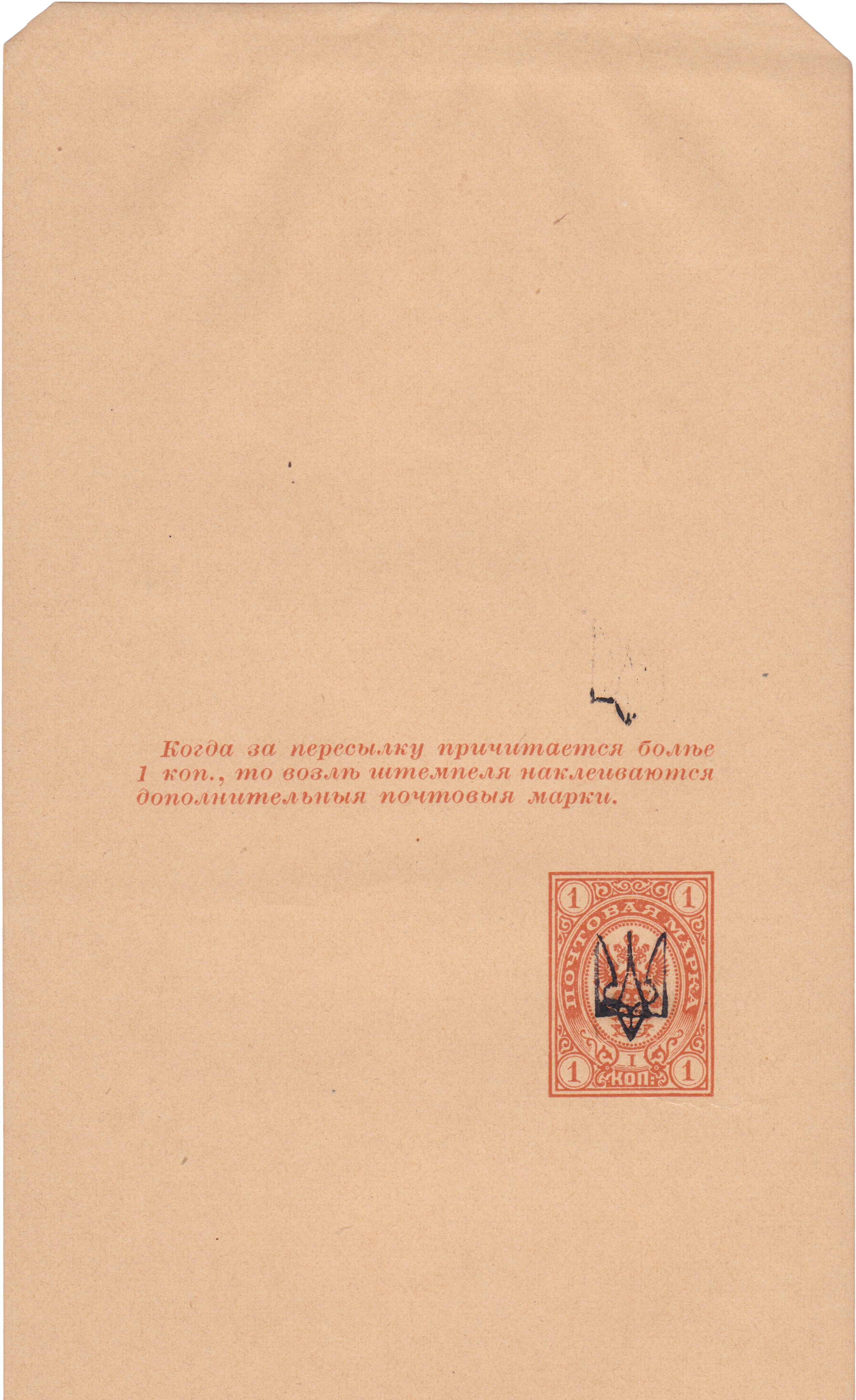
In Russia, stamped wrapper bands for printed matter were issued twice: in 1890–1891 and in 1913.
A type of postal stationery: printed-matter wrappers. These are paper bands of various widths and lengths with a printed indicium of postage payment. Wrapper bands were intended for wrapping newspapers, books, and other printed items. Unlike envelopes, printed-matter wrappers did not fully protect the contents from damage, since the edges usually remained open.
Originally, "wrappers" referred to paper bands for packaging postal items which, in some countries, were issued with printed postage payment marks. Such stamped wrappers belong to postal stationery and are objects of collecting (philately).
In the Russian Empire, the maximum weight for wrapper mailings was significantly lower, not exceeding 4 pounds for printed works and business papers (therefore, below the maximum weight for sealed letters) and 20 lots for samples of goods. Wrapper mailings were prepaid, although at a substantially reduced rate (the minimum rate for out-of-town mailings was 2 kopecks (equivalent to 5 centimes) for printed works, 7 kopecks for business papers, 3 kopecks for samples of goods), but each weight unit, taken as 4 lots, was paid in full.