
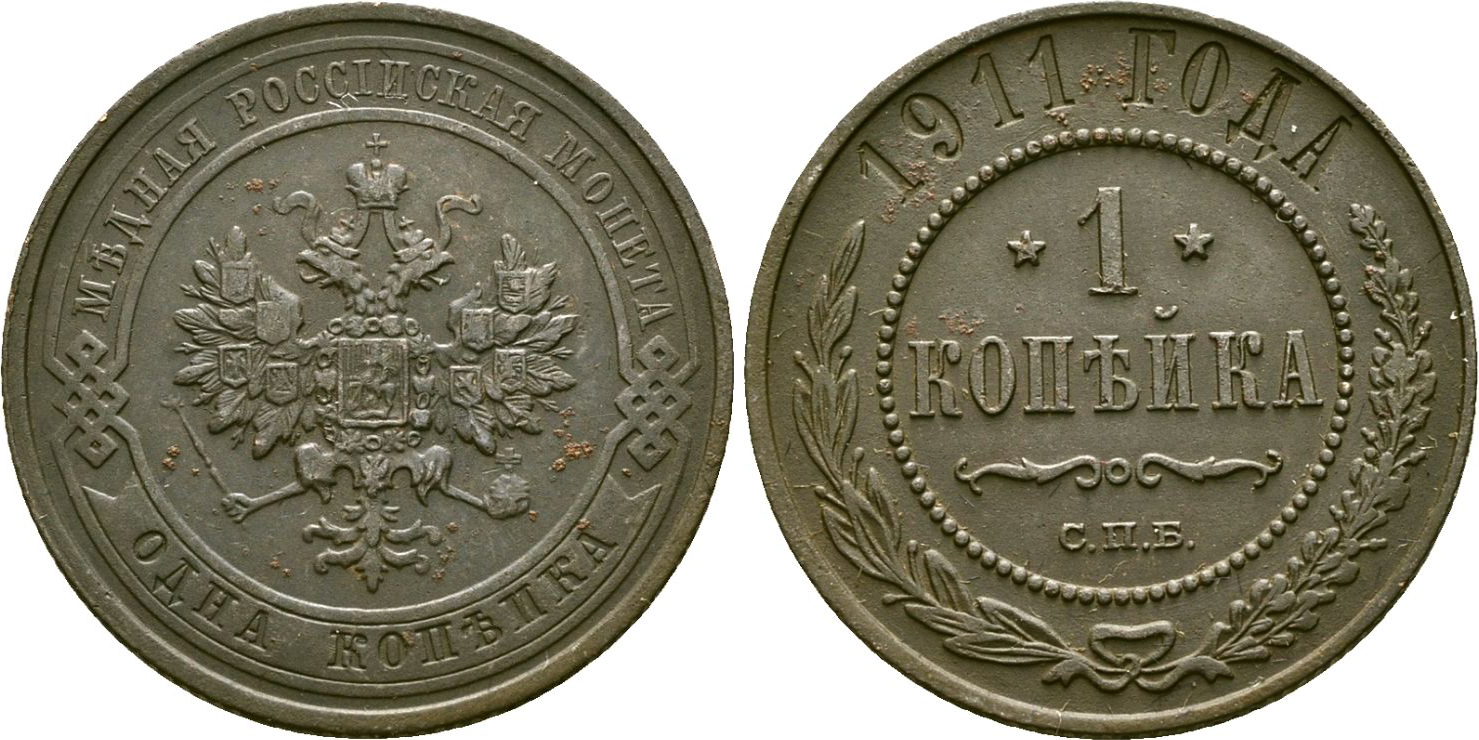
On 14 September 1911, in the Kyiv Opera House, Pyotr Arkadyevich Stolypin, Chairman of the Council of Ministers of the Russian Empire, was mortally wounded. The perpetrator, Dmitry Bogrov, by his own admission, acted alone. Today there was a gala performance at the city theater. All the ministers were present.
During the second intermission, a tall young man in a tailcoat rose from a seat in the 4th row near the box where the ministers were seated; approaching almost point-blank to P. A. Stolypin, he drew a revolver and fired two shots at him at close range.
A tremendous commotion ensued. The audience rushed at the shooter and disarmed him. He was immediately arrested by police officers and led out of the theater. An ambulance carriage was summoned at once to the theater, and in it P. A. Stolypin was taken to Dr. Makovsky’s private clinic. The wounded man’s condition is considered very grave. By one shot, P. A. Stolypin was wounded in the chest, below the right nipple. The bullet lodged in the spine. The second bullet, having wounded P. A. Stolypin in the arm, struck the leg of the musician Bergler.
Traffic of carriages and tram cars on the street where the clinic is located, in which P. A. Stolypin lies, has been suspended. The roadway is covered with straw.
P. A. Stolypin requested that he be sent the revolver from which Bogrov shot him. The revolver was delivered to him immediately. It is a large-caliber Browning. Two casings were found to be spent.
Dr. Cheremukhin, who examined P. A. Stolypin among other doctors, expresses firm confidence that the wounded minister will remain alive. The liver is not affected. Only the pleura is injured.
Bogrov served in the security police (Okhrana) for two years and betrayed party members. On 18 August he was summoned to Petersburg, where he received a proposal to atone for his guilt by killing P. A. Stolypin. The attempt was supposed to be carried out as early as 1 September in the Merchants’ Garden. On 29 August he returned to Kyiv and immediately received, from the security police, a ticket granting entry to the gala performance. Bogrov managed to convince the chief of the security police that only he knew about the assassination attempt being prepared during the performance and could point out among the audience the person plotting the murder.
D. Bogrov testified that he had intended to carry out the murder of the premier on 31 August during a concert in the Merchants’ Garden, where Bogrov was also present. There he allegedly chose a convenient moment so as not to wound anyone in the audience. The moment presented itself, but Bogrov was agitated and lacked the nerve to fire. The next day in the theater he also hesitated. However, during the second intermission he concluded that if he did not carry out his plan now, no other similar opportunity would present itself. Approaching P. A. Stolypin, near whom there was not a single security agent, Bogrov covered his right hand with a wide theater program and, taking the Browning from the back pocket of his trousers, fired two shots.
The bullet extracted today by the professor and Zeidler is slightly flattened. This is explained by the fact that the bullet struck the Order of St. Vladimir hanging in the buttonhole, knocked off the enamel from the middle part of the order, bent one end of the cross, flattened, and changed its subsequent direction. The wounded man feels well. About Bogrov he said to those around him: “That little Jew was terribly pathetic when, pale and hunched over, he came up to me.”
P. A. Stolypin died on 5 September, at 10:12 p.m.
How great P. A. Stolypin’s confidence was that he was destined to fall victim to an attempt is evident from the spiritual testament he left behind. The first point of this testament reads: “I ask to be buried where I am killed.” In fulfillment of this will of P. A. Stolypin, it was decided to bury him in Kyiv, and not in the family vault.
In China there are enormous centers of plague. The international tribunal in Tientsin has ceased its operations; the judges fled.
There is not a single case of recovery. Serum is powerless. The efforts of doctors are futile, in view of the indifference of the population.
Europeans are leaving Beijing.
The plague epidemic in Harbin and the surrounding settlements is expanding every day. The optimism of the Council of Ministers and the management of the Chinese Eastern Railway is unfounded. The local administration, within which there is divided authority, is not taking all necessary measures. The cordon around Harbin, reported by the agency, is ineffective. Coffins with corpses are not being buried. They are displayed openly near the Hule River. With the spring flood they will be carried away. On the surrounding roads lie corpses being eaten by dogs.
In recent days the plague has begun to spread downstream along the Sungari River, along the Harbin—Khabarovsk route, already engulfing about one third of this route. Thus, under threat of the epidemic being introduced, besides Blagoveshchensk and the village of “Pogranichnaya,” Khabarovsk too will soon find itself at risk.
Dr. Mikhel, who fell ill with the plague, was in charge of the plague barrack. When he became ill, he declared that although his situation was hopeless, in the interests of science he asked to be injected experimentally with “606.” This was done. Today Mikhel’s state of health is satisfactory. He is being cared for by his wife, whom they were compelled to admit.
The orderly Neptunsky, who fell ill yesterday, died.
Dr. Mikhel is beyond hope.
The orderly Teternikov died.
The orderly Rezvykh fell ill.
Dr. Mikhel, infected in the line of duty and who died on 21 January, left the very best memory of himself. He was considered one of the most energetic and self-sacrificing doctors, wholly devoted to combating the epidemic. The deceased left behind a wife and two children. His family will be provided for. Before his trip to Manchuria, Dr. Mikhel served as a district (zemstvo) doctor in Samara Province.
Several hundred foreigners left the city today, abandoning their affairs to fate.
Among court circles and in the troops, about twenty people die daily. From all northern provinces reports come of plague in the army.
All of Manchuria is gripped by plague. The Governor-General of Xi-Liang, warning the Beijing government of the serious situation that could entail international intervention, requests appropriations of large sums to fight the epidemic.
According to Chinese reports, 12 villages in the environs of Harbin have died out. Livestock has been looted by the honghuzi. The surrounding roads and fanzas are strewn with corpses.
VLADIVOSTOK, 1 February. The official organ of the South Manchurian Railway reports that a secret Chinese society has formed in Manchuria, setting as its goal the expulsion from Manchuria of the Japanese and the Russians. According to Harbin newspapers, members of this society have appeared everywhere in Manchuria, inciting the population against Russians and Japanese. The agitators urge people not to fear the plague, which was sent by the gods to drive out the “white devils.” It is necessary, they say, to spread the infection: to plant plague corpses. Anyone who infects a European will be saved. Ashihe and Hulanchan give the impression of dying cities.
The Vladivostok city administration announced that a reward—100 rubles—will be paid to whoever discovers the first case of plague.
In Chinese villages of the plague region the epidemic has assumed vast proportions. With astonishing speed entire villages are dying out. Only the howling of domestic animals left without owners can be heard. The agricultural region threatens to turn into one continuous plague cemetery.
The North American United States, wishing to demonstrate its friendship toward China, sent a steamer to Shanghai with bread and clothing for Chinese affected by the plague. The value of the cargo is six hundred thousand dollars.
March. Petersburg. Despite expectations of cholera again, fear of plague and the already present typhus, the city’s streets continue to drown in mud. Homeowners who clean streets, sidewalks, and especially drainage ditches are encountered as a rare exception. Our sanitation workers, whose staff has been increased, though only slightly, should immediately and seriously take up the cleaning of the city.
18 March HARBIN. The plague has almost completely ceased. A revival of trade is observed. Since the beginning of the epidemic, 1,474 Chinese and 52 Europeans have died.
21 August — Leonardo da Vinci’s painting “Mona Lisa” was stolen from the Louvre in Paris.
15 December — the Norwegian explorer Roald Amundsen reaches the South Pole.
P. Bleuler in Switzerland introduces the term “schizophrenia.”
In the USA, David Horsley creates the first film studio in Hollywood near Los Angeles. Over the course of the year, 15 more companies followed his example.
In view of the fact that the owner of the cinematograph at No. 43 on the Peterhof Highway, the pharmacy assistant Naum Adelson, had arranged special screenings to show films of pornographic content—moreover, these screenings were held after 11 p.m. in a cinematograph closed off from the street, with entry for visiting citygoers for a fee—the city governor, recognizing the further existence of such a cinematograph to be impermissible, ordered the said cinematograph to be closed.
20 February — a cinematograph came to the village of Bologoye. The premises where the film was shown were packed with spectators; about 150 people came, standing even in the aisles. In the “cinema hall” there were several doors, but only one of them was open—they feared gatecrashers. From overheating in the projector the film caught fire. Panic and crushing began. The wooden structure burned quickly; 64 people could not get out, 43 of them children.
Commotion in the ballet. The talented artist Mr. Nijinsky, who danced so brilliantly on Sunday in “Giselle,” has been dismissed. The reason for the dismissal was the costume Mr. Nijinsky wears in “Giselle”: a short little jacket and tights too closely fitting the dancer’s figure. The audience in the front rows and boxes found this costume overly bold, and the artist was asked to resign. The only strange thing is that the ballet administration found it possible to let Mr. Nijinsky appear in such attire. They say that Krupensky and the consultant artist Golovin, whose duty it was to inspect the costume before the artist went on stage, saw the costume and allowed the artist to appear in it on stage. Why did they not make Mr. Nijinsky dress more modestly? The costume was made from a sketch by the artist Alexandre Benois, and in it Mr. Nijinsky repeatedly danced in Paris, Brussels, and Berlin.
15 March — the Pasteur Institute in Paris sends an expedition to Russia to study tuberculosis among the Kalmyks. The expedition will also travel to the Kirghiz steppes to study the origin and spread of plague. The expedition will be headed by Mechnikov, accompanied by his wife.