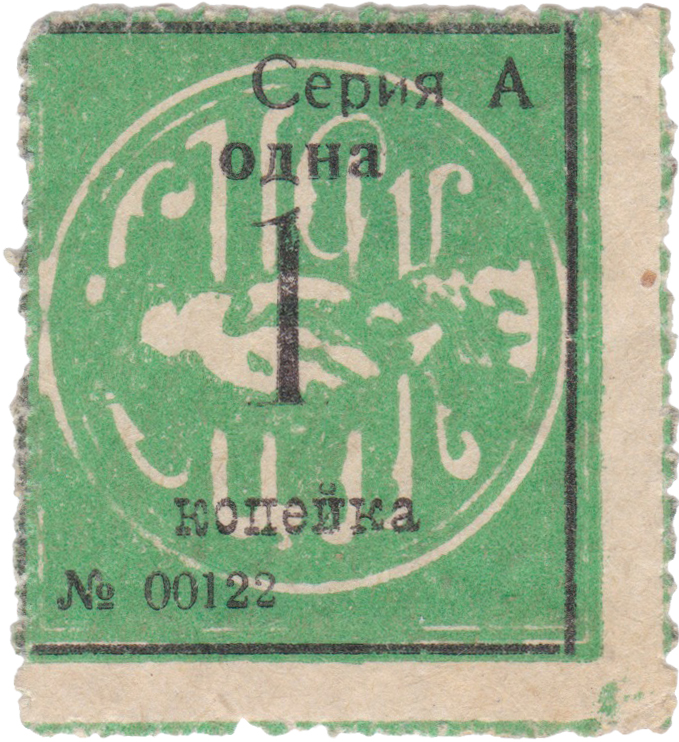
Stalino CRC (initially the Yuzovka Workers’ Cooperative) was the largest non-state issuer in Yuzovka (Stalino). The cooperative was founded in 1888 on the Larin side, i.e., in the factory part of the settlement. At that time it was called the “Consumers’ Society near the plant of the Novorossiysk Society.” According to old residents’ recollections, it issued its own tokens (orders) that could be used to obtain food products from the agriculture of the Novorossiysk Society, located at the Peski farmstead. At the beginning of the 20th century, the cooperative opened branches (shops) on the 1st line (now Artema St.), the 10th line, and at the Vetka mine.
In 1924, together with the city, the cooperative changed its name. In 1924, the Stalino CRC was the largest cooperative association of employees of the “Yugostal” trust, which, in addition to the Stalino Metallurgical Plant with its mines, also included the Makeevka and Enakievo metallurgical plants and mines. As of January 1, 1924, the Stalino CRC united 7,541 workers in its ranks. In total, 21,000 people worked at the plant and mines. The share capital in January amounted to 23,950.78 rubles. In April of the same year, the number of members was increased to 7,938 people.
In January 1924, the cooperative operated 2 general stores, 8 branches (mid-sized shops), and 6 kiosks (small shops). Several bakeries baked 7,213 poods of bread monthly. Canteens opened in the second half of 1924. In June, an additional 5 shops, 5 bread kiosks, and 20 tobacco stalls were opened. In April 1924, the population purchased goods worth 415,496 rubles. A few more facts: the cooperative sold bread at 7 kopeks (at the market it cost 16 kopeks), and meat at 16 kopeks per pound. Up to 30% of these goods were sold for monetary substitutes, or, in other words, vouchers—of the cooperative’s own production.
1 Kopeck 1928.
Stalin Central Workers’ Cooperative (SCWC).