
The Copper Riot was an uprising of the urban poor in Moscow that resulted from the monetary reform under Tsar Alexei Mikhailovich.
The need to change the monetary system of the Muscovite state in the 17th century was obvious. At that time, the main coins used in circulation were silver kopecks. For example, to pay the wages of the Russian army, half a million such kopecks were needed. In addition, these kopecks were inconvenient because of their small size. The idea emerged to introduce a larger coin or denomination that could be correlated with the main monetary unit of contemporary Europe—the thaler. In Russia, such money was not used in circulation. It was melted down and used to make silver kopecks.
In 1654, Tsar Alexei Mikhailovich and his government began a monetary reform in Russia. It started with the introduction of the silver ruble. By weight, it was equal to a thaler. The country’s population accepted these coins very readily. The difficulty of the reform at this stage was that the thaler in fact corresponded by weight to 64 Moscow kopecks, while the ruble was issued at a forced rate of 100 kopecks. At first, this drawback did not strongly affect the inhabitants of the Russian state—the need for large coins was very great.
The next stage of the reform was connected with the fact that it proved impossible to mint a large number of rubles, because the minting equipment broke down quickly. Then the Russian government took another route: they took ordinary efimki (as thalers were called in Russia) and overstruck them in a special way. They were called “efimki with countermarks.” They were put into circulation at a more reasonable rate—64 kopecks for one such unit.
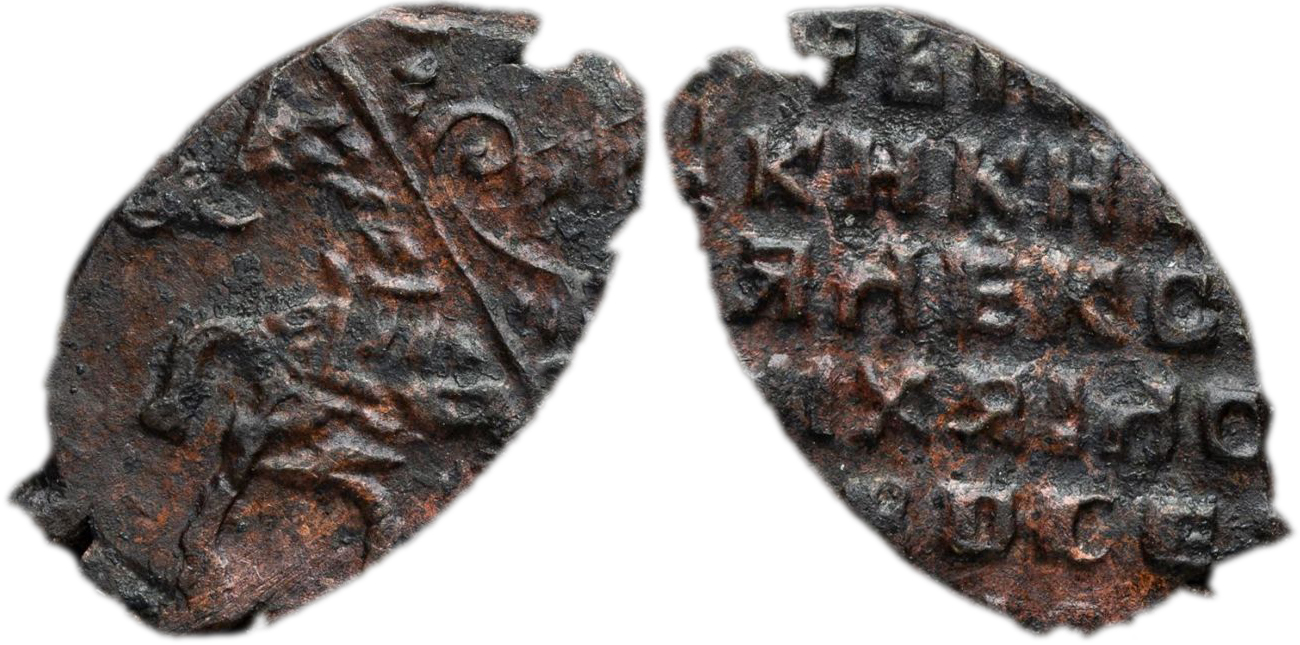
Then Alexei Mikhailovich decided that the time had come to mint copper money. The need to mint copper coins was due to the fact that until the end of the 17th century Russia had no domestic silver. All of this metal was imported, and it was clearly insufficient. The Moscow Mint began striking copper coins. The immediate reason for minting copper was the discovery of copper ore near Kazan, which they decided to put to use. They minted altyns, poltinas, and kopecks. All this money was issued at the value of silver circulation. It was not possible to establish mass minting of large copper denominations because of the weak technical base of the newly opened mints, set up in haste. A small number of issued poltinas has survived; the other denominations have not come down to our time. Soon after the reform began, it was decided to switch mainly to minting kopecks, which were made by the same method as the old “scale” coins—from pieces of wire. This was a time bomb for the entire reform, since the value of copper was 50 times lower than that of silver.
The reform began in 1654—at the time when the Russo-Polish war started. Therefore, more and more money was required to wage it. More and more copper money was issued. This money was sent to the active army, and the war was fought on the territory of the Polish-Lithuanian Commonwealth, whose population regarded the new money with distrust. As a result, a difference in exchange rates arose. This was called a discount—a surcharge when accepting a low-value currency. This difference grew more and more over time.
At this time, Alexei Mikhailovich made the following mistake. He issued a decree ordering that taxes be collected only in silver, while wages be paid only in copper. After this decree, a financial crisis began in Russia. The entire monetary system became disorganized. It would seem that peasants should have benefited, since food prices rose. However, it was unprofitable for them to sell their goods for copper money. Service people were also paid in copper. This greatly displeased both peasants and other groups of the population.
From 1661, Russian-minted copper stopped being accepted in Ukraine, and throughout Rus people refused to sell bread for it. The troops did not want to receive their wages in “red” money anymore. Unrest began in the army, soon intensified after a series of military defeats. By 1662, counterfeit copper money had also become widespread, since it was not difficult to strike from cheap metal. Forgeries were produced even by the tsar’s close associates. Driven to despair, the Moscow population rose in July 1662 in an uprising that went down in history as the “Copper Riot.” The people demanded the abolition of the “red” money.