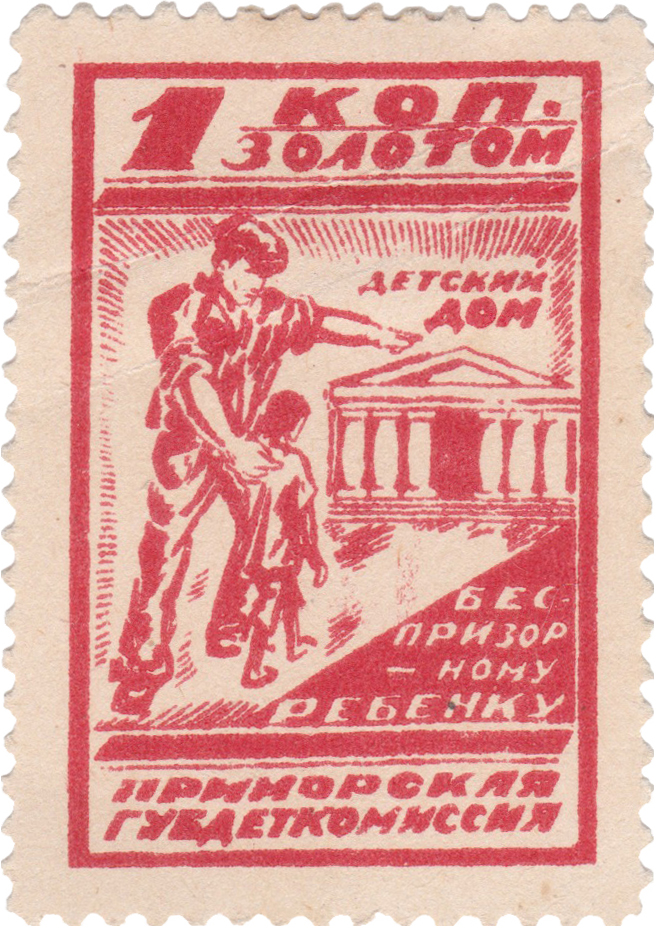
After the end of the Civil War and foreign intervention, the state began creating a system to protect children and adolescents. In January 1921, by decision of the All-Russian Central Executive Committee of the RSFSR, the Commission for the Improvement of Children’s Lives (Detkomissiya) was established, with F. E. Dzerzhinsky appointed as its chairman. At the same time, Order No. 23 of the Cheka explained the reasons for its creation and the Cheka’s tasks: “The situation of children, especially the homeless, is severe, despite the fact that the Soviet government spared neither funds nor effort for this. Now, having breathed more freely on the external fronts, the Soviet government can, with full energy, turn its attention first and foremost to caring for children—this future support of our communist system.”
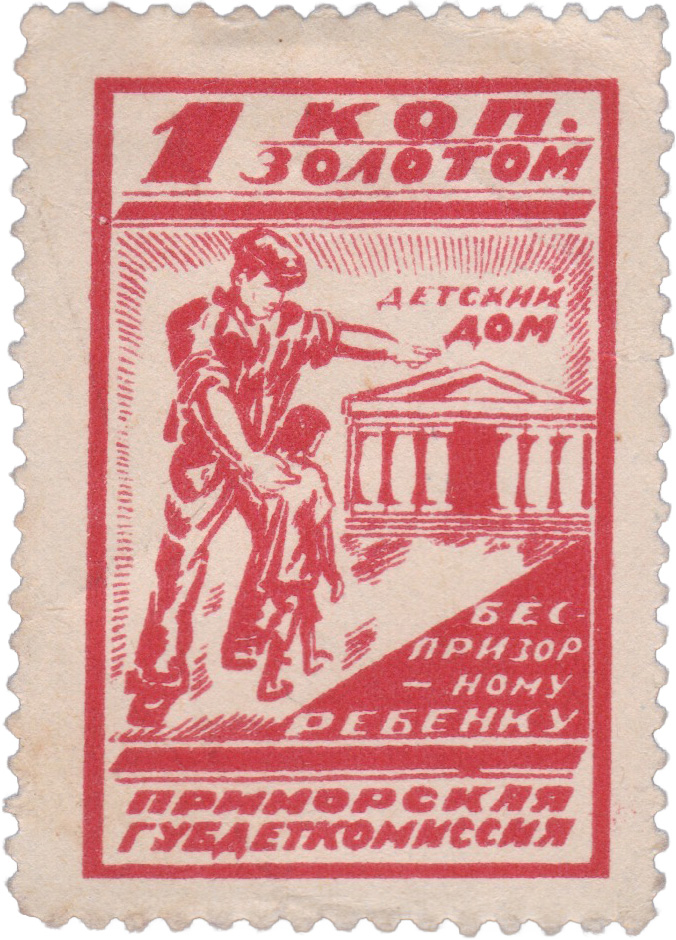
Since the Civil War and foreign intervention ended later in the Far East (November 1922), the constitutional provisions securing young people’s rights to education, work, and rest, as well as the creation of public organizations, began to be applied after the region’s incorporation into the RSFSR. Two urgent tasks came to the fore: eliminating illiteracy and semi-literacy among the younger generation, and combating homelessness and neglect. Provincial committees created commissions for juvenile affairs and opened orphanages.
Orphanage for a homeless child 1 Kopeck gold 1924.
Primorsky Provincial Commission for Children, Vladivostok.