
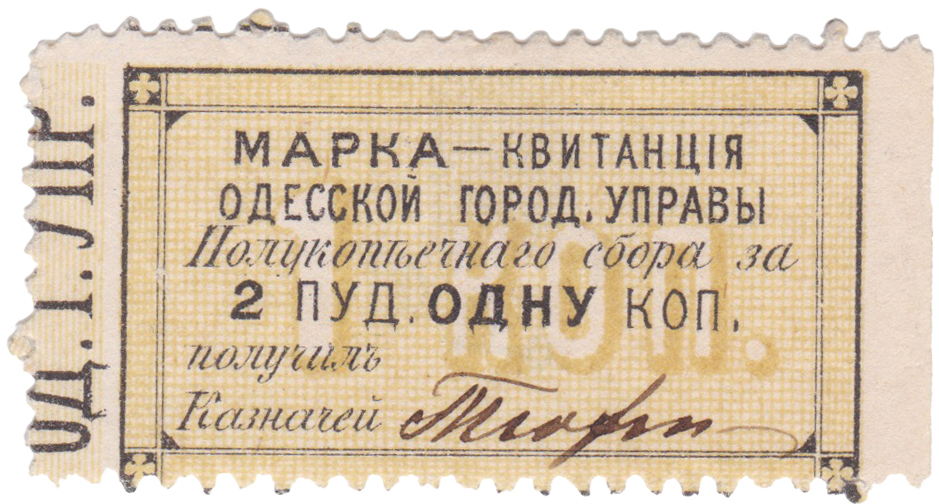
Issue 1.
Half-kopeck levy — a monetary charge in the amount of 1/2 kopeck collected for each pood of cargo imported and exported through the port (except timber); vessels delivering cobblestones for street paving were not subject to the levy.
The half-kopeck levy belonged to the category of port dues and was established by a special government decree. The proceeds from this levy remained at the disposal of the port city and were allocated to urban improvements. Most often, such a levy was introduced for a specific purpose: development of port infrastructure, paving of city streets and roads, обеспечение water supply, etc.
For the first time in the Russian Empire, this levy was introduced in Odessa in 1801 for each pood of goods exported from the Odessa port abroad (the majority of exported cargo consisted of grain). Initially, its proceeds were used to cover city expenses and build a sewer system; later, they were used to improve port facilities and pave the streets along which cargo was transported to the port.
Receipt stamps were printed with stubs and bound into booklets. The left part (the receipt) remained with the fiscal office, and the right part (the stamp) was issued to the payer. Only the right-hand parts have survived to the present day. The design and text of the receipt are unknown.