

Patronage, which originated at the height of the Soviet Republic’s struggle for survival, initially took the form of the proletarian care of the working class for its defender—the Red Army. In order to feed the Red Army, the Bolsheviks assigned entire regiments and divisions to various factories, which were regarded as patrons of their units and were obliged to supply them with food. With the transition to peaceful construction, it grew into the workers’ concern for the countryside, which lagged behind in cultural development, and as the revolutionary conflagration around the world intensified, it expanded to an international scale.
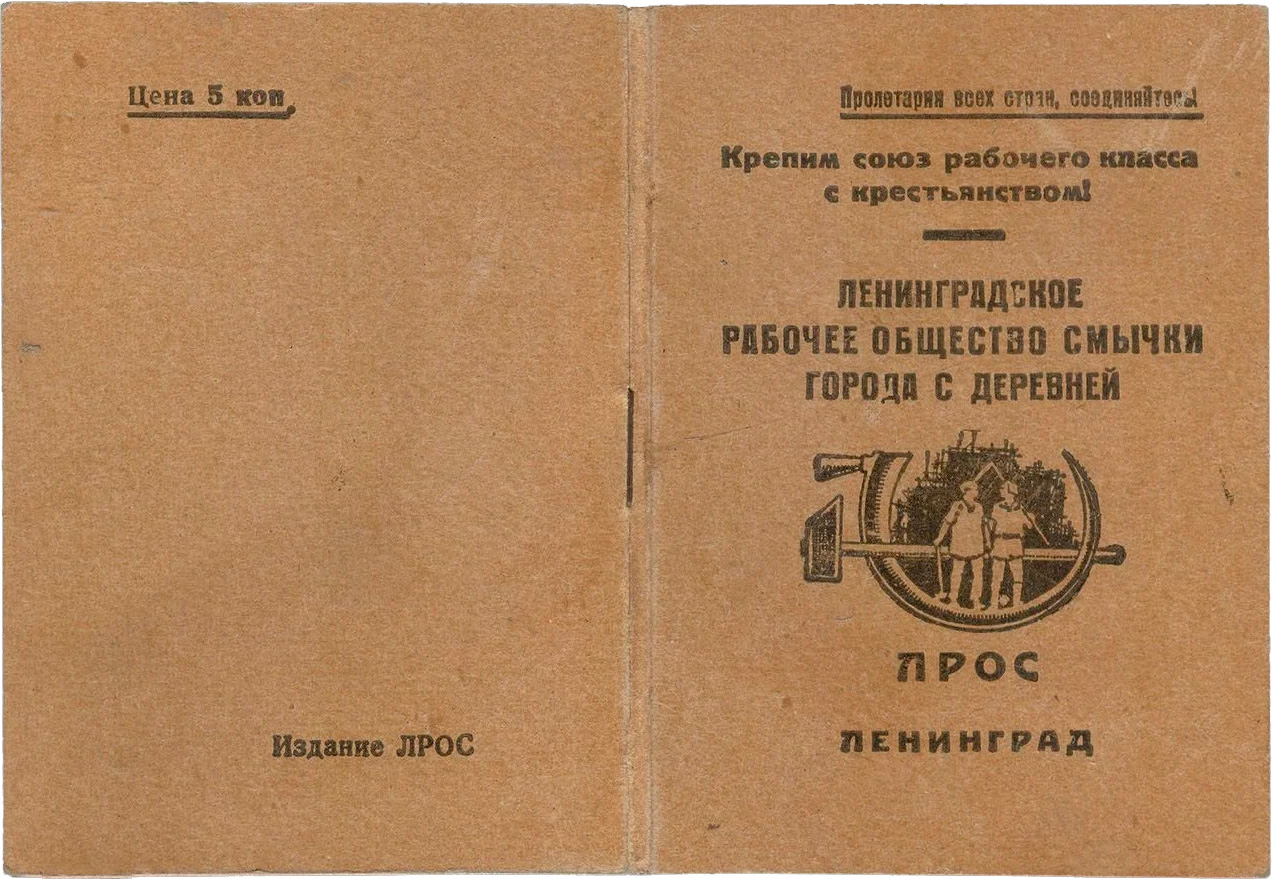
In one of his last articles—“Pages from a Diary”—V. I. Lenin addressed the question of patronage, highly appraised its significance, emphasizing that “we can and must use our power to truly make the urban worker a conduit of communist ideas into the midst of the rural proletariat.”
V. I. Lenin’s article was published in Pravda on January 4, 1923, and only a few days later, on January 10, Pravda reported on the initiative of the workers of the AMO plant, who took patronage over two volosts of the Mozhaysk and Serpukhov uyezds. On January 16, the first patronage society arose in the Moscow-Narva district of Petrograd. From Moscow and Petrograd the movement spread to all major industrial centers of the country.
By the end of the recovery period, the activities of the patronage societies had reached a broad scale. Workers’ collectives that patronized villages and volosts not only carried out extensive organizational-economic and political-educational work, but also acted as initiators in creating cooperatives, artels, machine partnerships, helped electrify the countryside, purchase tractors and other agricultural machines. Over three years (1923–1925) the patrons collected among workers and spent on aid to the countryside no less than 5 million rubles. They repaired, equipped, and opened in the countryside hundreds of schools, reading huts, and peasants’ houses, and at their own expense supported many rural workers (political education workers, agronomists, feldshers, etc.).