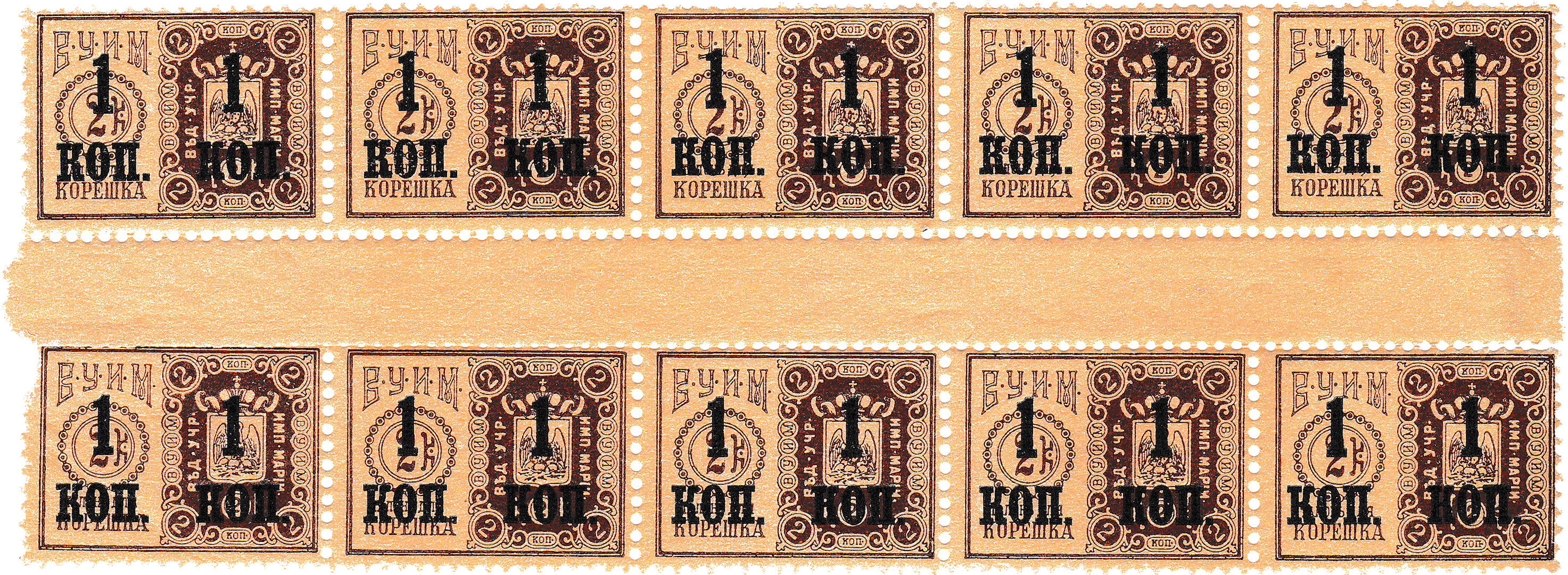
Issue 4.
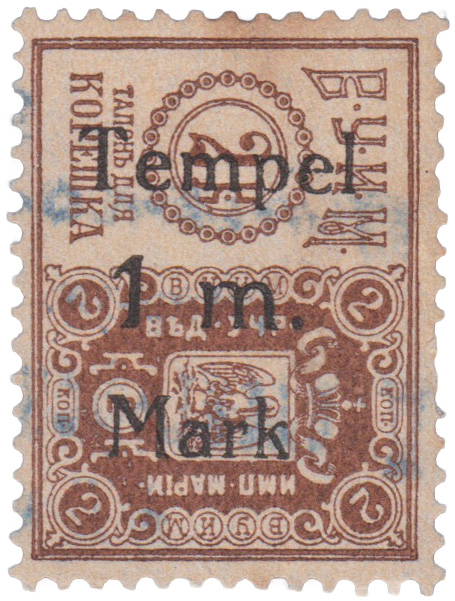
A stamp of the Department of the Institutions of Empress Maria (VUIM). Entertainment stamps were affixed to tickets for the cinema, circus, and theater and were canceled by tearing the ticket.
In § 16, Chapter VI, of the first part of the General Plan of the Foundling Home, Supreme-approved on September 1, 1763, it was stipulated: “from public entertainments, i.e., comedies, operas, balls, and all kinds of paid amusements, to take one fourth of the income for the Foundling Home.”
By decree of July 12, 1783, it was ordered: to take from performances 1/4 of the net income; and by decree of February 22, 1798, it was prescribed: instead of 1/4 of the net income of municipal theaters, to remit to the Foundling Home always 1/10 of the gross income. On December 21, 1797, there was also a Supreme order that governors “take into their special care” the collection from entertainments.
After the death of Empress Maria Feodorovna (October 24, 1828), the collection from entertainments began to decline, and this decline continued until the end of the 1860s. This is explained by the fact that the savings and loan funds of the guardianship councils provided them with enormous sums, while the collection from entertainments brought in, compared with these millions, insignificant means 1). Therefore, all attention was focused on financial institutions. In addition, from 1854 onward, it became almost practically impossible for the guardianship councils to exercise their privilege of collecting from entertainments; specifically, in that year the Directorate of the Imperial Theaters also received the right (abolished in 1882) to a share of the collection from metropolitan entertainments, as a result of which entrepreneurs had to pay a double levy. When demands for payment were made by the guardianship councils, entertainment entrepreneurs pointed to the absolute impossibility of complying, given the burden of the double levy, which threatened them with ruin.
As noted above, from 1828 the collections decreased, and this decline was observed not only in collections from entertainments given by private persons, but also in collections from the Imperial Theaters. Therefore, as early as 1850, the Guardianship Council began correspondence with the theater directorate about providing, instead of 1/10 of the income, an annual fixed sum. As a result, on October 6, 1851, Supreme consent was obtained for the Imperial Theaters to pay annually into the guardianship councils 7,000 rubles for the St. Petersburg theaters and 5,000 rubles for the Moscow theaters.
With the transfer of the savings and loan treasuries to the jurisdiction of the Ministry of Finance, the resources of the guardianship councils diminished to such an extent that it became necessary to find some source to increase these resources. And so, from 1868, various measures were adopted to strengthen the collection from entertainments. These measures consisted mainly in more proper oversight of the receipt of the collection from entertainments given in the capitals, but until recently this collection was carried out by agreement with entertainment entrepreneurs. Independently of this, the guardianship councils paid special attention to developing the question of the collection from entertainments and began to entrust this work to various persons and commissions; finally, on May 5, 1892, the opinion of the State Council on changing the method of collection was Supreme-approved, in the sense that henceforth this levy would be collected not from entertainment entrepreneurs, but from visitors as an addition to the ticket price.
From entertainments, over the first 15 months more than 1,000,000 rubles were raised, and the cost of collecting the levy amounted to only 5% of this sum.
Fiscal stamp of tax on spectacles and entertainment 1 Kopeck 1898.
Department of the Institutions of Empress Maria (VUIM).