
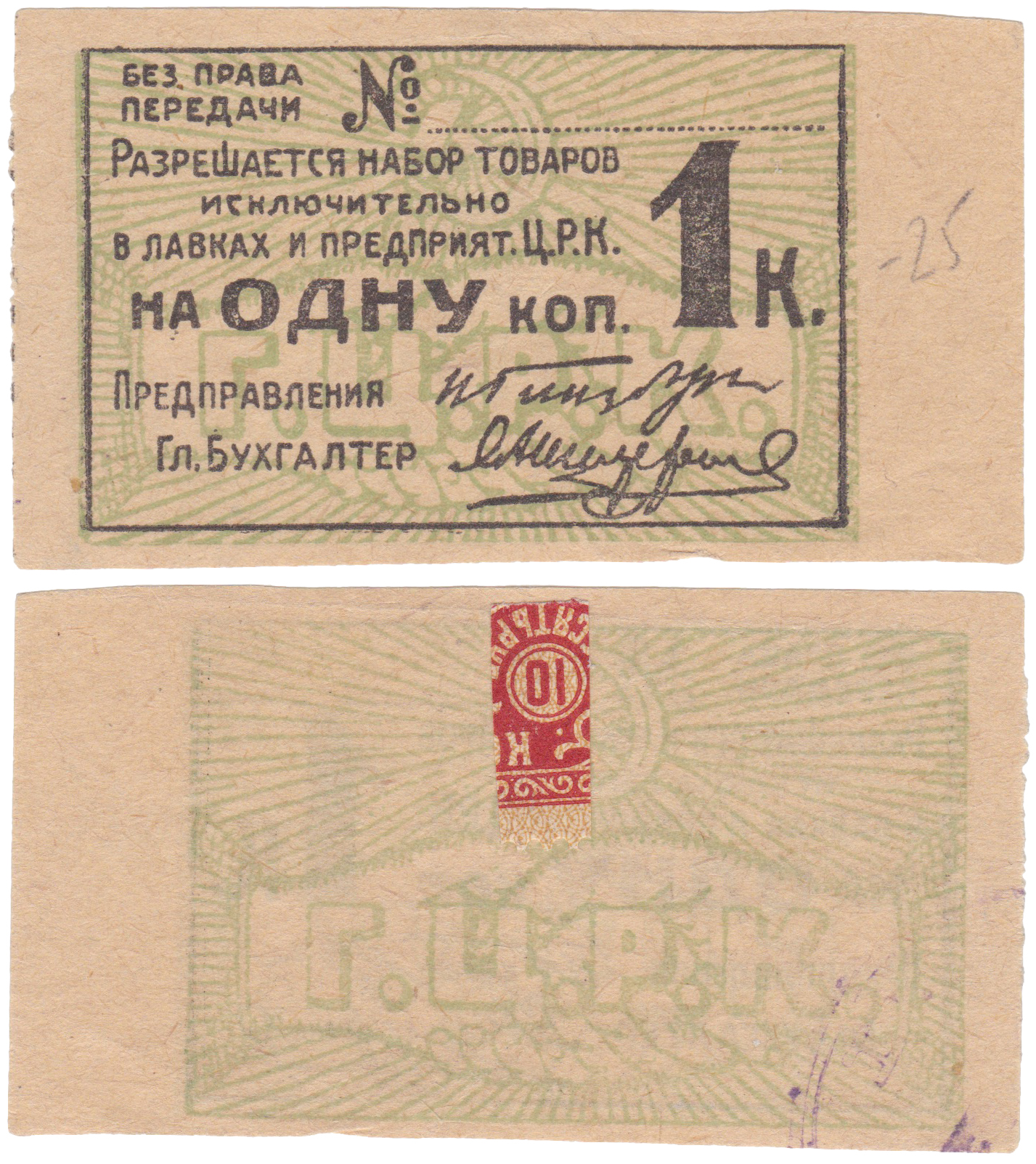
The first cooperative organizations appeared in the Gomel region as early as the end of the 19th century. By the autumn of 1917, cooperatives operated in trade, agriculture, artisanal production, and the credit sector. However, as a result of the policy of "War Communism," by 1921 the cooperative movement had been almost completely nationalized. Only with the transition to the NEP were favorable conditions created for its development. The 1920s can confidently be called the era of flourishing of the national cooperative movement.
In the 1920s, the Gomel Central Workers' Cooperative (CWC) was a very large public organization. Its members were workers of state enterprises and artisanal cooperatives in the city.
Consumer cooperatives, as economic organizations relatively independent from the state, existed in cities until 1930. Then, due to the maximum centralization of all resources under the conditions of forced industrialization and the introduction of the ration-card system, so-called closed workers' cooperatives (CWC) and closed distribution points (CDP) were created at each large enterprise. The former handled the fulfillment of workers' ration cards, while the latter served managers and senior staff.