
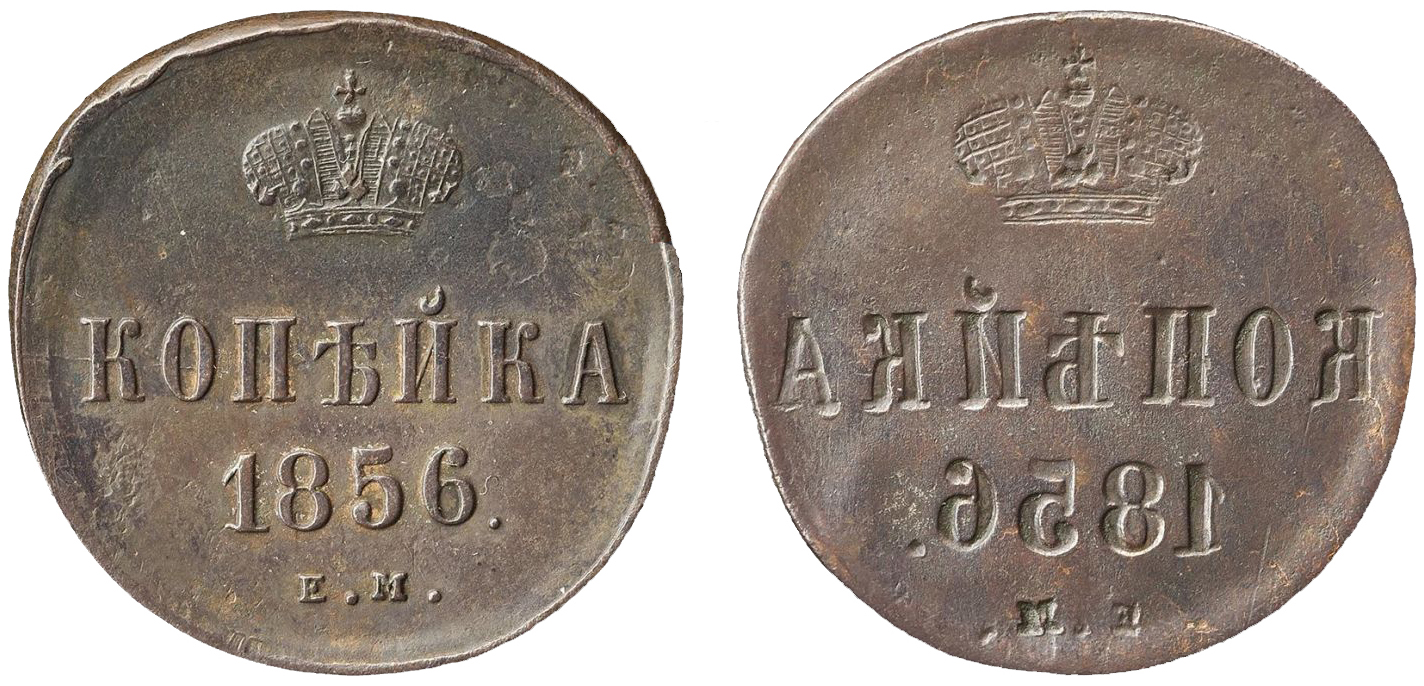
13 February — a congress opened in Paris, attended by representatives of England, France, Austria, Prussia, Sardinia, Turkey, and Russia (Baron Burunov and Aleksey Orlov). Peace was signed on 18 March. Russia renounces the exclusive right of protection over the Danubian Principalities and any interference in the internal affairs of these countries. Free navigation on the Danube is ensured by a commission including representatives of the contracting parties. The entire Danube delta went to Turkey and the Principalities. The Black Sea became neutral, open to merchant ships of all nations and closed to warships. Turkey and Russia may keep there only 10 light vessels each for coastal protection. Of the two demands of Russian diplomacy (that no indemnities be imposed and that our territory not be diminished), the first was achieved. Russia was deprived of the right to maintain a military fleet in the Black Sea, but suffered no territorial losses, except for a small area at the mouth of the Danube.
30 March — Alexander II’s speech to the Moscow leaders of the nobility:
"Rumors are spreading that I want to grant freedom to the peasants; this is untrue, and you may tell this to everyone far and wide; but hostile feeling between the peasants and their landlords, unfortunately, exists, and because of this there have already been several cases of disobedience to landlords. I am convinced that sooner or later we must come to this. I think that you are of the same opinion as I am; therefore it is much better that this should happen from above rather than from below."
20 August — the Bolshoi Theatre, restored after a fire, was opened.
22 May — the Tretyakov Gallery was founded. The collector, merchant, and textile manufacturer Pavel Mikhailovich Tretyakov acquired the paintings by Shilder, "The Temptation," and by Khudyakov, "Clash with Finnish Smugglers." Having set himself, while still young, the goal of creating a museum of the Russian national school of painting, Tretyakov devoted more than 40 years of his life to it.
He maintained friendly relations with the Peredvizhniki (the Wanderers), supported them in every way, including financially, thanks to which the collection received the finest works of the Peredvizhniki. In 1881 the gallery was opened for public viewing. And in 1892 Tretyakov donated his collection to Moscow.
At that time the collection included 1,287 paintings, 518 drawings, and 9 sculptures. Later the collection also included paintings that had belonged to Tretyakov’s brother, Sergey Mikhailovich.
Before the October Revolution, the gallery was called the Moscow City Art Gallery of Pavel and Sergey Tretyakov.
In 1918 a decree on the nationalization of the gallery was issued, and it received the name the State Tretyakov Gallery.
In the early 20th century the Tretyakov Gallery became one of the largest art museums in Russia and Europe.
A number of small Moscow museums were incorporated into it: the Tsvetkov Gallery, the Museum of Icon Painting and Painting named after I. S. Ostroukhov, and the picture gallery of the Rumyantsev Museum. It houses a unique collection of Russian icons, represented by works by Andrei Rublev, Theophanes the Greek, and Dionysius. Nineteenth-century Russian painting is represented by the finest works of Kiprensky, Tropinin, Vasnetsov, and Bryullov.
The gallery’s collection includes the best works of the Peredvizhniki: Kramskoy, Perov, Makovsky, and Ge. A highlight of the collection is the halls devoted to Repin, Surikov, Levitan, Serov, and Shishkin.
At present, the Tretyakov Gallery’s collection totals more than 100,000 works of art. All this diversity is housed in the architectural complex in Lavrushinsky Lane and in the building on Krymsky Val. By a presidential decree of the Russian Federation in 1995, the State Tretyakov Gallery was classified among the most valuable objects of Russian culture.
4 April — the adventures began of the rarest stamp ever printed: the stamp of the colony of British Guiana, today the Co-operative Republic of Guyana. This rarity was crudely produced at a print shop in a single copy, made possible by the delay of a ship from London that was bringing postal supplies for the colonies. The octagonal "British Pink Guiana," printed in black ink on red paper, has no perforation.
At the center of the stamp is an image of a three-masted schooner. Above and below the schooner is the colony’s motto in Latin, Damus Petimus Que Vicissim ("We give and expect to receive in return").
In 1873 a 12-year-old schoolboy found an envelope with this stamp in his father’s home and steamed it off. However, the boy was not particularly interested in the stamp and sold it to a neighboring philatelist for 6 shillings (about a dollar and a half at the time). Five years later the stamp ended up in Europe, where, after a series of dramatic resales, it was bought in 1980 for $935,000 by John du Pont, a member of one of America’s richest industrial clans.
In 1997 du Pont was sentenced to 30 years in prison for the murder of Olympic freestyle wrestling champion Dave Schultz. Apparently, this unique artifact was kept in the basement of some bank while its owner served his term, until his death in prison in 2010. And in March 2014 it became known that this legendary and ultra-rare postage stamp would be offered at auction by Sotheby's in New York, at a sale held as part of the dispersal of the estate of the late multimillionaire John du Pont. "This is the most unique stamp in the world. For any collector it represents the highest summit of philately," Sotheby's representative David Redden said at the time.
As a result, at the auction held on 18 June 2014, the 1-cent stamp was sold for $9.5 million and thereby became the most expensive postage stamp in the world. Designer and shoe company owner Stuart Weitzman bought the stamp by phone буквально in the first minutes after the auction began.
Leo Tolstoy met Aleksandra Alekseyevna Obolenskaya in St. Petersburg and felt madly in love. Even in his youth he had been taken with her, and now he was tormented by the thought that this happiness could have been his. On 28 May Tolstoy left for Yasnaya Polyana with the firm intention of marrying. There he renewed his acquaintance with the Arsenyev family and, on the advice of his friend Dmitry Alekseyevich Dyakov, began considering marriage to Valeriya Vladimirovna. For three and a half months he studied her, without ceasing to indulge in sensuality; then, wishing to sort things out, he went to St. Petersburg and wrote her moralizing letters from there. This year Tolstoy went abroad for the first time; the monument of this journey was a series of stories, including the sketch "Lucerne," in which the first notes of denunciation of modern culture can already be heard. Returning to the countryside, Tolstoy would experience several enthusiasms (music, forestry, etc.) and would become especially deeply engaged in educational work, establishing a model school in his village.
In the Neander Valley (Germany), parts of the skeleton of a prehistoric human (a Neanderthal) were found.
6 May — Sigmund Freud, the founder of psychoanalysis, was born.
10 July — Nikola Tesla, inventor, was born.
11 December — Georgy Valentinovich Plekhanov was born, the first propagandist of Marxism in Russia.