
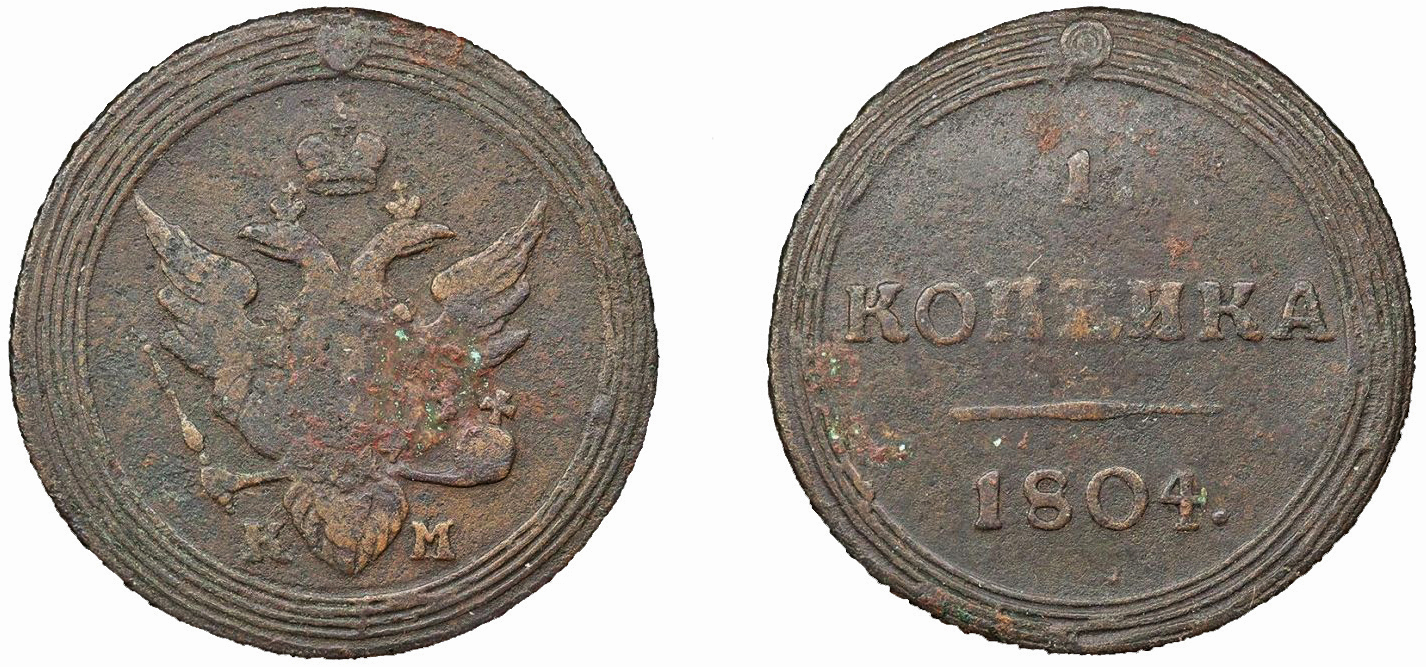
29 October — construction of the first Mytishchi water supply system in Moscow was completed.
21 July — the first censorship statute in the Russian Empire was adopted.
This statute regulated all publishing and printing activity in the country, from submitting a manuscript to a publisher to the release of the finished print run. Prior censorship was also introduced, without which a printed publication could not appear. It was especially forbidden to write against God, the authorities, and citizens’ personal honor: “If a manuscript is sent to censorship,” one of the statute’s paragraphs noted, “filled with thoughts and expressions that clearly reject the existence of God, that arm [people] against the faith and the laws of the Fatherland, that insult the supreme power, or that are entirely contrary to the spirit of the social order and tranquility, then the committee immediately reports such a manuscript to the government for the identification of the author and to proceed with him according to the law.”
28 April — the first Pedagogical Institute in Russia was established. Count Pyotr Zavadovsky’s proposal was supported by Alexander I. The main task of the new higher educational institution was to train highly qualified teachers for gymnasiums. Interestingly, in addition to the main sciences, rural household management was studied there.
Education at the institute lasted three years. During the first two, core subjects were studied “so that during this time they might in all of them acquire such sufficient knowledge that, in case of need, they would be able to replace any teacher in provincial gymnasiums.”
In summer — anti-Russian uprisings in Kabarda and Ossetia. Russian possessions in the Caucasus were extended to Georgia, Imeretia, Guria, and the Ganja Khanate.
The Russo-Persian War began. It was started by Iran after an ultimatum demanding the withdrawal of Russian troops from Transcaucasia was rejected, and it would last until 1813. As a result, Russian troops would occupy the territory of Northern Azerbaijan.
21 March — by order of Emperor Napoleon I, a French prince of the blood, the Duke of Enghien (Bourbon), was executed by firing squad in the moat of the Château de Vincennes.
Louis Antoine Henri de Bourbon-Condé, Prince of the Blood, Peer of France, Duke of Enghien, was the only son of Louis VI, Prince of Condé, and Louise Marie Thérèse Bathilde of Orléans. Thus Louis Antoine was a Bourbon both on his father’s and his mother’s side. With the start of the French Revolution, a few days after the fall of the Bastille, he emigrated from France together with his father and grandfather.
In March — Napoleon Bonaparte decided that the Duke of Enghien was connected to a royalist plot whose aim was his assassination. Napoleon ordered the duke to be kidnapped according to a plan drawn up by Talleyrand.
At that time the Duke of Enghien lived in the small town of Ettenheim, spending his days in idleness and amorous adventures. Talleyrand’s spies took advantage of this weakness: they seized a young woman, the duke’s beloved, and took her to the border town of Belfort. The duke rushed to her aid, hoping to bribe the guards and free the lady of his heart.
As soon as the Duke of Enghien crossed the French border, he was seized and on 15 March 1804 brought to Paris. After a brief trial by a military tribunal, on the night of 21 March he was shot by gendarmes in the Vincennes woods. The executioners made him hold a lantern in his hands so it would be easier to aim. After that, the duke’s beloved was released. She did not even suspect what role she had played in so terrible an affair.
2 December — in the famous Paris Cathedral of Notre-Dame, a splendid coronation ceremony of Emperor of the French Napoleon I Bonaparte took place.
This year Beethoven dedicated his Third Symphony to Napoleon Bonaparte. When the idol failed to justify the composer’s high confidence, the symphony would receive the name “Eroica.”