
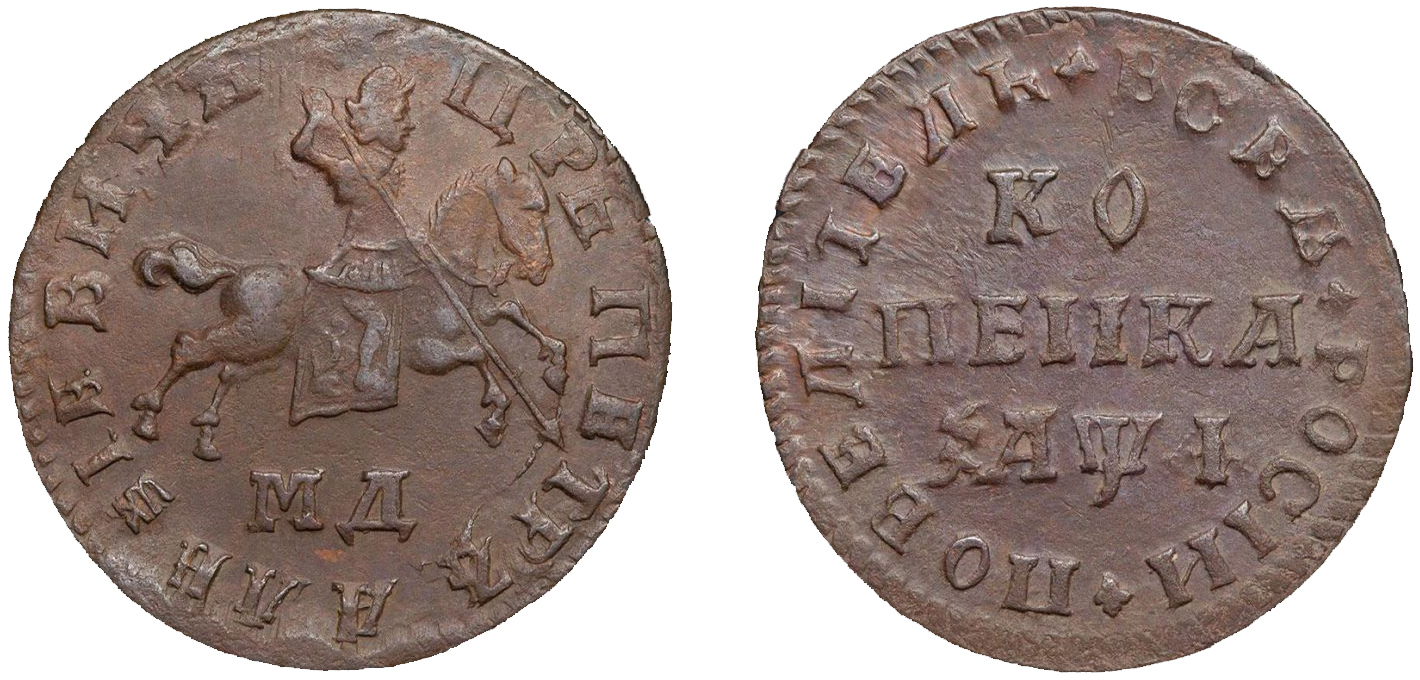
January 29 — In the Russian Empire, Emperor Peter I issues a decree officially introducing the Russian civil alphabet. The Church continues to use the Old Church Slavonic alphabet.
April 10 — In England, the "Statute of Queen Anne" comes into force—the first copyright law in history. Under this document, an author could sell the right to use their manuscript for 14 years. After that term expired, the right reverted to the author, who could sell it again for the same period. The law led to rapid growth in book publishing. Its influence on periodicals was even more beneficial. The law established a number of fundamental principles for protecting exclusive rights to works, which were later adopted by the legislation of other bourgeois countries. In France, a corresponding law was adopted much later—only in 1777. Later still, in 1828, copyright came to Russia. There, the transformation of the book into a commodity was hindered by the low literacy of the population.
March 10 — The first printed geography textbook in Russian is published: "Geography, or a Brief Description of the World." Presumably, it was translated from Dutch. The book described the "circles of the Earth"—the equator, the poles, the tropics, the Arctic and the Antarctic. It also explained degrees of latitude and longitude, listed the political systems and natural riches of Europe’s subsoil and lands, and described certain countries and peoples of Asia, Africa, America, and Australia.
June 24 — By imperial decree, the Sar'skaya Myza estate, together with 43 attached villages and lands, is gifted to Marta Skavronskaya (who in 1712 became his wife under the name Catherine Alexeyevna). This day is the official founding date of Tsarskoye Selo. For more than two centuries, Tsarskoye Selo served as a residence of Russian monarchs and as one of the most attractive suburbs of Saint Petersburg.