
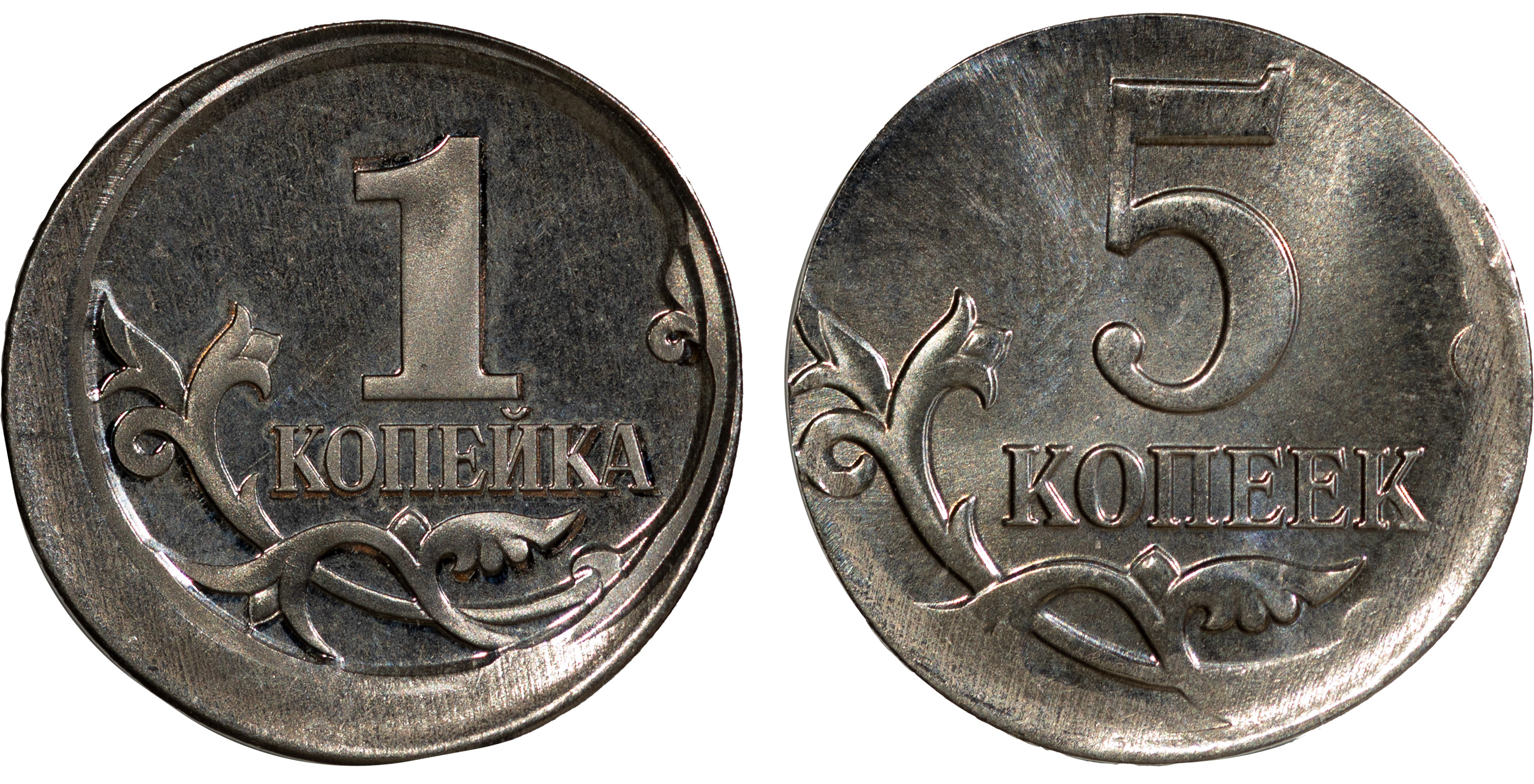
A minting error caused by incorrect pairing of dies. Such coins are called: mule, mismatched die, hybrid.
Most such coins were mistakenly struck in the USSR; the most common are 3- and 20-kopeck coins whose obverse and reverse were swapped due to their similar diameters: the obverse was struck with a 20-kopeck die, and the reverse with a 3-kopeck die, and vice versa. Mismatches of 2- and 10-kopeck coins are also known, although their diameters differ much more. USSR and Russian Federation commemorative coins struck with an incorrect date are also known; in essence these are mules, since it is obvious that the obverse die (which bears the date) was mixed up; such coins are extremely rare.
Because most mules are collectible and valuable, attempts to counterfeit them for profit are fairly common. One method is to grind down one side of two different coins and then glue them together, producing a "fantasy" coin passed off as a mule. A telltale sign of this forgery is a seam on the coin’s edge, although recently fraudsters have begun using a new method: drilling out one side of a coin and inserting into the cavity a suitably turned blank taken from another coin. This counterfeit is much harder to detect: a faint seam is located near the coin’s rim.