
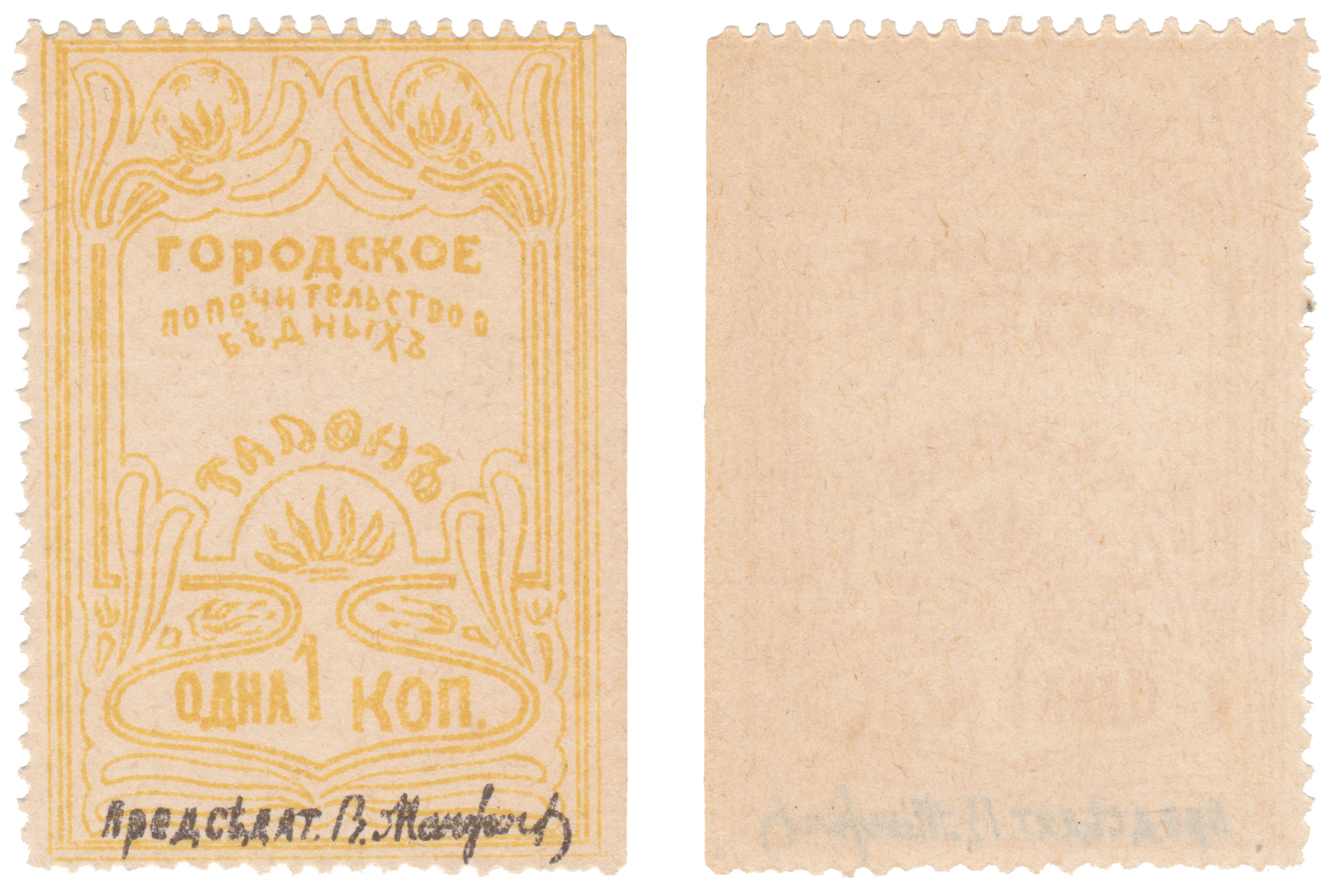
Trusteeship for the poor was established in the Russian Empire on January 29, 1892.
The municipal trusteeship operated using funds from the city duma, the zemstvo, and the “collection cup” fundraising, but the main source of income consisted of large private donations. The trusteeship’s resources were directed to the upkeep of almshouses, allowances for poor families, meals in public schools, Christmas gifts, and more.
For work improving the city—painting a fence or sweeping the streets—for one hour of work they were given one token. Five tokens entitled a person to a night’s lodging in the municipal shelter or a meal.