
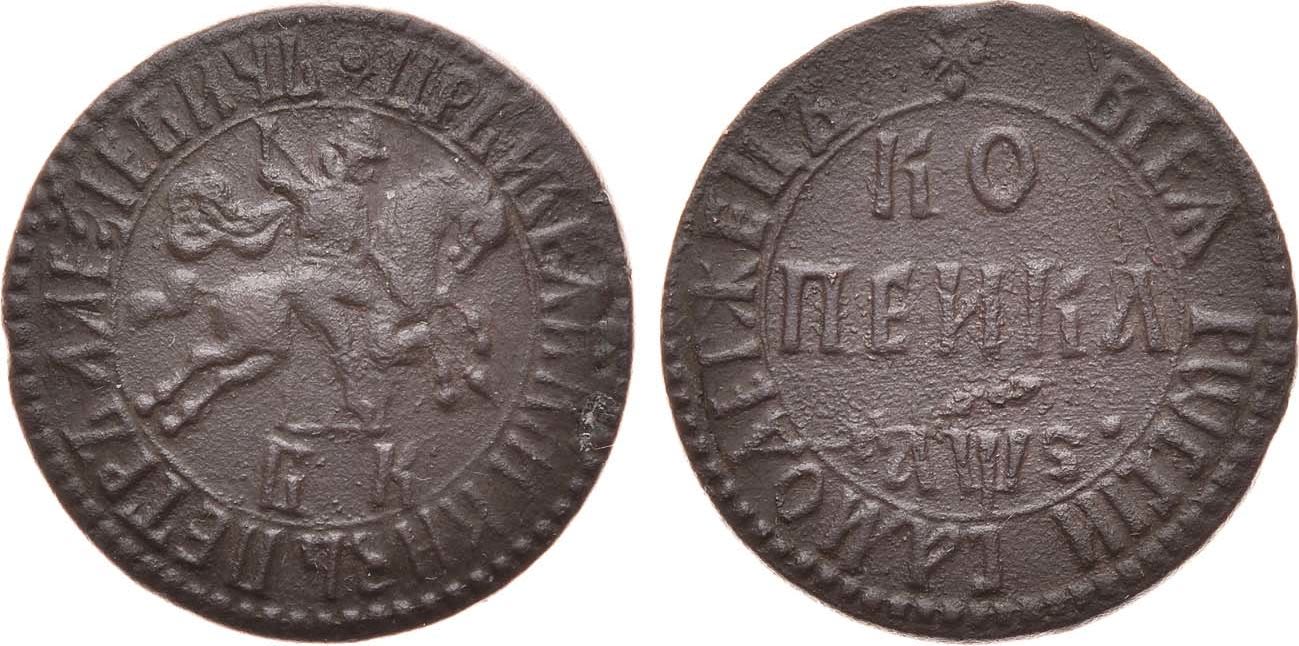
At the beginning of the 18th century, Peter I decided to install Dutch clocks with a 12-hour dial on the Spasskaya Tower. A foreign clockmaker, Yakim Gornel (Yekim Gorlov, or Gornov), was invited to install them. The new clock with bell music (in 33 bells) chimed for the first time on December 9 at 9 a.m.
October 29 — the Battle of Kalisz. It was the largest Russian victory over the Swedes, the best-armed military force of that period, in the first six years of the Great Northern War. After the battle, Menshikov, in a letter to the tsar, admired his dragoons’ ability to fight in regular formation: “Not by way of praise do I report: such a battle as never before occurred took place, and it was a joy to watch how on both sides they fought in proper order, and it was truly wondrous to see how the whole field was strewn with dead bodies.”
As a result of the battle, the allies lost no more than a thousand men killed and wounded, whereas the Swedes and Poniatowski’s Poles lost ten times as many.
The victory at Kalisz gave the allies all of Poland, but Augustus II, having already signed a separate peace with Charles XII at Altranstädt, sent Menshikov to winter quarters in Galicia, released the prisoners, and went to meet King Charles XII in Saxony.
February 13 — after their victory over the Saxon-Russian army near the Polish town of Fraustadt, the Swedes killed all Russian soldiers who had fallen into their captivity.