
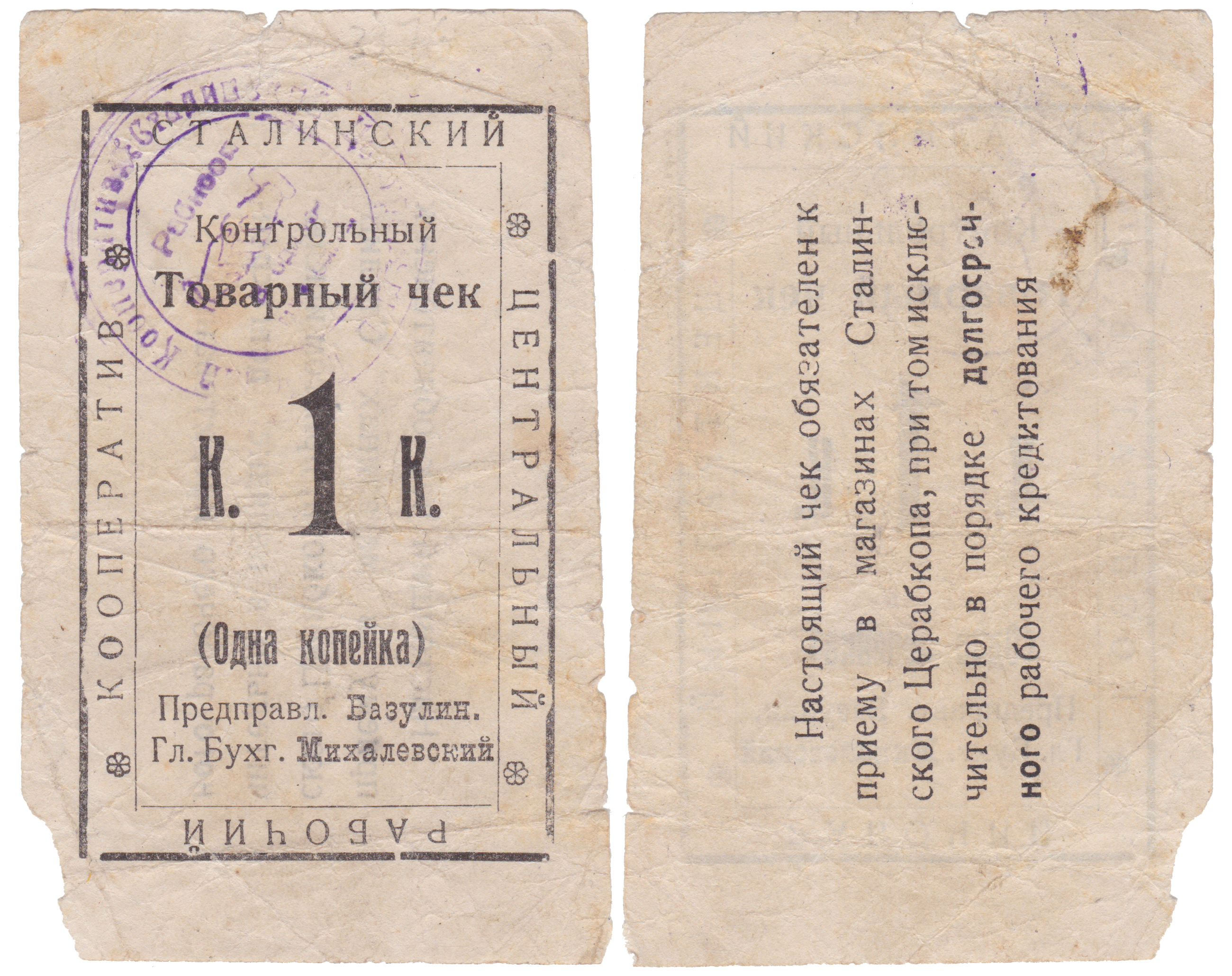
3rd issue.
Since 1924, the Yuzovsky Cooperative began to be called the Stalin Central Workers’ Cooperative (Stalin CRC). It was the largest cooperative association of employees of the “Yugostal” trust, which—besides the Stalin Metallurgical Plant with its mines—included the Makeevka and Yenakiyevo metallurgical plants and mines.
As of January 1, 1924, the Stalin CRC united 7,541 workers in its ranks. In total, 21,000 people worked at the plant and the mines.
The board of the Stalin CRC was located on the site of house No. 49 on Artema Street. The chairman of the board of the SCRC was Bazulin; the accountant was Mikhalevsky.
In the summer of 1924, delays in wage payments at the plant and the mines forced workers to take most of their pay in the scrip of the Stalin CRC.
A worker’s earnings were enough for food, but not for purchasing basic necessities. To solve the problem, two lending methods were developed.
The first was small-shop credit, i.e., from one payday to the next. It was opened for a worker at his own request and approved by the factory committee and the plant administration in an amount of up to 50% of wages. Under this credit, it was possible to purchase food and basic necessities, except for wine and luxury items.
The second was long-term credit. It was opened for a period of two to four months. This credit provided for the purchase of clothing and footwear, and textiles. Credit for outerwear was opened for a period of six months in an amount of up to 1.5 months’ salary.