
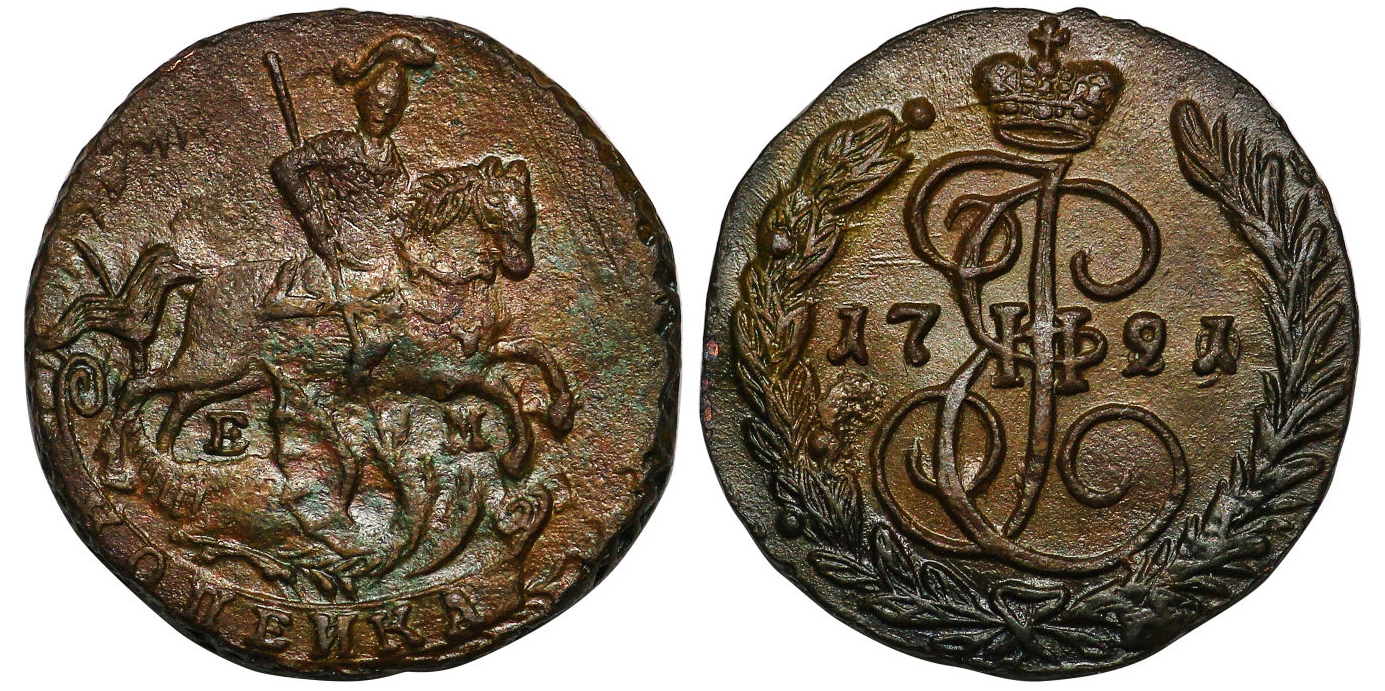
Peace was concluded at Iași. Turkey confirmed the Treaty of Küçük Kaynarca and permanently ceded Crimea, Taman, and the Kuban Tatars. Anapa was returned to the Turks. The Dniester became the border between Russia and Turkey. Turkey undertook to pay an indemnity of 12 million piastres (7 million rubles), but Count Bezborodko, after this sum had been entered into the treaty, refused to accept it on the empress’s behalf. Turkey’s finances had already fallen into dire disorder after the second war with Russia.
By decree of Catherine the Great, the so-called “Pale of Settlement” was established, defining the territories in which Jewish communities were permitted to reside.
14 February — the around-the-world expedition of the French navigator La Pérouse was officially declared missing.
30 September — in Vienna, at the Theater auf der Wieden, the premiere of the opera The Magic Flute took place—the last work of the Austrian composer Wolfgang Amadeus Mozart. The libretto was written by the composer’s longtime friend and impresario Emanuel Schikaneder. The opera was a huge success with audiences. Goethe liked the work so much that he attempted to write a continuation of the libretto, though without success. The plot, fashioned in the spirit of the popular folk fairy spectacles of the time, full of exotic wonders, was drawn by Schikaneder from C. Wieland’s tale Lulu: the daughter of the Queen of the Night is abducted by the magician Sarastro. The Queen sends Prince Tamino to save the girl and gives him a magical attribute—a flute—and helpers. The prince switches to the magician’s side, undergoes trials, and attains Love. The Magic Flute was Mozart’s last opera and, like the youngest child in a family, his most beloved. Legend has it that on his deathbed he wished to hear it and began humming Papageno’s little song.
20 November — Wolfgang Amadeus Mozart went to bed in his Vienna apartment with a fever.
5 December — the composer died in his home in Vienna, Austria, at the age of 35.
14 August — an uprising of enslaved Black people began, triggered by the French execution of the vodou priest Boukman, who had foretold an imminent war of the enslaved against their masters. By the end of September 1791, the rebels had killed more than 1,000 white people, destroyed 1,200 coffee plantations, and burned 200 ingenios—sugarcane plantations together with the technical equipment for producing raw sugar. In response, white planters executed 10,000 enslaved people. As a result, Haiti became the first independent state in Latin America and the second, after the United States, in the New World.
The French Academy of Sciences proposed the meter as a unit for measuring length, tied to an unchanging natural reference: one ten-millionth of the distance from the North Pole to the equator along the Paris meridian.
The first U.S. president, George Washington, chose a site on the Potomac River. 9 September — the capital, which had only just begun to be laid out for construction, was named in Washington’s honor.
British clergyman and mineralogist William Gregor isolated from black sand found in a valley in the county of Cornwall a mineral and concluded that it consisted of iron oxide and a metal not yet known to science. In 1791 Gregor published the results of his research in the Physical Journal; he discovered titanium.