The First World War, which in Russia was called the Second Patriotic War, proved to be a severe trial for Bessarabia. This border province not only became a transit point for the wounded and refugees but also a place where hundreds of thousands of peasant families lost their breadwinners — husbands and fathers called to the front by general mobilization. The state system of benefits, established by the law of 1912, functioned with serious disruptions: inflation rapidly devalued payments, and many informal unions did not entitle families to government rations at all. Under these circumstances, the main burden of caring for "soldiers' wives" and their children fell upon society, and Kishinev became one of the centers of this mercy.
The central role in organizing aid was played by Archbishop Platon of Kishinev and Khotyn, who had been appointed to his see literally on the eve of the war — in June 1914. As early as July 18, immediately after the declaration of martial law, the Bessarabian Spiritual Committee was created on his initiative, becoming the main coordinator of charity within the diocese. The committee did not merely collect funds: by the end of 1915, it had about 200,000 rubles at its disposal. With this money, hospitals were opened in Kishinev, a Labor Brotherhood was organized to sew clothing for soldiers, and — most importantly — the creation of shelters for the children of warriors began.
The largest social project of that time was the establishment of the **Bessarabian Orphanage** (known in historiography as the "Platonovsky Orphanage"). Archbishop Platon, renowned for his "exceptional love for children," resolutely rejected the idea of distributing orphans among monasteries, insisting instead on creating a single specialized institution in Kishinev. The solemn opening of the orphanage took place on December 20, 1915, in the Seraphim House — the diocesan center of the city. It is important to note that this cause was not solely ecclesiastical: all social estates, from nobles to peasants, participated in it. Soldiers' families themselves, as well as landowners and rural communities, donated flour, wheat, and money, transforming a church initiative into a truly national cause.
Thus, during the First World War, a unique system of public charity emerged in Kishinev, in which the clergy acted not merely as preachers but as the principal organizers of aid. The activities of Archbishop Platon and the orphanage he founded became an example of how, amid the collapse of state support mechanisms, "good works" and organized mercy became the mainstay for those whose fathers were fighting on the fronts of the "Great War."
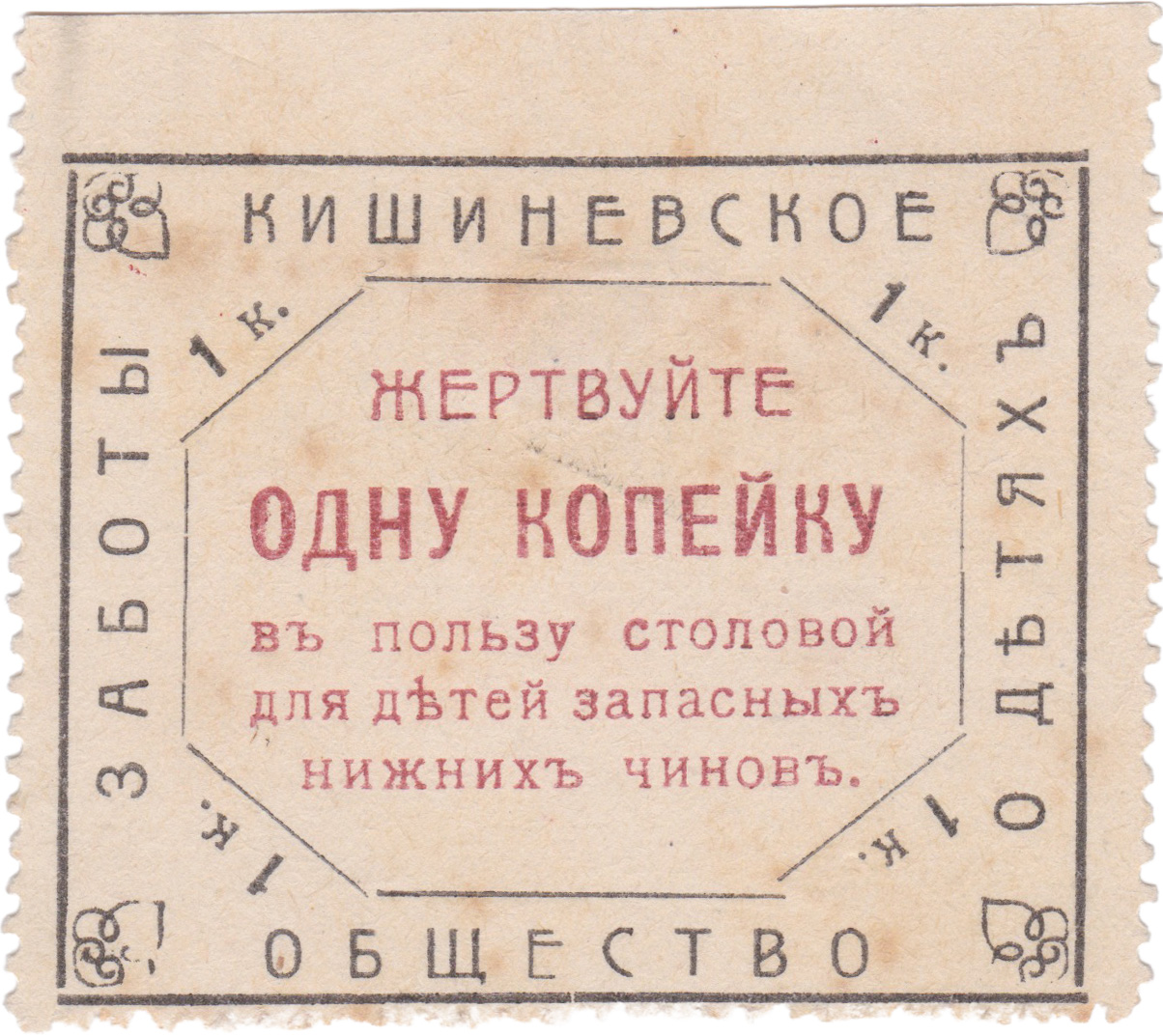
For the benefit of a mess for the children of reserve junior ranks 1 Kopek.
Kishinev Society for the Care of Children.