
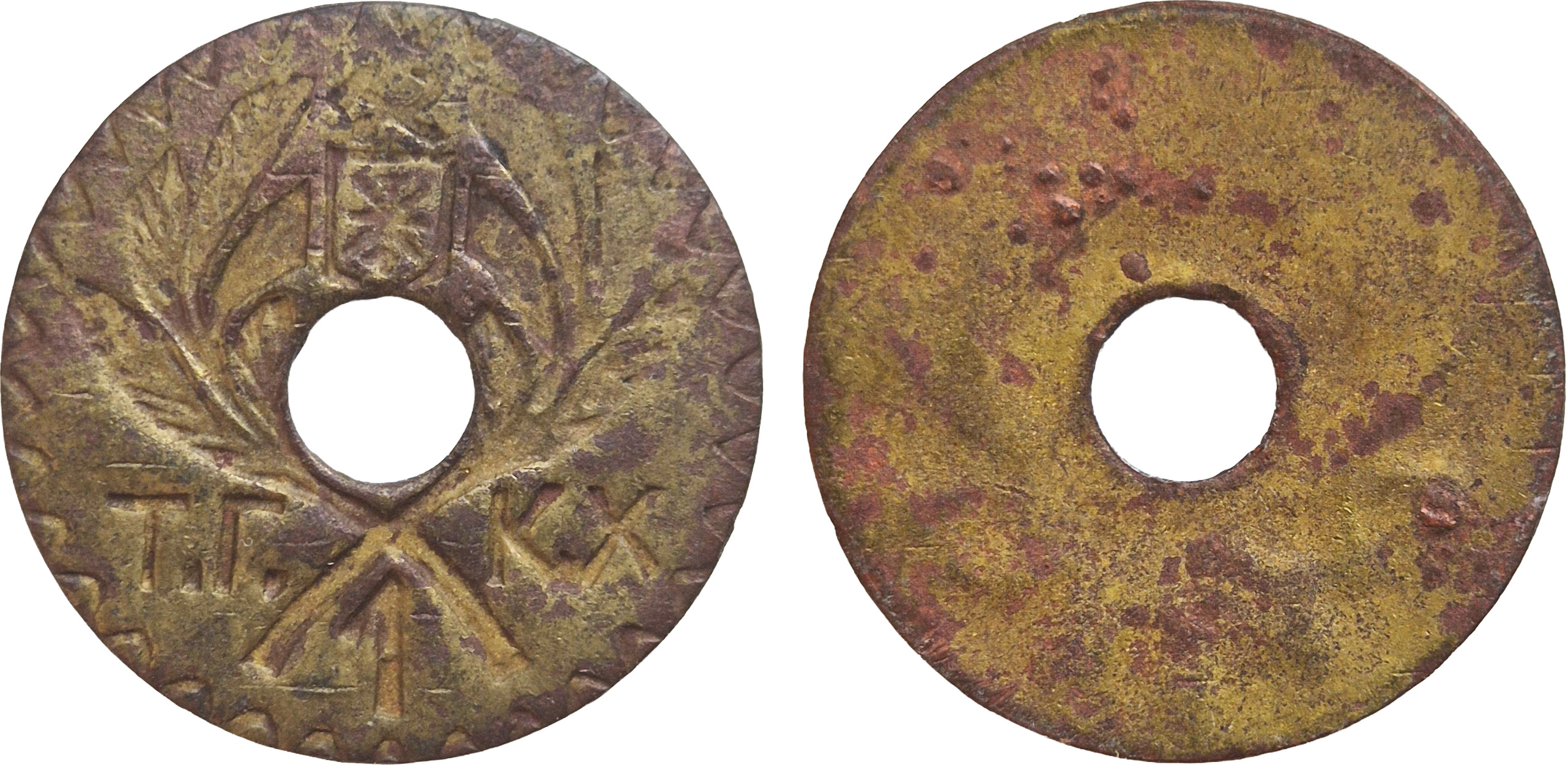
Possibly the denomination is 1 bucket.
The reconstruction and use of water-supply systems in Russia in the late 19th and early 20th centuries led to the appearance of special tokens granting the right to receive water from water-distribution booths. The tokens were made of paper and metal. Historical records tell us that water mains, and therefore tokens, existed in at least 14 cities. Some tokens are known and kept in municipal and private collections. Most of them are made of metals (brass, zinc, aluminum, tinplate, galvanized iron).
The Tula water supply was built on the initiative of the writer and physician V. Veresaev (Smidovich) and the public health doctor P. Belousov in 1894. In Tula, 17 water-drawing booths were constructed; water from them was dispensed using special metal tokens featuring, in relief, the city’s crowned coat of arms in an ornamental design and a denomination “in buckets,” as well as abbreviations: TV (Tula Water Supply), TGV (Tula City Water Supply). Each booth had a meter for the amount of water dispensed; on the outside there was a long pipe. Water was issued from three sides of the booths: into barrels for water carriers, into troughs for watering horses, and into buckets and canisters for townspeople.
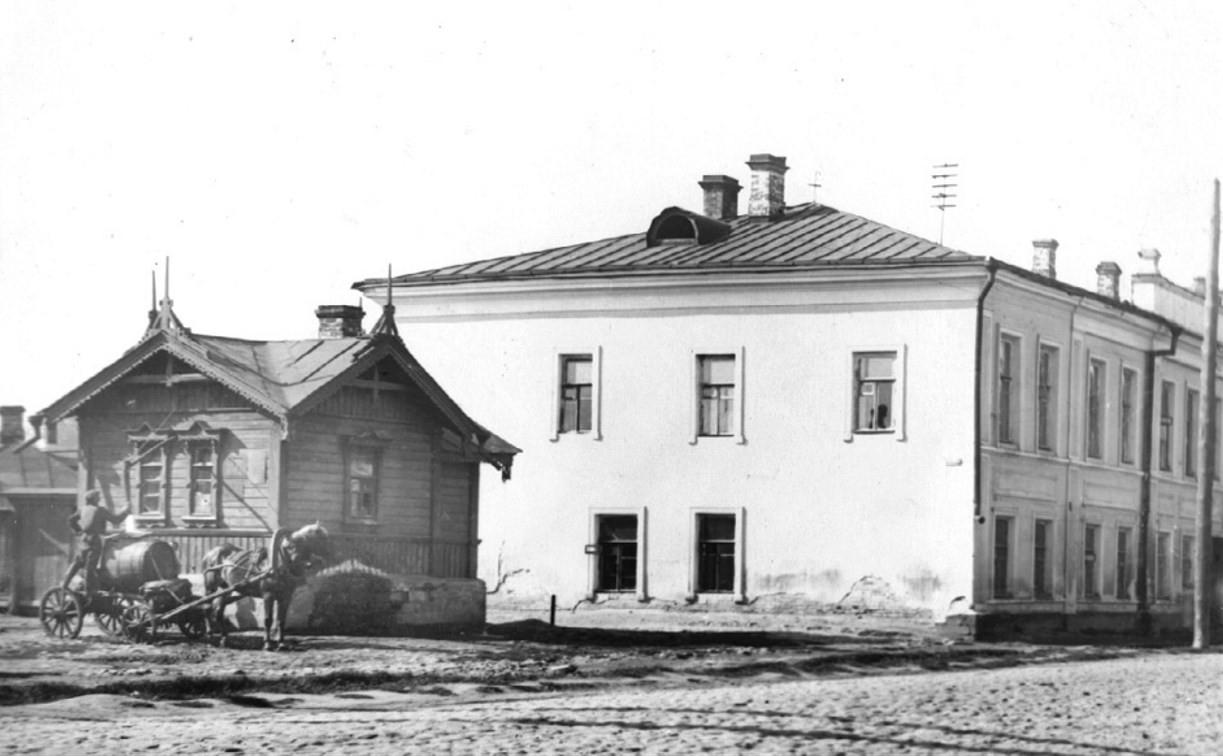
In Soviet times, the tokens bore the letters TGKKh (Tula City Municipal Services). In Tula, the tokens were called “marks,” apparently by analogy with the service tags used by workers at the arms factory and other Tula plants. The tokens were purchased at the City Administration, located in a house on Shcheglovskaya Street (now Kirova Street), where each round token sold was stamped with an oval punch mark showing the city coat of arms with a crown above it. Shaped tokens and Soviet-era tokens were not stamped.
The water-supply booths dispensed water in Soviet times as well, using municipal-services tokens different from the pre-revolutionary ones, until 1933–1935. In Soviet times, tokens were purchased at the cashier’s office of the Water Supply Administration.
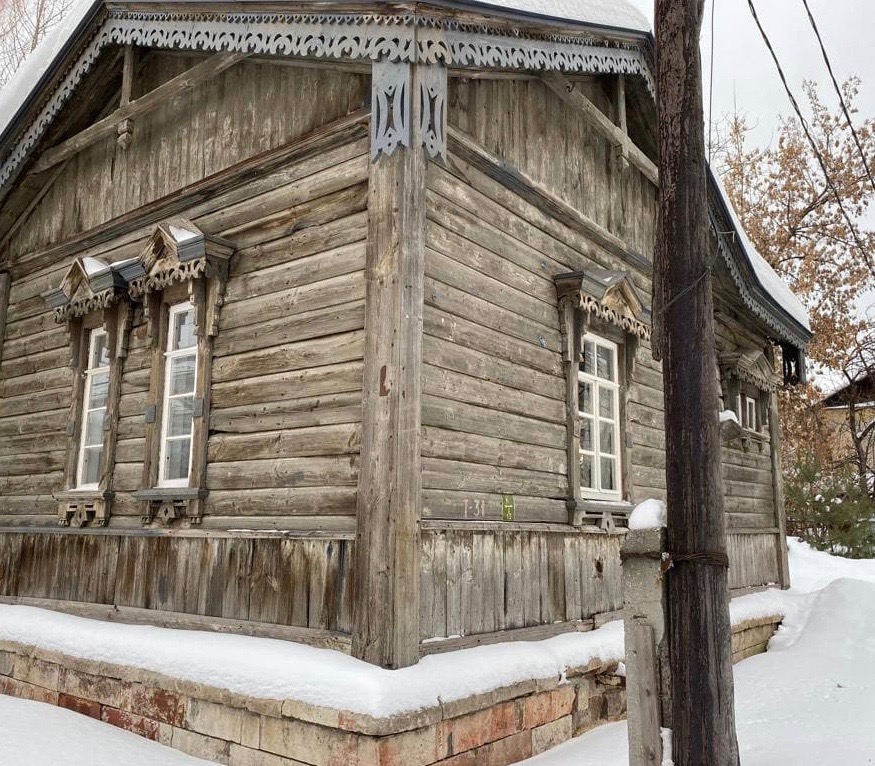
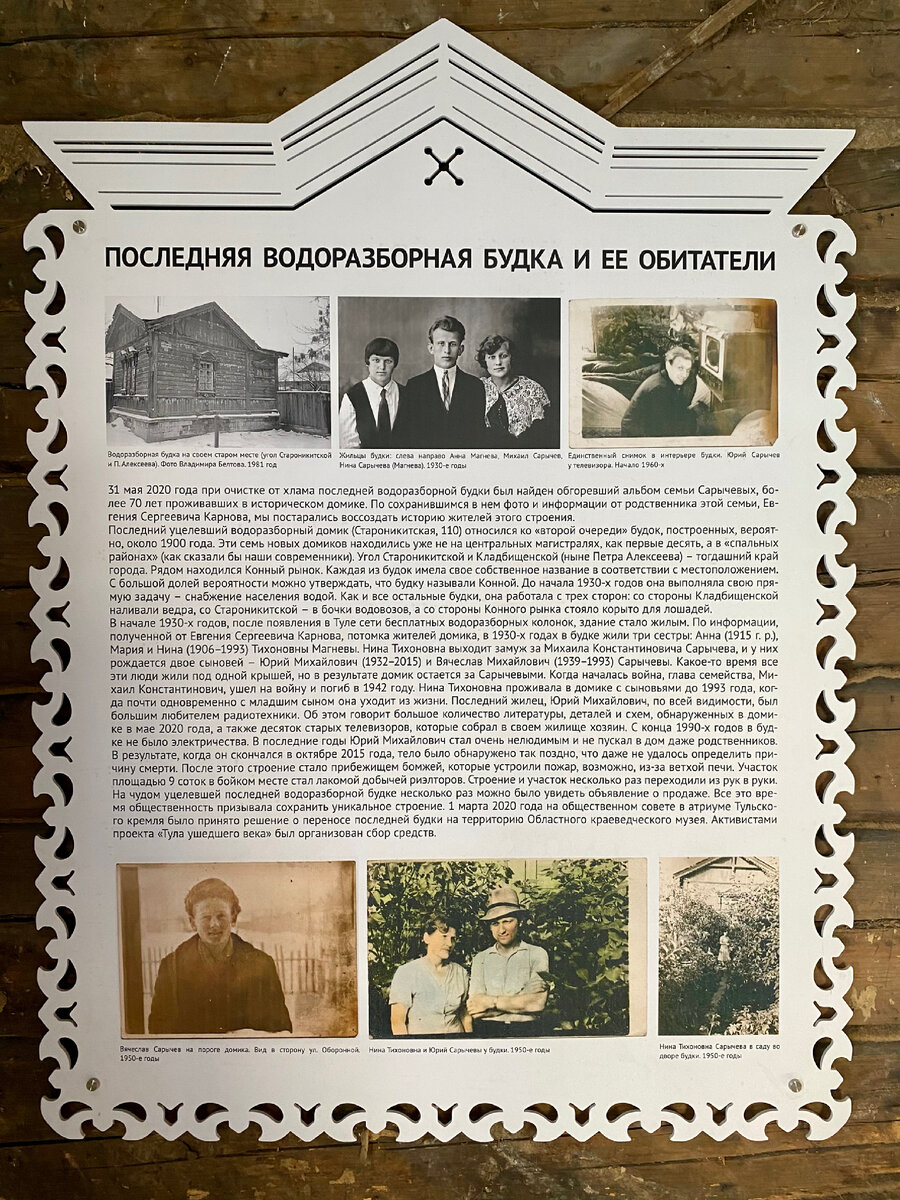
A water-distribution hut near the Horse Market, on the outskirts of Tula at that time, was built around 1900. At the beginning of the 20th century there were about 30 such points in the city. They received water through pipes and then distributed it for various needs. From one side of the hut residents filled buckets, from another side the barrels of water carriers pulled up, and from the third side there was a trough to water horses. A family of the employee responsible for dispensing water and maintaining the equipment lived inside the house. The water-distribution booth performed its function until 1930, and then it was transferred to the housing stock.
In 2015 the last resident of the house died, the plot was bought by realtors, and in 2020 they planned to demolish the booth. By that time it was the only surviving hut out of 30.
Fortunately, it was possible to combine the efforts of heritage defenders and the city administration, and the last booth was saved in time. The owner agreed to let the heritage defenders dismantle and remove the booth; specialists from GUK TO TsIOPIK took measurements and prepared a restoration project; the Tula Regional Museum of Local Lore allocated a place for it on its grounds. Before dismantling the house, all parts were labeled. Volunteers helped to carefully dismantle the house and then erected it in the new location. Professional carpenters and restorers do a great deal for free, and residents of Tula and a small number of major sponsors send money for the necessary expenses: Artemy Lebedev donated 100,000 rubles, and the Leroy Merlin store provided materials for a standing-seam roof.
At the new site, they first made a base for the hut, repeating the original technology: a brick foundation faced with white limestone. Where tiles were missing, they were taken from a similar booth that had been demolished earlier. Then volunteers assembled the walls and the roof of the house.