
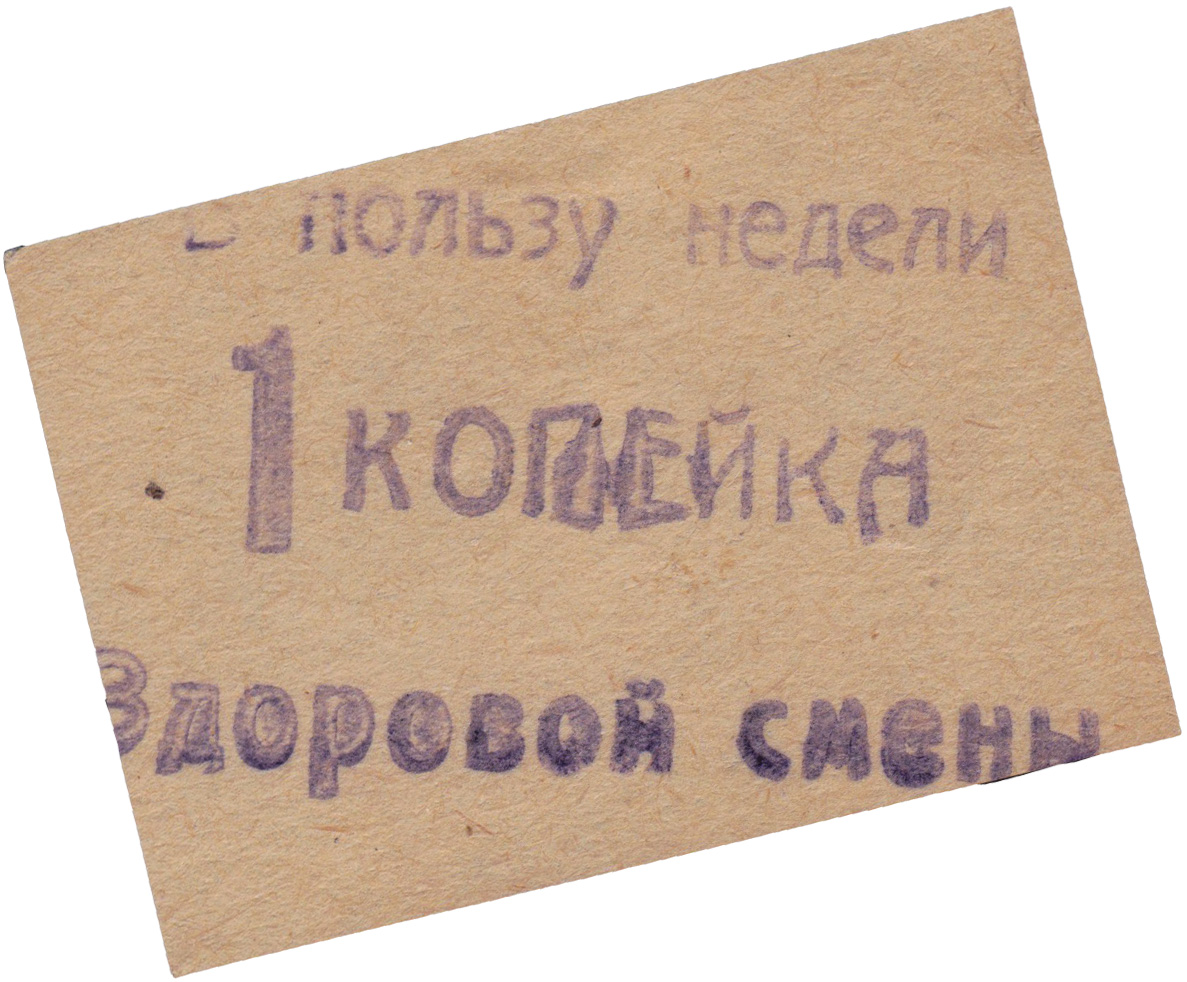
In 1928, the “All-Russian Week for a Healthy Rising Generation” was established, to be held every year from April 20 to 27. The campaign’s tasks were, on the one hand, to overcome the negative demographic consequences of war, famine, and the like (what in the discourse of the 1920s was called the problem of “degeneration”), and, on the other, to create the prerequisites for constructing the “new person.” In both cases, children and adolescents were at the center of attention.
The explanatory text for a series of slide images prepared for the “Week” stated: “The country of Soviets needs a healthy rising generation: to raise class-oriented fighters for socialist construction, conscious fighters in defense of the USSR is one of our foremost tasks. Physical culture is one of the real means that helps solve this task.” Thus, physical culture became a “class duty of the children of working people.”
As with many other campaigns, the “Week for a Healthy Rising Generation” was an attempt to correct the failure of a previous initiative. On July 1, 1926, a joint circular of the People’s Commissariat of Health and the People’s Commissariat of Education No. 93, “On holding a ‘health protection week’ in schools and children’s institutions,” was issued, according to which, to strengthen health-improvement work in schools, a “Week of Improving the Health of Schools and Children’s Institutions” was established. It was to be held annually in September. Its implementation was planned to involve public, worker, and party organizations, the children themselves, and their parents. However, two years later the organizers of the “Week for a Healthy Rising Generation” noted that the 1926 campaign, “having a narrowly school-focused purpose, did not attract sufficient attention from the Soviet public and from the parents of schoolchildren to such mass health-improvement measures as children’s playgrounds, kindergartens, Pioneer playgrounds and Pioneer camps, and also, due to the opening of schools, the ‘Week’ could not, in a practical form, raise the issue of repairing schools, new school construction, school furniture, and the like.”
The “Week,” according to the procedures and program for its conduct developed by regional health departments, could include a universal medical examination of homeless children, as well as “approaching local authorities with reports on the condition of orphanages, while emphasizing the need for additional appropriations to improve nutrition, purchase clothing, and achieve sanitary improvements of premises.” In support of children’s institutions, it was proposed to organize collection-box donations, paid evening events, film screenings, and performances.
Overall, the results of the “Week” were assessed as barely satisfactory. A “major public undertaking,” as one report put it, was reduced to “revitalizing our usual work.” Lack of time, overload with other tasks, a high concentration of events in a single period, and the inability and unwillingness of organizations to direct resources to the campaign—all of this determined its limited effect. In subsequent years, no attempts were made to achieve the desired scale of the “Week”; the campaign petered out, although its name did not disappear completely.
Nevertheless, the result of the “Week” was not zero, since any work, given the acute relevance of caring for the health of the younger generation, was necessary. The campaign organizers sincerely sought to increase its effectiveness, to acculturate the population, and to instill rules of hygiene and everyday-life culture. Among other things, with the help of the “Week,” new standards of a healthy lifestyle, bodily culture, and healthy leisure gradually, time after time, became established in Soviet society. In addition, it was part of a broader set of government initiatives and reforms in this area.