
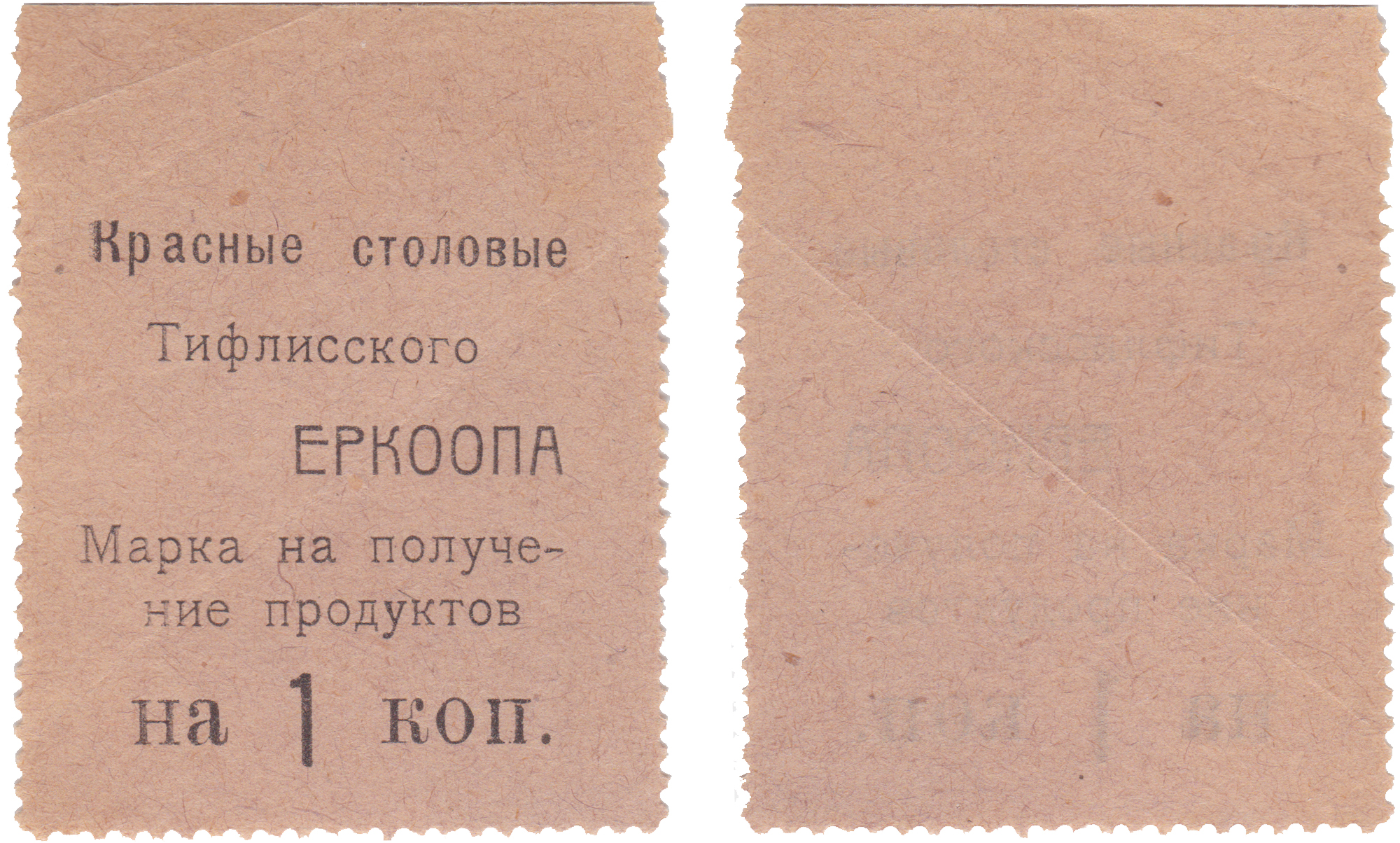
In April 1920, the Civil War in European Russia was largely over. Anton Denikin’s army had been defeated. Its remnants were evacuated to Crimea, where, as the Red command believed, they were securely trapped. Having seized Denikin’s main stronghold—the North Caucasus—the Red Army hoped to take Transcaucasia in a lightning campaign.
Although in late April–early May 1920 Azerbaijan was Sovietized in three days, practically without resistance, the Red Army’s further triumphal march across Transcaucasia had to be interrupted because the Soviet–Polish War had begun, requiring the transfer of the main forces to the West. After it ended, Armenia was likewise Sovietized bloodlessly at the first stage. As in the case of Azerbaijan, the Red Army’s ally was Kemalist Turkey, which defeated the Armenian army that was trying to regain western (Turkish) Armenia.
On 15 February, Lenin demanded that the 11th Army take Tiflis; a large-scale Soviet invasion of Georgia began, which constituted a violation of the peace treaty concluded on 7 May 1920 between Soviet Russia and the Georgian Democratic Republic. The head of the Georgian Revolutionary Committee formed by the rebels, Filipp Makharadze, retroactively invited the Red Army into Georgia, proclaiming the creation of the Georgian Soviet Republic, and appealed to the government of the RSFSR for military assistance.
March 1930.
The state of food supply for a number of cities in the region (Tiflis, Batum, etc.) (excluding bread) is strained. The shortage of meat, butter and other fats, pasta, and certain kinds of vegetables is felt especially acutely.
City of Tiflis. Since January, sunflower oil and butter have been completely absent from the stores of the Central Workers’ Cooperative (TsRK). Demand for butter for children is met only by 50%. There is also a shortage of confectionery, cheap varieties of candy, pasta, and vermicelli. Demand for pasta and vermicelli is met by 20%. Demand for milk (by children’s ration books) is met by 50%. The situation with meat supply is tense. In March, all canteens were supplied exclusively with frozen poultry. In the third quarter, a deterioration in meat supply should be expected. Often, meat is delivered to shops of poor quality and with significant delay.
City of Batum. An inspection by workers’ brigades revealed a number of instances of baking low-quality bread (undercooked, sour). The supply of meat to the population occurred with interruptions. In view of the absence of refrigerators, the question has been raised of stopping deliveries of frozen meat, which spoils quickly.
In the work of the Batum TsRK apparatus, a number of serious shortcomings have been noted that negatively affect the situation with workers’ supply: a) insufficiency of the cooperative network; b) lack of accounting for the actual number of the population subject to regular supply (the supply plan is drawn up on the basis of previous years); c) mismanagement (spoilage of goods, etc.); d) instances of self-supply by cooperative employees; e) ties with private traders; f) unsanitary condition of shops, bakeries, and canteens; g) inoperability of shop commissions, etc.
The distribution of scarce goods takes place in an extremely disorganized manner, without prior weighing out, as a result of which on the days products are issued, large queues form outside shops.
The practice exists of issuing scarce goods on the basis of notes from members of the board and even on notes from individual employees.
Workers’ dissatisfaction with interruptions in supply and significant shortcomings in the work of the cooperative manifested itself in a negative attitude among some workers toward increasing the cooperative contribution.
On this basis, a number of sharp speeches at workers’ meetings were noted.
At general meetings where the question of concluding a contract between Yerkoop and the workers regarding the supply of workers with food and manufactured goods according to established norms and prices was discussed (workers are obliged to pay in a timely manner a differentiated share, a one-time contribution of 10 rubles, and a targeted contribution to receive calico and vegetables), the following statements were noted:
“Yerkoop demands an increased share from us; we do not refuse, but let Yerkoop give us what we ask for. At previous meetings, many proposals were made, but Yerkoop did not fulfill them. What is the point of now talking about the same thing again—everything will still remain on paper” (TUES).
“Yerkoop can let us down with contracts, the way it did when supplying us with vegetables: it collected the targeted contribution, but delayed the distribution for a long time” (furniture factory).
“Yerkoop again demands an increased share, but we still won’t get anything; we’ll have to go to a private trader” (1st printing house).
At a meeting of workers of the Batum branch of the Oil Syndicate on the question of increasing the share contribution (the speaker’s instruction on the need to introduce an additional share), there was an uproar, and shouts were heard from the floor: “You demand a share from us, but you do nothing,” “first give us what we need, and then increase the share—otherwise you feed us rotten potatoes and onions.”