
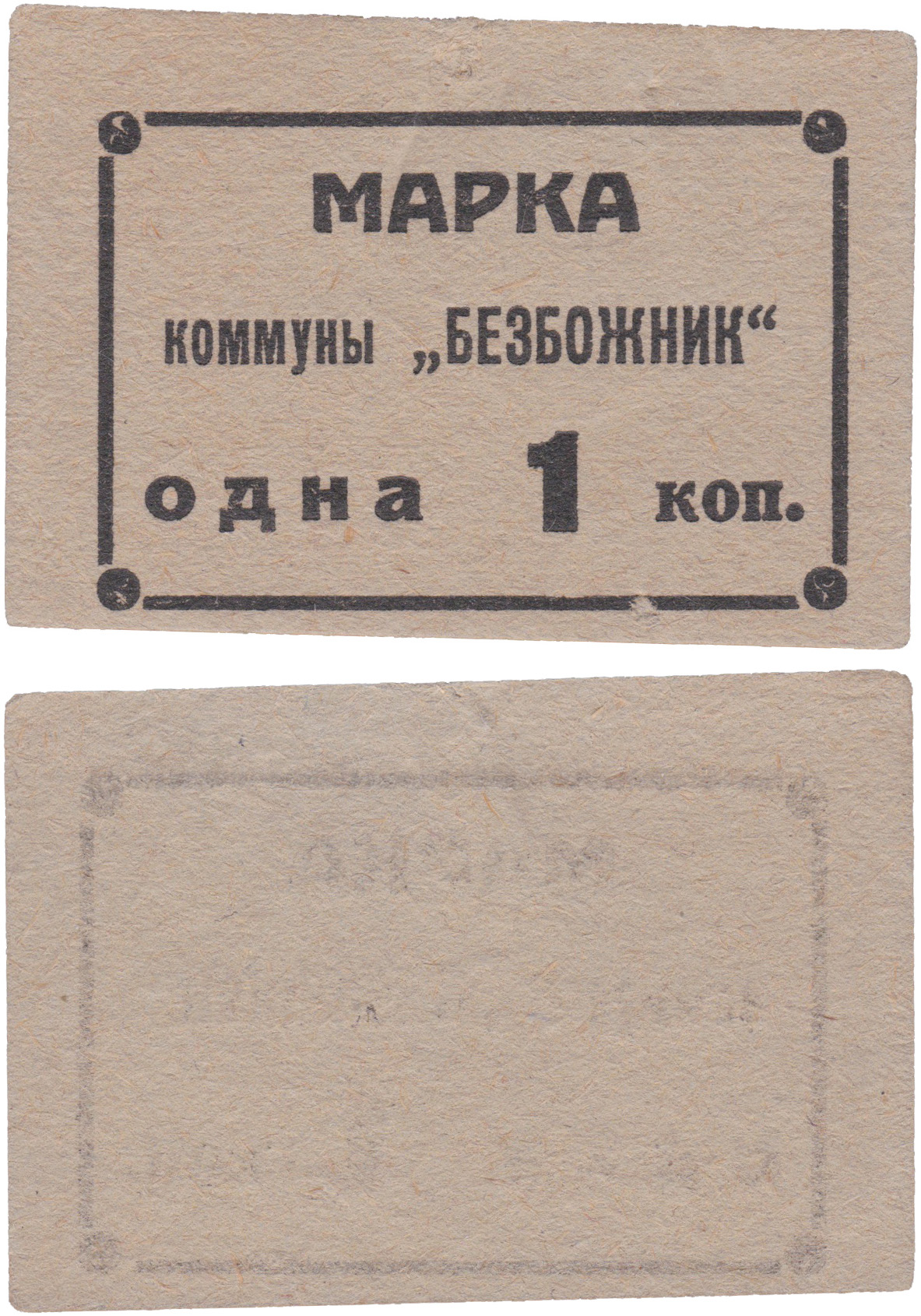
The first reports of atheistic collective farms date back to 1925. For example, in issue No. 32 of the newspaper “Bezbozhnik” (1925), we read the following correspondence:
“In the former Pustoshinsky state farm (Mozhga uyezd, Votsk Oblast) there is the commune ‘Bezbozhnik.’ The commune has 53 members; it has 400 desyatinas of land, of which 76 desyatinas are sown with ‘Vyatka’ rye, 56 desyatinas with oats, 2 1/2 desyatinas with clover, and the rest with other crops. The commune has 14 horses and 15 cows. All labor duties among the members of the commune are distributed equally.”
In 1926 and 1927, the number of these collective farms increased significantly. At present, across the USSR we have more than 400 atheistic collective farms, scattered across almost all republics, territories, and regions; most of them rank among the leading collective farms, successfully carry out economic and political campaigns, and strive for the socialist re-education of their members.