
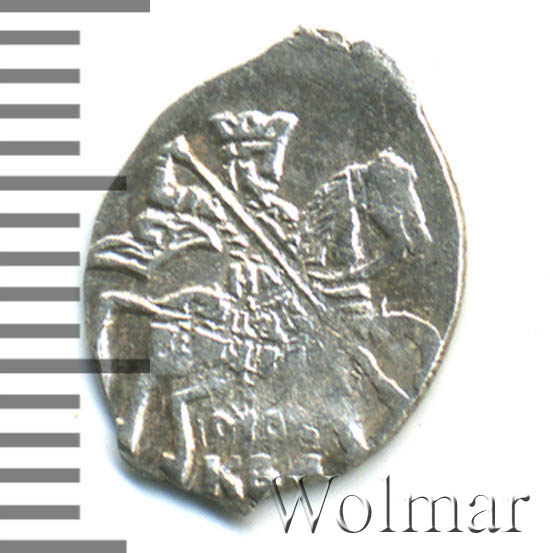
7 February — the election to the throne of Mikhail Fyodorovich Romanov, the founder of the Romanov dynasty, took place. In January, the elected delegates gathered. The council was one of the most crowded and most complete: it included representatives even from the “black” volosts, something that had not happened before. Four candidates were put forward: V. I. Shuisky, Vorotynsky, Trubetskoy, and M. F. Romanov. Contemporaries accused Pozharsky of also campaigning strongly in his own favor, but this can hardly be accepted. In any case, the elections were very turbulent.
A tradition has survived that Filaret demanded limiting conditions for the new tsar and pointed to M. F. Romanov as the most suitable candidate. Mikhail Fyodorovich was indeed chosen, and undoubtedly he was offered those limiting conditions about which Filaret wrote: “To allow full course to justice under the old laws of the land; to judge and condemn no one by supreme authority; without a council to introduce no new laws, not to burden the subjects with new taxes, and not to make the slightest decisions in military and state affairs.”
The announcement was postponed until the 21st, so that in the meantime they could find out how the people would receive the new tsar. With the election of the tsar, the Time of Troubles ended, since there was now an authority recognized by all and on which one could rely.
2 April — shortly before the coronation of the young Mikhail Fyodorovich Romanov, Ivan Susanin led a hostile detachment into forest wilderness and swamps; it was trying to reach the future sovereign and his mother, who were living on their estate in the Kostroma lands. This feat cost the guide his life, but saved the sovereign youth from death.
Dorogobuzh, Vyazma, Bely, and others were taken back, but the attempt to take Smolensk ended in failure; bands of Poles, Cossacks, and Lithuanian men plundered Ukraine and the Seversk region.
The Swedes besieged Tikhvin but were repulsed; the attempt by Russian troops to regain Novgorod was unsuccessful. The further war with the Swedes was reduced to the defense of the borders: our troops avoided meeting Gustavus Adolphus’s army in open battle.