
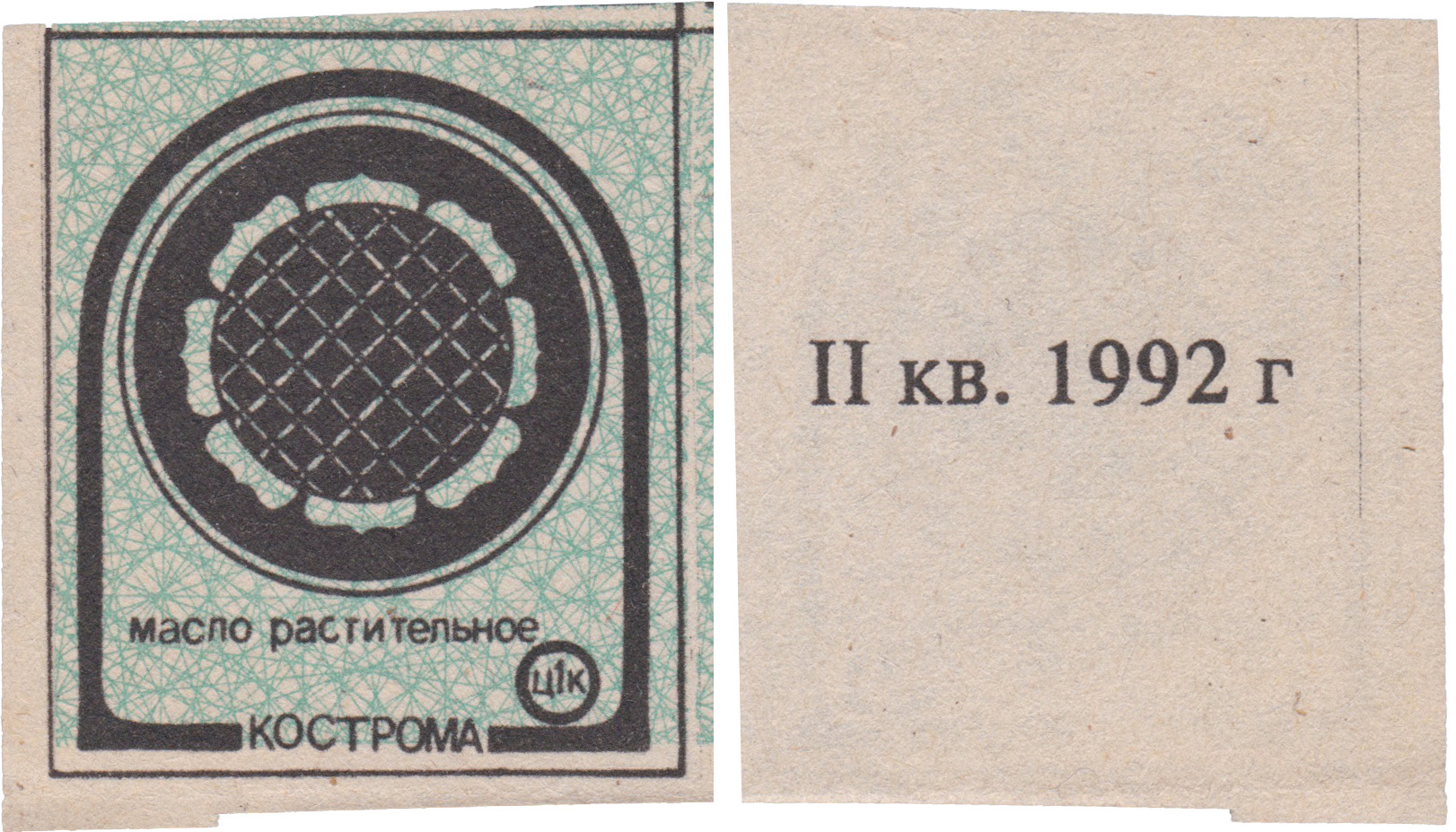
Rationing system — a system of supplying the population with consumer goods under conditions of shortage. Under this system, to buy a product one had to not only pay money for it, but also present a single-use coupon entitling the holder to purchase it. Ration cards (coupons) set specific monthly per-person consumption limits for goods.
The essence of the coupon system is that to purchase a scarce item, it was necessary not only to pay money but also to hand over a special coupon authorizing the purchase of that item.
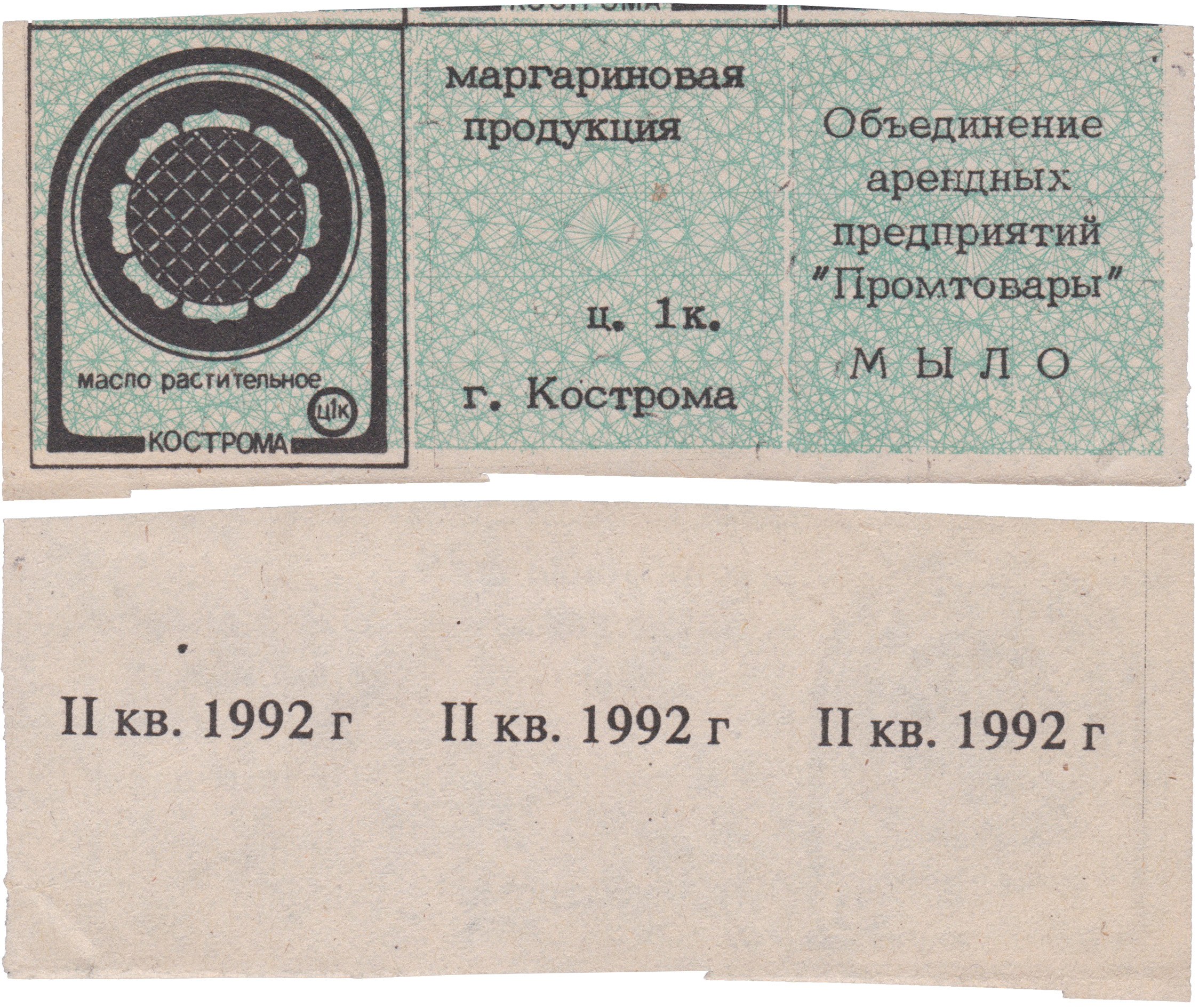
Coupons for food and some consumer goods were obtained at one’s place of registered residence from the housing office. At the workplace (usually through the trade-union committee), distribution was organized for certain foods and manufactured goods received via in-kind exchange between enterprises.
The reason the coupon system emerged was the shortage of certain widely used consumer goods.
The goal of introducing coupons was to provide the population with a minimally guaranteed set of goods. Demand was supposed to decrease, since without a coupon the corresponding goods were, in practice, not sold through the state retail network. In practice, it was sometimes impossible to use coupons if the corresponding goods were not available in stores. Some goods, if they were in surplus, were sold without coupons even though coupons were issued for them as well—for example, salt.
Without a coupon, goods could be bought at markets and from speculators.
The assumed consumption norm could differ depending on the status of a locality; for example, when butter rationing was introduced in the Chelyabinsk Region in 1981, the norm for Chelyabinsk, Magnitogorsk, and five other large cities was 200 grams per person per month; for some smaller towns it was 150 grams; and for most localities it was 100 grams. The extent to which coupons were actually backed by specific products could vary; for example, with a guaranteed norm of 2 kilograms of meat products per person per month, in the Chelyabinsk Region in 1983 coupons were redeemed as 67% sausage, 23% poultry meat, and 10% beef and pork (mainly for war invalids and diabetics). In 1985 the situation with meat-product supplies worsened, and coupons were redeemed mostly for boiled sausage, pork, and lean mutton.
Perestroika, on the one hand, partially abolished mandatory state deliveries, and on the other hand eliminated the foreign-trade monopoly, as a result of which exporting enterprises and cooperatives accumulated large amounts of money not backed by actual goods. This led to an increase in shortages of certain goods and some expansion of the coupon system; and as shortages grew in 1989–1990, coupons were introduced almost everywhere for many food products and some other goods (tobacco products, vodka, sausage, soap, tea, grains and cereals, salt, sugar, and in some cases, in remote areas, bread, milk, mayonnaise, laundry detergent, women’s underwear, etc.).
Since large and “closed” cities of the USSR were supplied with food better than the provinces, in attempts to stop nonresidents from taking scarce goods (meat, meat and fish products) out of the city, the leadership of certain cities began putting forward ideas to introduce coupons for meat. In the late 1970s and the first half of the 1980s, amid a growing food shortage, in some cities and regions of the country (Perm, Sverdlovsk, Chelyabinsk, Vologda, Zheleznogorsk, and others) attempts were made to regulate consumption by introducing rationing and coupons for certain types of food (meat, meat products, sausage, butter).
The coupon system began to be introduced on a large scale in 1989 and became most widespread in 1990–1991, when the overall shortage reached its peak; and both meat products and everyday items that had not previously been scarce began to disappear: sugar, grains and cereals, vegetable oil, and others.
The coupon system faded out starting in early 1992 due to price liberalization, which triggered hyperinflation (in 1992 alone prices increased 26-fold) and the spread of free trade. For some goods in certain regions, coupons remained in use longer.