
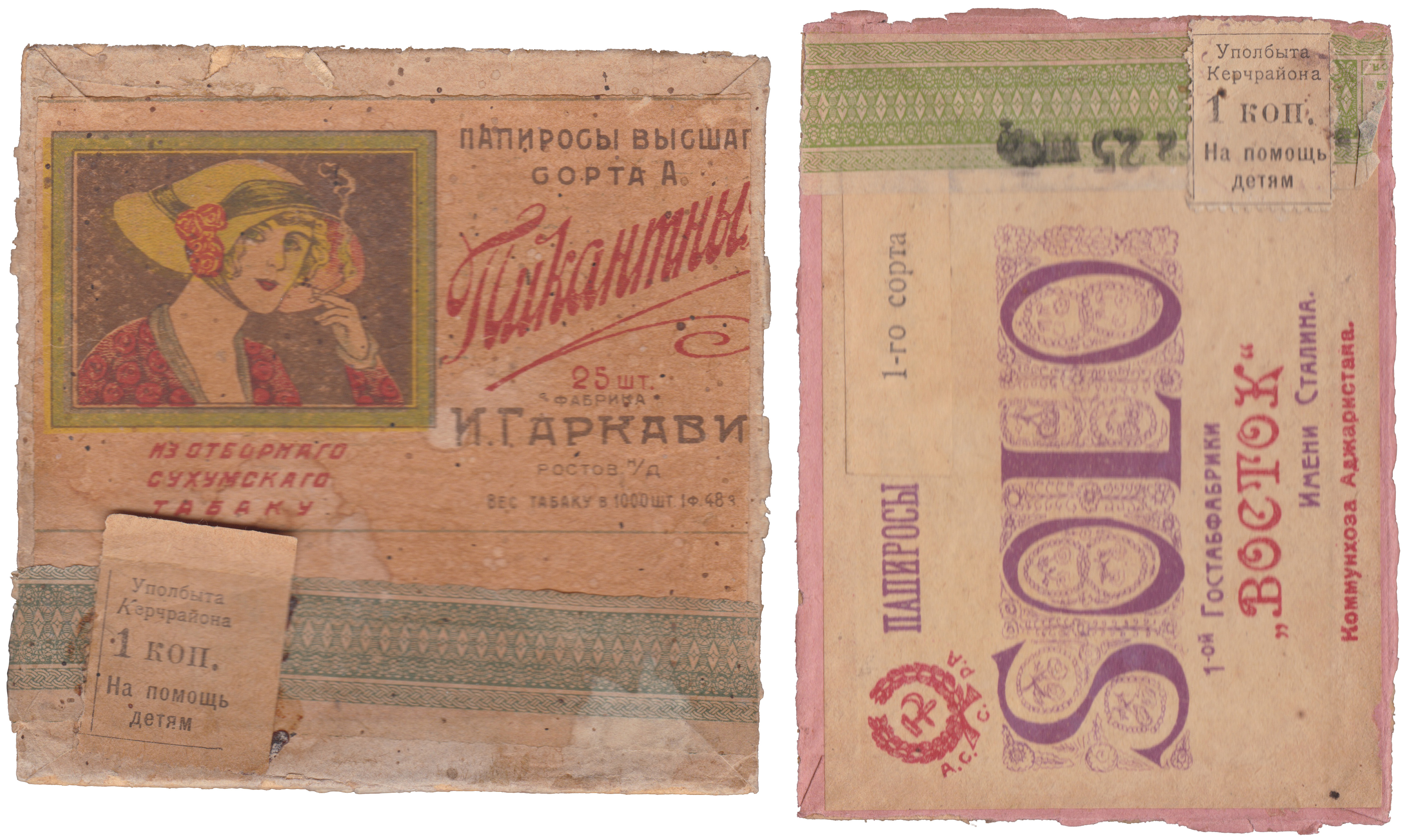
On a pack of cigarettes. Two guys.
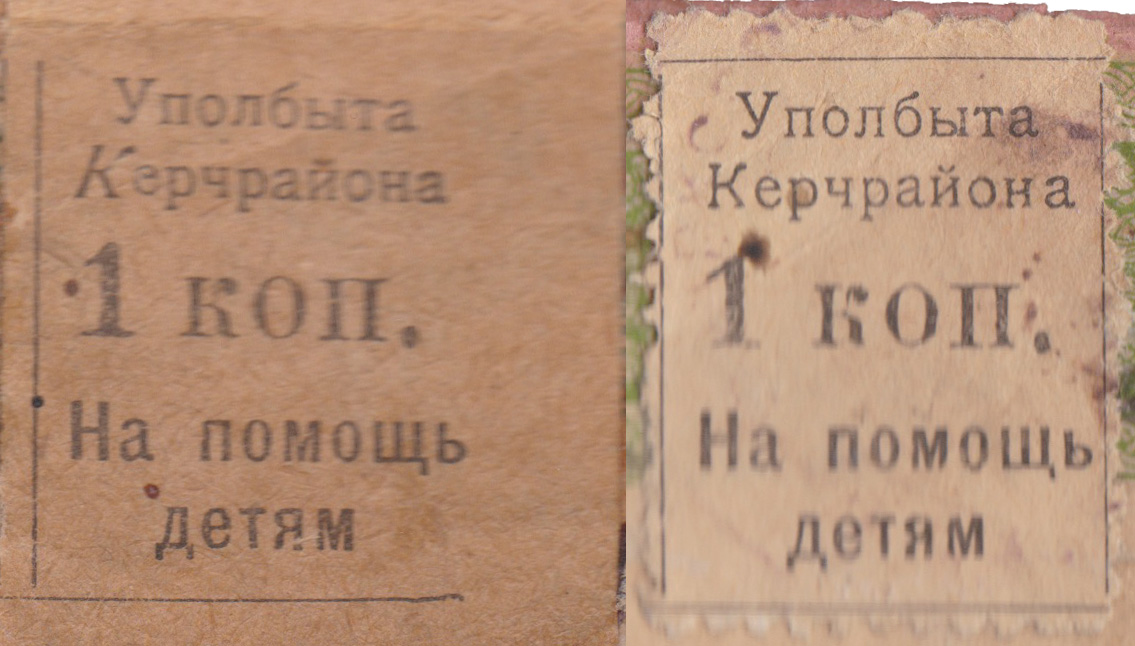
On January 27, 1921, a special body was established to coordinate and direct the activities of all agencies and organizations in the protection of childhood—the Commission under the All-Russian Central Executive Committee for Improving the Lives of Children (the Children’s Commission under the VTsIK), chaired by F. E. Dzerzhinsky (before that, the Commission under the VTsIK and, for a time, the Council for the Protection of Children had been operating). The Children’s Commission included representatives of the All-Union Central Council of Trade Unions (central trade-union bodies), the People’s Commissariat of Education, public health authorities, the Workers’ and Peasants’ Inspectorate, and the Cheka; the Commission’s membership was approved personally by the Presidium of the VTsIK. The Commission developed a long-term strategy to combat child homelessness, but in parallel with the creation of local commissions, urgent measures for child welfare were also taken.
In the field, the Commission had social commissioners, and later its own departments within the provincial Soviets of Deputies. It had the right to submit legislative proposals to improve children’s lives, primarily on the following issues: providing food, housing, fuel, clothing, etc. to institutions responsible for protecting children’s life and health, above all homeless children; issuing, within its authority and on the basis of existing laws, resolutions concerning the protection of children’s life and health; submitting to the central authorities proposals for new laws and regulations within the Commission’s sphere of activity. The Commission’s decisions made it possible to delineate functions among agencies and other organizations in the fight against child homelessness.
However, by the beginning of the 1920s the situation with eliminating child homelessness in some regions that had seen the most intense phases of the Civil War remained extremely difficult. A report in this regard is characteristic: that of E. Enshtein, the commissioner for improving children’s living conditions at the Krasnodar regional corrective home, dated November 21, 1921. It states, in particular: “The situation of children in the Kuban since the arrival of Soviet power has been unenviable... The Civil War is in full swing. Premises for orphanages and children’s shelters are poor, equipment was completely lacking, there were no uniforms, food was poor. Children are left to the mercy of fate... The Commission for Improving People’s Living Conditions failed to cope with these difficulties, because an executive comrade was appointed as commissioner for whom this work was secondary, while the main concern was party or Soviet work. Civil and party bodies were least of all interested in the situation of children. In August and September, the following phenomena were observed: children from orphanages, to satisfy their hunger, collected scraps from trash bins, begged, and fought over every piece of bread.” Those responsible for these outrages were punished rather strictly. Of course, in the Soviet period, when covering the historical aspects of these issues, such facts were kept quiet, although for contemporaries they were no secret, because they could not help but be seen.
After the end of the Civil War, measures were taken to improve the situation. On August 13, 1926, the Central Executive Committee and the Council of People’s Commissars of the USSR adopted the decree “On Measures to Combat Child Homelessness.” This document regulated, among other things, the work of placing children from orphanages into working families, for a certain payment, i.e., the foster-care system was developed.
By 1928, the number of homeless children had fallen to 200,000.