
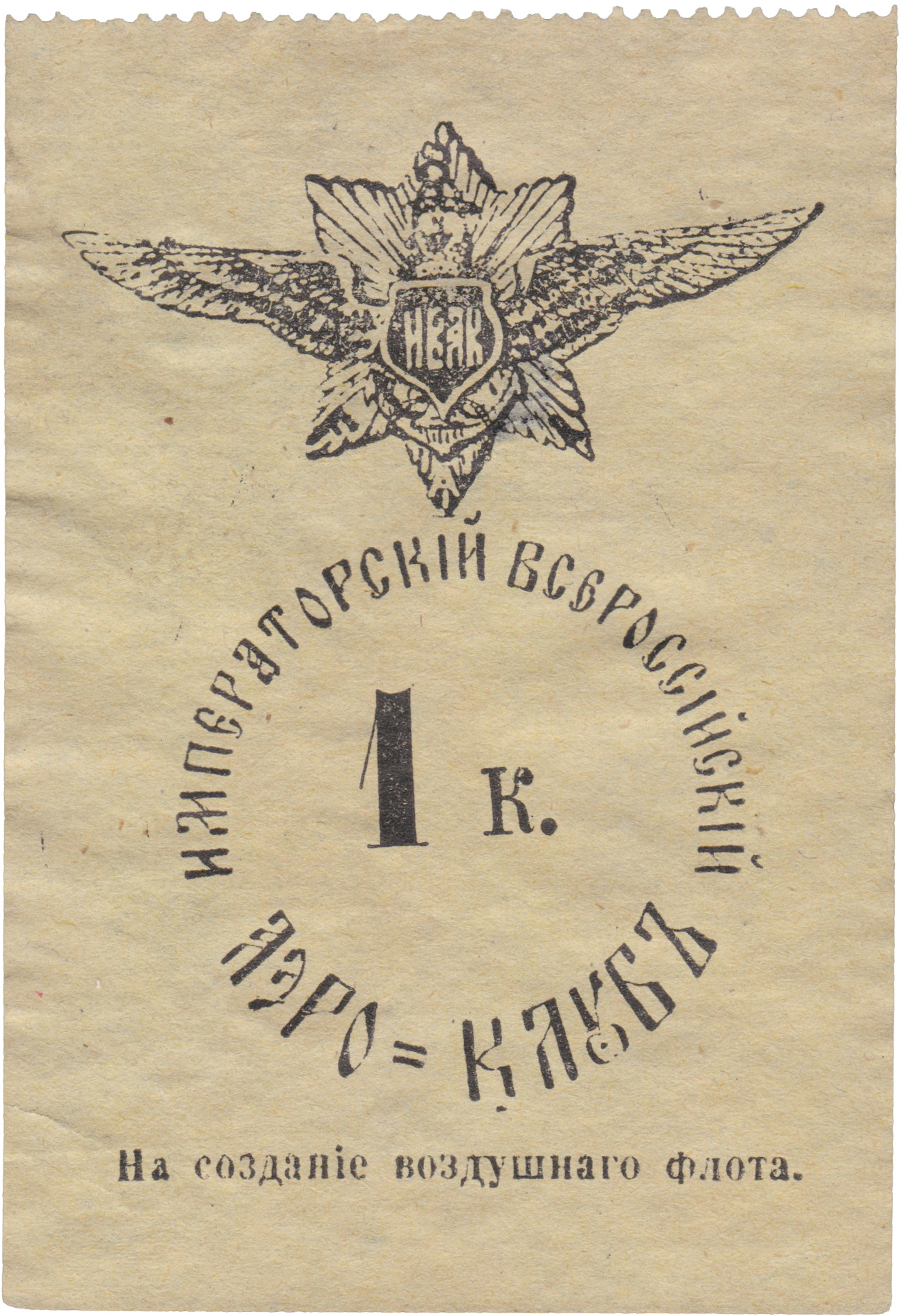
The Imperial All-Russian Aeroclub (IVAK) was founded on January 29, 1908, in St. Petersburg. Its goal was to promote in Russia the ideas of using aeronautics for scientific and technical, military, and sporting purposes, and to organize joint activity by scientists and aeronautics enthusiasts.
The initiator of the aeroclub’s creation was Vasily Vasilievich Korn. On May 12, 1909, Emperor Nicholas II took patronage over the new organization, and from that moment it became known as the Imperial All-Russian Aeroclub (IVAK).
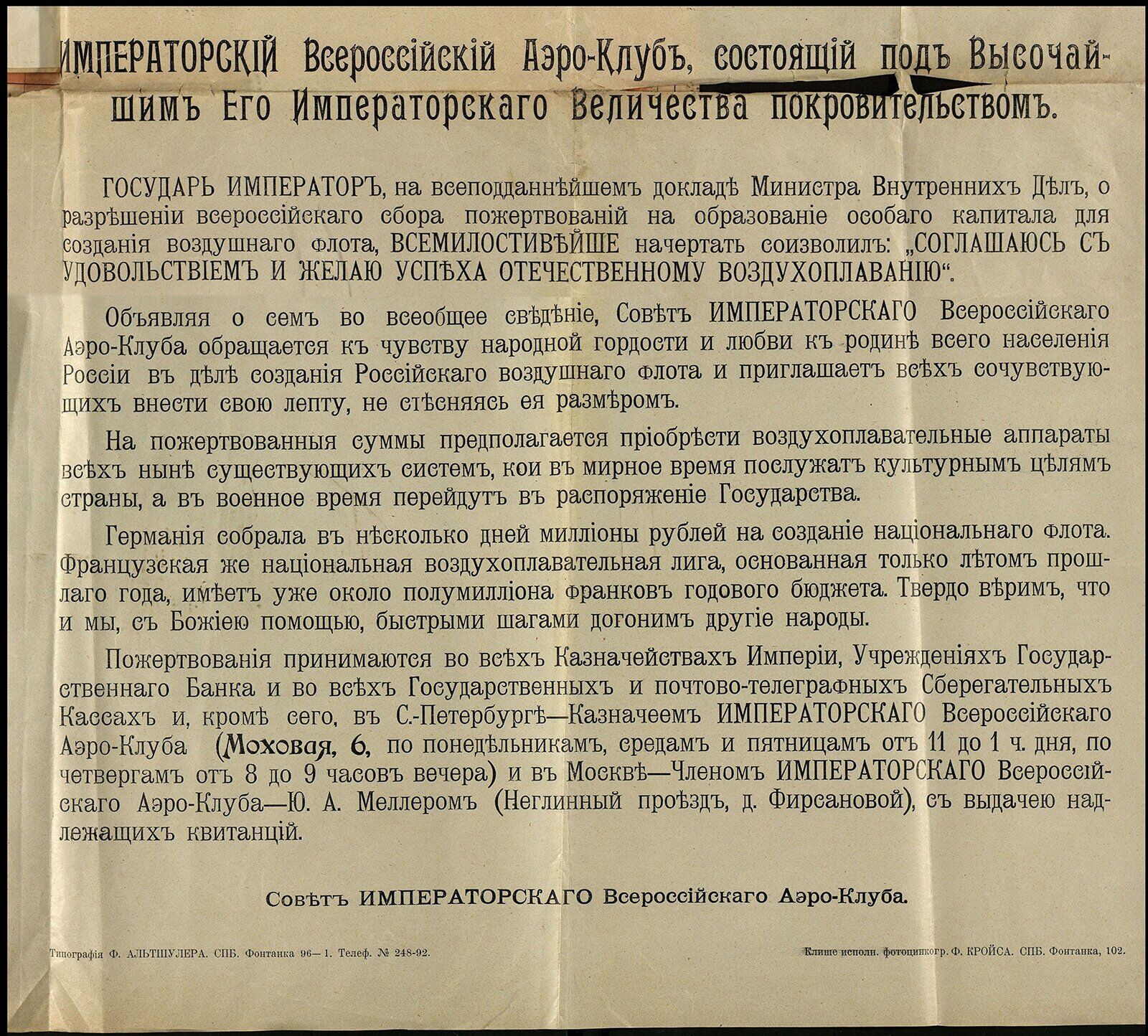
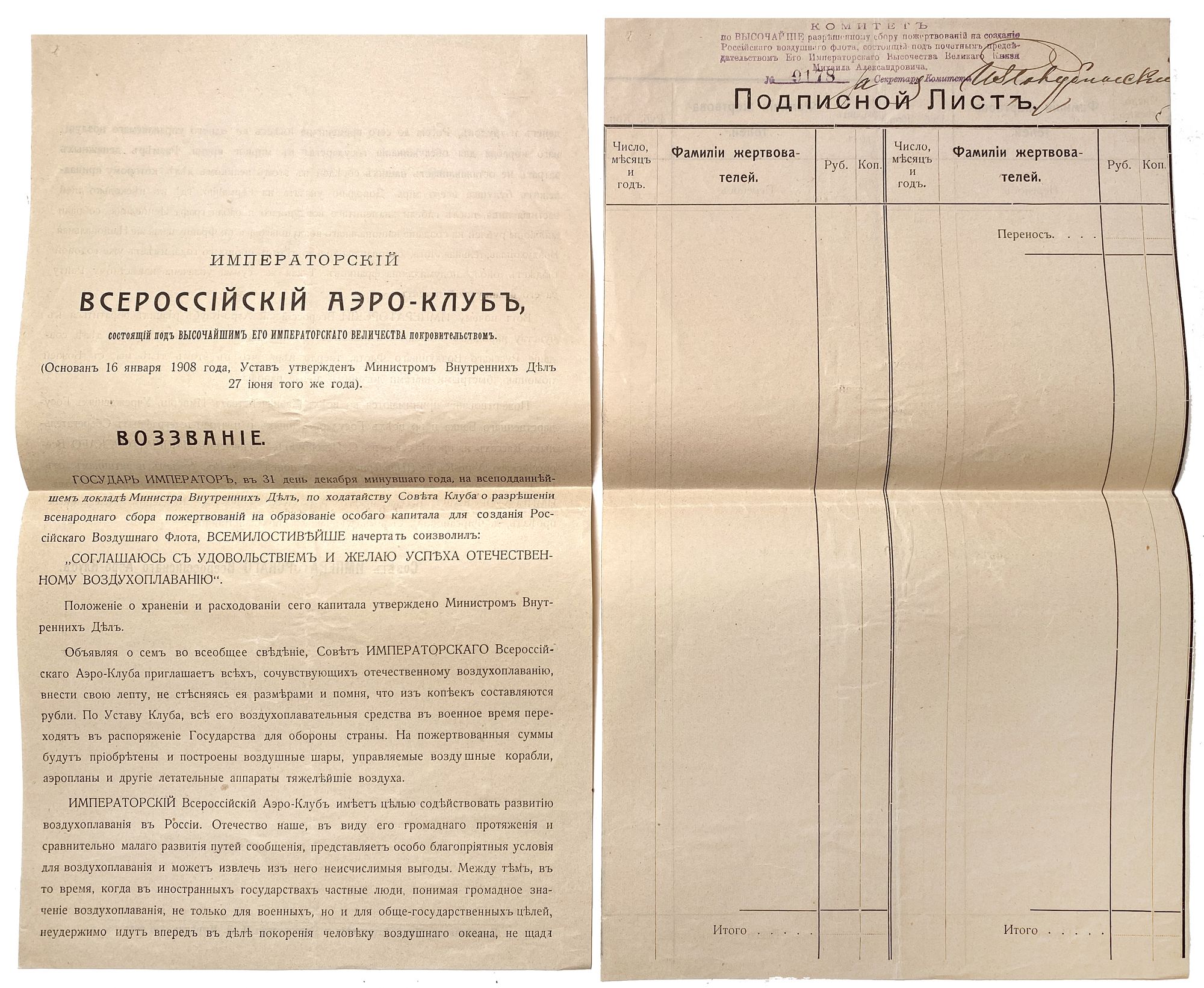
The Imperial All-Russian Aeroclub received the Highest permission to conduct a nationwide collection of donations to create the Russian air fleet. In IVAK’s appeal it was stated that “with the donated sums, balloons will be purchased and built, steerable aeronautical ships, aeroplanes, and other heavier-than-air flying machines.” The funds were also to ensure the operation of IVAK’s airfield and aviation school. A special IVAK committee for collecting donations organized exhibitions, literary and musical evenings, as well as National Air Fleet Days, when a cup collection was announced and a charity sale of the popular brochure “Aeronautics,” badges, and postcards was held. After a short break connected with the outbreak of World War I, the Committee continued organizing charitable collections for the construction of aircraft and for assistance to wounded pilots and their families.
To increase the flow of funds, at the Committee’s general meeting held on May 24, 1912, it was resolved:
“
1. To request the Highest approval for establishing, within the Committee, a breast badge for persons of both sexes, and to distribute it among the population on the condition that for a donation of 500 rubles a gold badge be issued, for 100 rubles a silver one; for especially outstanding large donations, to request special awards; and, in addition, in certain cases, for special efforts and merit in assisting the Committee, to issue the breast badge free of charge;
2. To issue, in accordance with continuously received requests, inexpensive tokens (with a value of three rubles) to be worn on a chain, so that everyone who has contributed their share to the cause needed by the Motherland may have a remembrance of it…
”
On June 25 of the same year, the Emperor granted approval for the establishment of the breast badge.
Over 4 years (up to 1913), 100,554 rubles in public donations were collected.
IVAK officially closed at the end of 1917.