
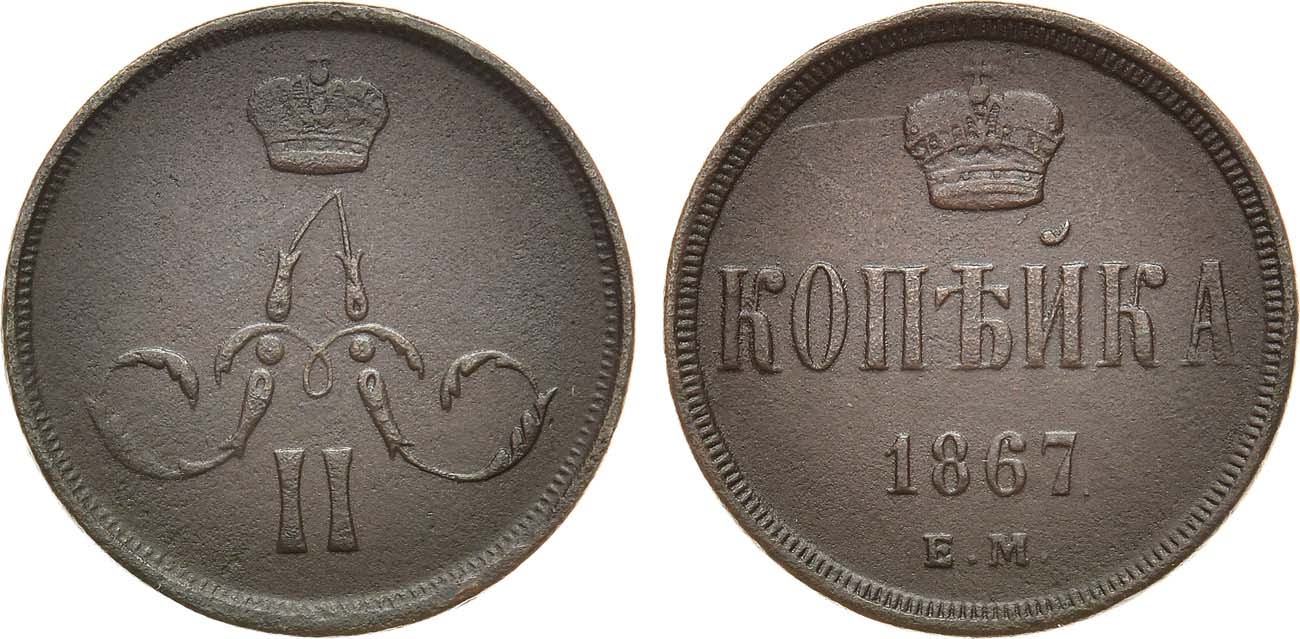
March 30 — A treaty was signed between Russia and the United States for the sale of Alaska.
Alaska, discovered by a Russian expedition led by M. Gvozdev and I. Fedorov in 1732, was a Russian possession in North America. Initially it was developed by private individuals, and from 1799 onward by a specially established monopoly, the Russian-American Company (RAC).
At the beginning of the 19th century, Alaska brought revenue to the Russian treasury through the fur trade, but by the middle of the century it became clear that the costs of maintaining and defending this remote and geopolitically vulnerable territory would far exceed any potential profit. Ideas about selling Alaska were first voiced in the government of Tsarist Russia in the early 1850s, and negotiations for its acquisition by the United States began in 1866 under President Andrew Johnson.
At a special meeting in the ceremonial hall of the Ministry of Foreign Affairs, held with the participation of Emperor Alexander II on December 28, 1866, a decision was made to sell Russia’s possessions in North America. On March 30, 1867, in Washington, a treaty was signed for Russia’s sale of Alaska to the United States of America for $7,200,000 (11 million tsarist rubles). The area of the sold territory was slightly more than 1.5 million sq. km. Many researchers believe that the Alaska purchase treaty was a mutually beneficial outcome of the pursuit of American geopolitical ambitions and Russia’s soberly calculated decision to focus its efforts on developing the Amur region and Primorye, annexed to the Russian Empire in 1860. The official ceremony transferring Alaska to the United States took place on October 18, 1867.
At that time, within America itself there were few who wanted to acquire a vast territory that opponents of the deal called a reserve for polar bears and an ice cellar. The treaty was ratified by a margin of just one vote. Incidentally, the name Alaska itself appeared during the treaty’s passage through the U.S. Senate.
In his speech defending the acquisition of new territories, Senator Sumner, following the traditions of the Indigenous people of the Aleutian Islands, gave it a new name—Alaska, meaning “Great Land.” However, when gold and rich mineral resources were discovered in Alaska, the deal came to be recognized as the greatest achievement of President Andrew Johnson’s administration.