
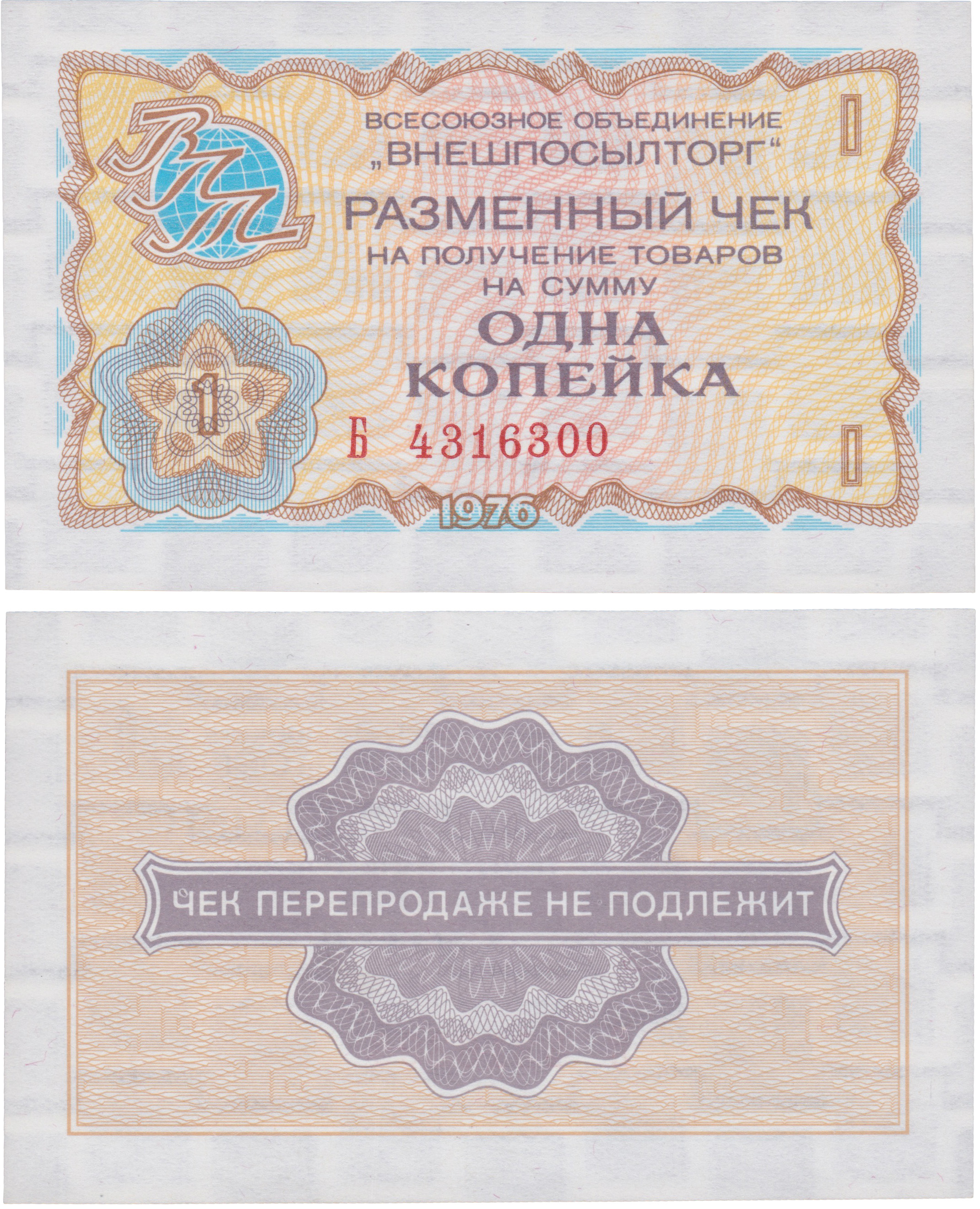
Vneshposyltorg checks (formerly "certificates" and "vouchers") were a kind of "parallel currency" that existed in the USSR from 1964 to 1988. They were used to pay salaries to Soviet citizens working abroad: mainly specialists employed under USSR construction contracts, as well as specialists (for example, teachers, doctors, and military advisers) working under contracts with foreign state and private institutions (hospitals, universities, etc.), rank-and-file embassy employees, and other persons within the USSR who received fees or transfers in foreign currency.
The main purpose of introducing certificates, and later VPT checks, was the Soviet state's desire to limit foreign-currency wage expenditures for citizens working abroad (especially in capitalist countries, where otherwise employees would withdraw their entire salary in foreign currency and spend it locally), and also to reduce the inflow into the country of private consumer-goods imports from uncontrolled sources. While staying abroad, part of the foreign-currency salary of overseas workers was voluntarily transferred (but no more than 60%) to an account at Vnesheconombank, from which it was possible on the spot (usually through the economic adviser at the USSR Embassy) or upon returning to the USSR to receive a pre-ordered amount in the form of certificates (later, checks). Some categories of overseas employees of foreign trade organizations and diplomats could bring into the USSR a limited amount of foreign currency, which they were required to convert into certificates (checks) no later than the установленный deadline; otherwise, their possession of foreign currency was also considered illegal.