
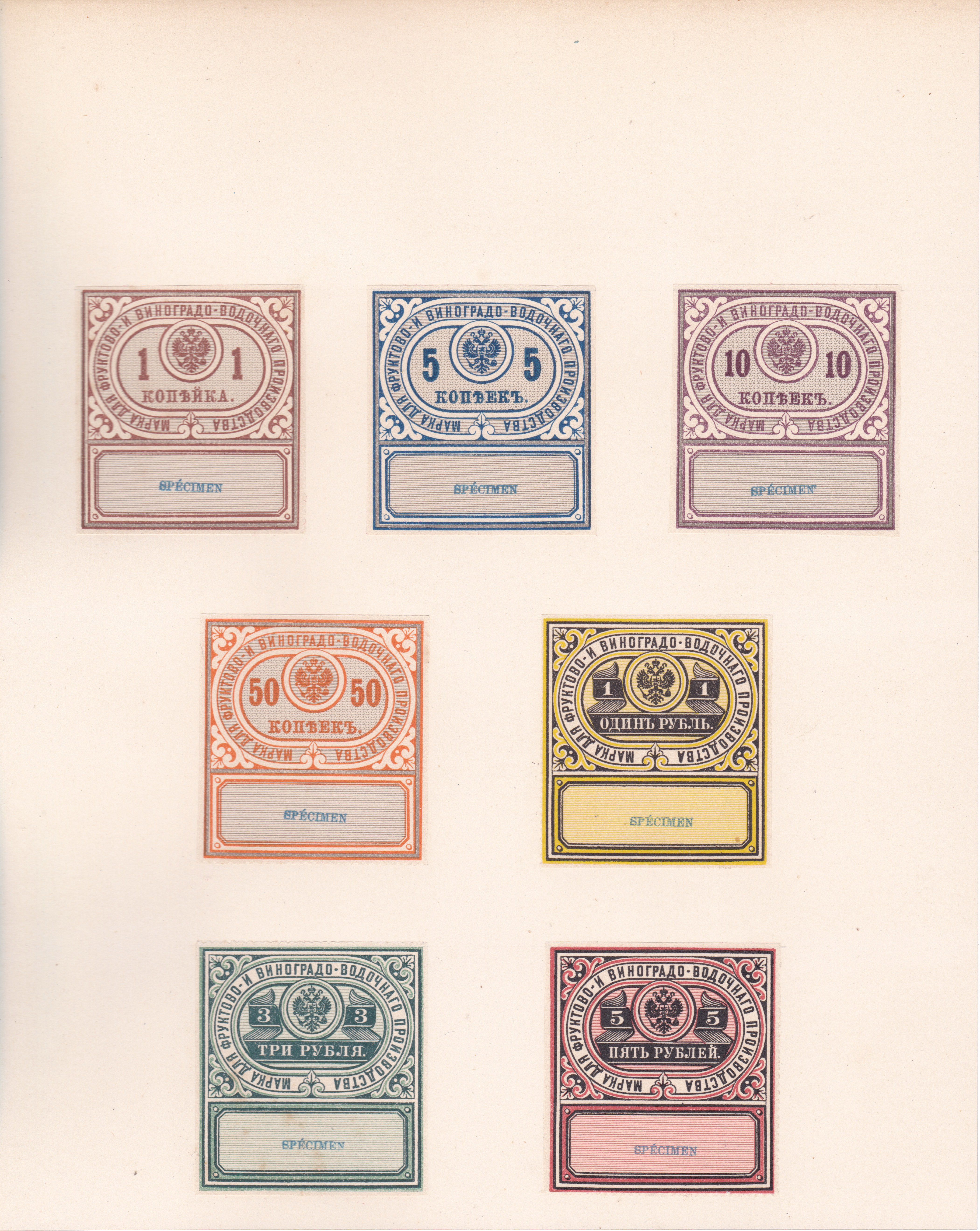
Sample Issue Two.
Excise stamps, or excise bands, are a type of fiscal stamp used to pay excise duty on certain categories of goods, such as wine and tobacco. The use of excise stamps allows the state to promptly identify goods for which excise duty has not been paid, and guarantees the buyer the quality and quantity of the purchased product.

When excise bands are used, the package can be opened only by tearing the band. The term “band” itself comes from the French word banderole, meaning a strap or strip of paper, fabric, tin, etc., with which boxes, packages, or other containers holding goods are sealed.
The purpose of sealing goods with a band is twofold: it is done either to protect against counterfeiting or substitution of products of a well-known factory firm, or to ensure that the customs duty or excise due on the item has been paid to the government.
In the first case, the band was formerly called private (protective), and both its form and the content of the inscription placed on it depended entirely on the manufacturer of the goods, who could submit them to the appropriate official authorities for approval, on the same basis as so-called labels and factory marks.
In the second case, the bands were called state, or government, and the form, color, and the signs and inscriptions placed on them were established by a legally authorized official or a government institution.
The system of collecting duties or excise by affixing bands to goods was called the band system and greatly facilitated oversight of whether the required charges on goods had been paid. At the same time, a subscription system was often used (Fr. abonnement, Ger. Abfindung), under which each manufacturer of excisable goods was obliged to purchase a certain number of bands each year. The sale and purchase of goods subject to banding without bands, or with torn bands, subjected those responsible to penalties specified by law.
In doing so, bands had to be taken by vodka, tobacco, and match manufacturers for a sum specified by law; installment payment was allowed, and bands could be issued on credit, subject to the conditions specified by law. At the request of excise administrations, when necessary, bands could be issued to official bodies, institutions, and officials either as whole sheets or as separate strips, in the quantity required each time.