
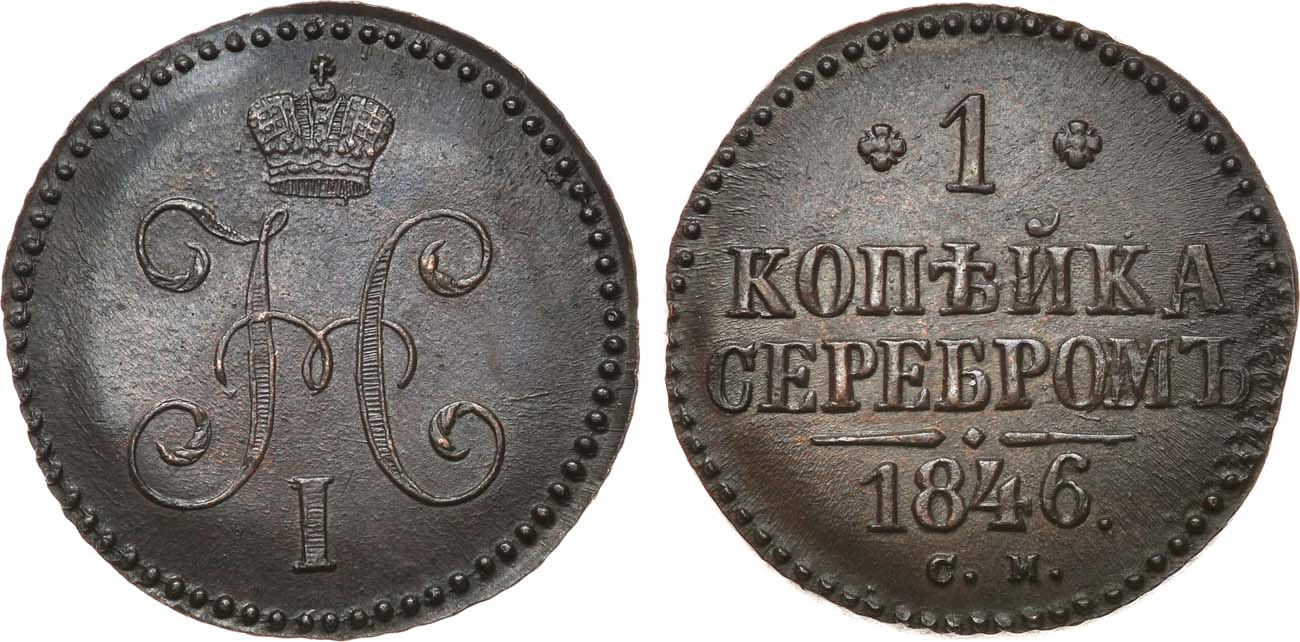
In Saint Petersburg, the “Numismatic and Archaeological Society” was founded. A few years later, it expanded its activities and was renamed the Archaeological Society.
German astronomer Johann Gottfried Galle of the Berlin Observatory discovered the eighth planet of the Solar System—Neptune.
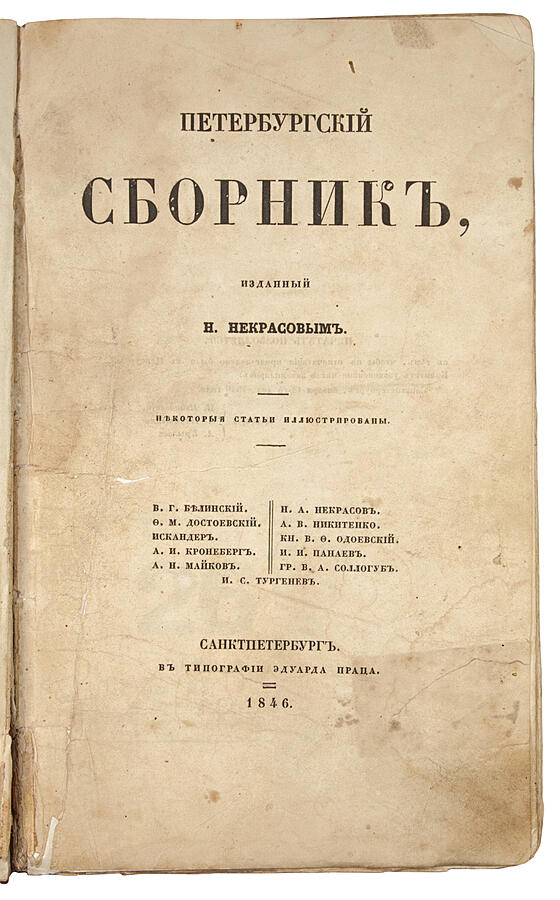
The first work by Fyodor Dostoevsky was published—the novella *Poor Folk*, printed in Nikolai Nekrasov’s *Petersburg Collection*.
In Charlestown, Massachusetts, Dr. Morton performed the first tooth extraction using anesthesia—ether.
Anna Grigorievna Dostoevskaya, the wife of Fyodor Dostoevsky, was born. She was born into the family of a minor Saint Petersburg civil servant, Grigory Ivanovich Snitkin, who in his youth was fond of theater and literature and was a great admirer of Dostoevsky’s work. The family even nicknamed their daughter Netočka (after the heroine of one of Dostoevsky’s novellas). Her mother, Anna Nikolaevna Miltopaeus—a Swede of Finnish origin—was the complete opposite of her passionate and impractical husband. Energetic and strong-willed, she was the true head of the household.
After graduating from a girls’ gymnasium with a large silver medal, the young woman enrolled in the physics and mathematics division of the Pedagogical Courses, but observing flasks and retorts did not interest her. Therefore, when Professor P. M. Olkhin’s shorthand courses opened, she enrolled in them, and this played an exceptional role in her life. When her father died later that same year, 1866, the professor recommended her—his best student—to Fyodor Dostoevsky, who at the time was writing the novel *The Gambler*. Their first meeting took place in mid-October 1866. Gradually, a feeling of deep mutual sympathy arose between two people who had recently lost loved ones (the writer’s elder brother had died in 1864). In February 1867 they had a modest wedding. Despite the 24-year age difference and the difficult character of the former convict, who also suffered from epilepsy, she managed to establish their family life. Thanks to Anna Grigorievna, Dostoevsky was able to break with his destructive habit of playing roulette. She also helped him in his work: she took his novels down in shorthand, recopied manuscripts, read proofs, and organized the sale of books.
Her husband’s death was a profound shock for Anna Grigorievna, and on the day of the funeral she vowed to devote the rest of her life to popularizing his works. Seven times she published collected editions of the writer’s works, organized an apartment-museum, and wrote memoirs. In the summer of 1917, while in the south, she contracted a severe form of malaria and died a year later in Yalta. She was buried far from her husband, although she had asked to be interred at the Alexander Nevsky Lavra beside him, and that no separate monument be erected—only a few lines engraved. Her wish was fulfilled only in 1968. After meeting her, Leo Tolstoy said: “Many Russian writers would feel better off if they had wives like Dostoevsky’s.”