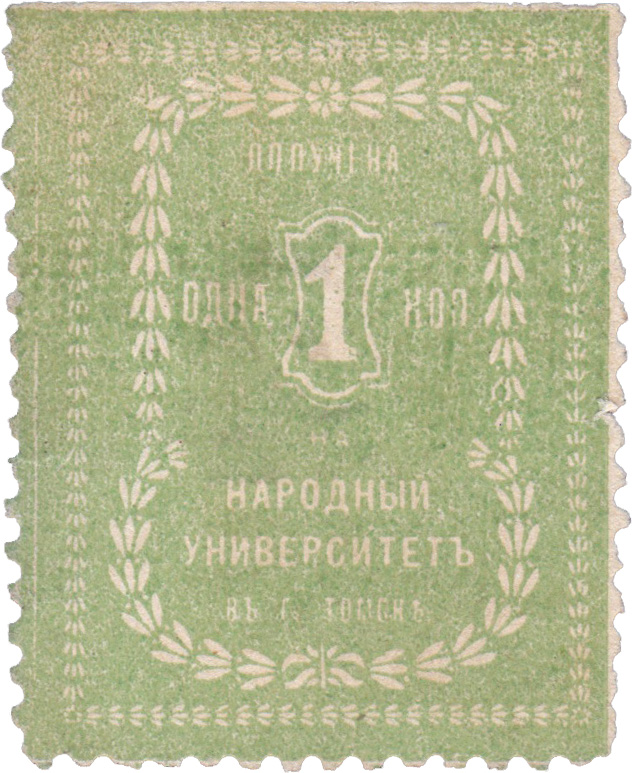
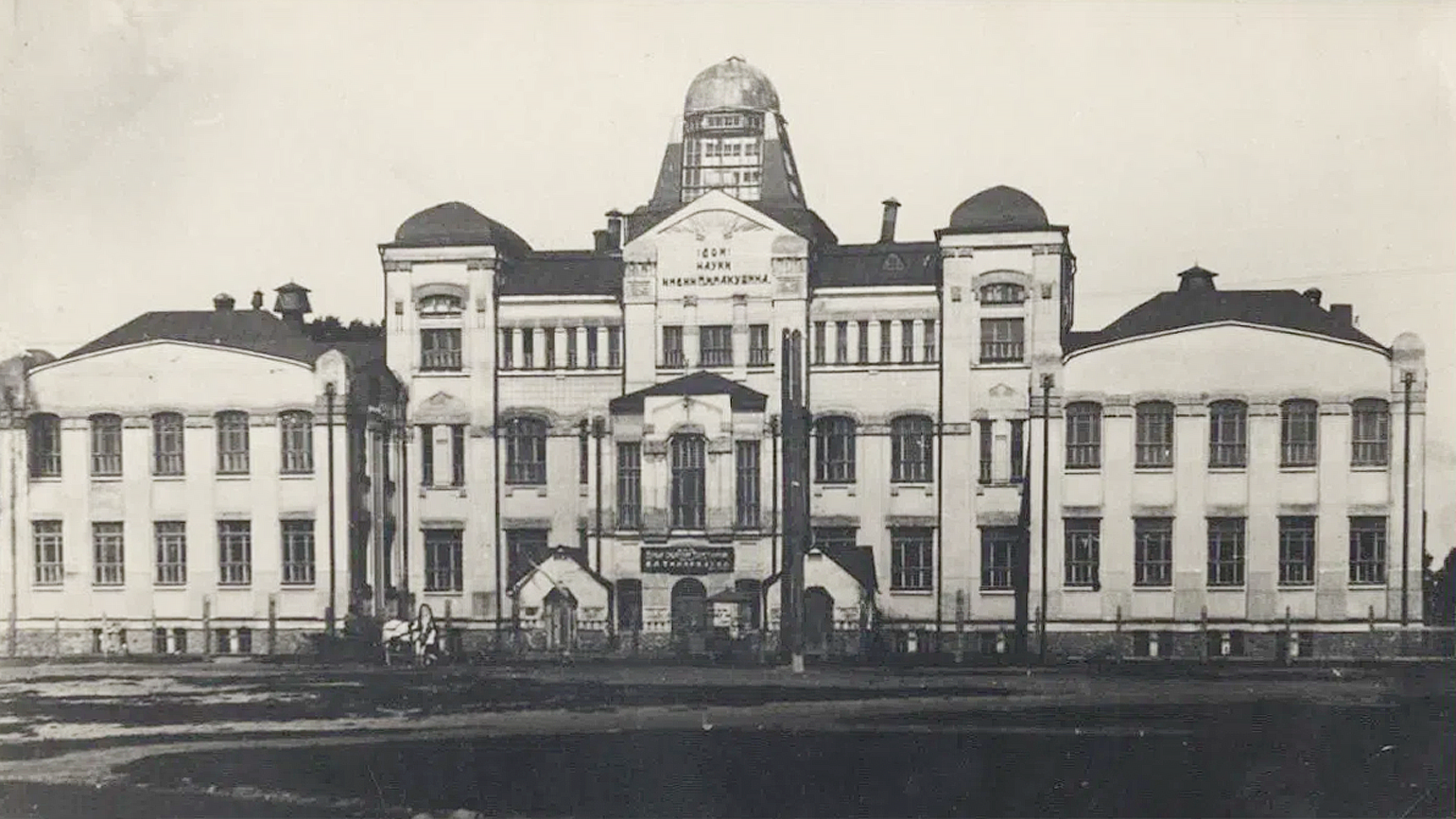
Tomsk People’s University named after P. I. Makushin.
The People’s University in Tomsk was founded by the educator Pyotr Ivanovich Makushin, a major Siberian bookseller, publisher, and public enlightener. Before the university, he established a missionary school in Altai “for native boys,” and then the first free People’s Library not only in Siberia but in Russia as well, doing much to promote literacy.
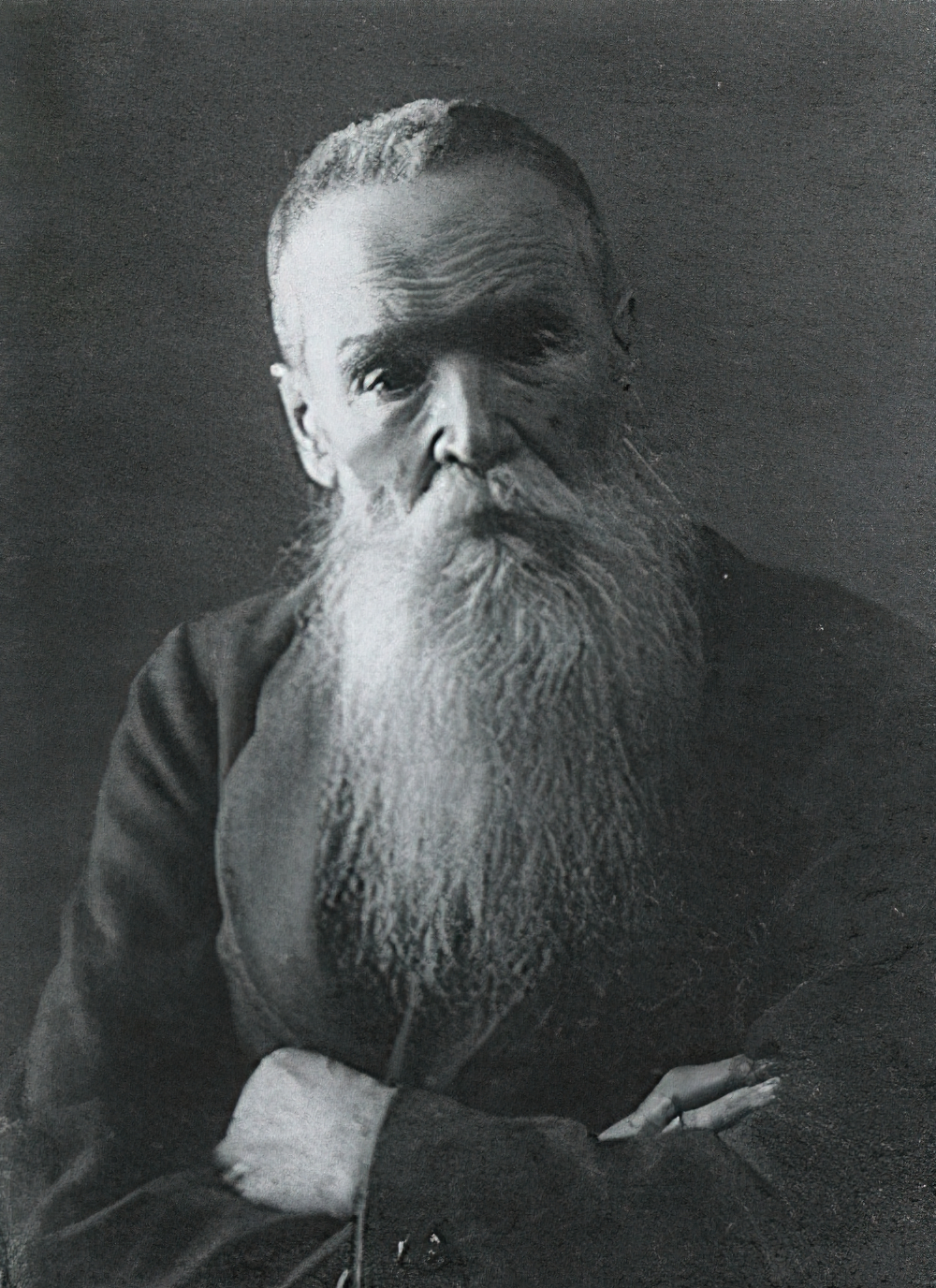
From 1902, he tried to open a People’s University in Tomsk, donating a total of 325,000 rubles to the cause. This roughly corresponded to the annual salary of 72 full university professors, or 100 associate professors.
In April 1905, P. I. Makushin submitted a petition to the Tomsk City Duma to establish a People’s University.
On May 1, 1911, the building for the People’s University was laid on Solyanaya Square and was given the name “House of Science.”
On October 7, 1912, the building was ceremonially opened.
A negative attitude toward people’s universities on the part of the Minister of Public Education L. A. Kasso and the Trustee of the West Siberian Educational District L. I. Lavrentyev for a long time prevented the university from receiving official permission to open.
Only on January 9, 1916, did the new minister P. N. Ignatiev approve the charter of the People’s University. By that time, the building was occupied by several organizations at once (including a military hospital), and preparations for opening the People’s University slowed down.
Only on December 30, 1917, were elections held for its economic committee and an organizational meeting of the board of trustees.
On January 16, 1918, in a lecture hall of Tomsk University, Professor A. A. Gvozdev delivered the first lecture for students of the People’s University, on the works of W. Shakespeare.
In 1921, due to the difficult situation, the university’s activities were suspended.
On October 13, 1925, the university was reopened; its founder P. I. Makushin attended the ceremonial opening. However, at the end of 1925, due again to severe economic conditions, the university closed once more and never resumed its work afterward.
Received 1 Kopeck 1914.
People's University in Tomsk.