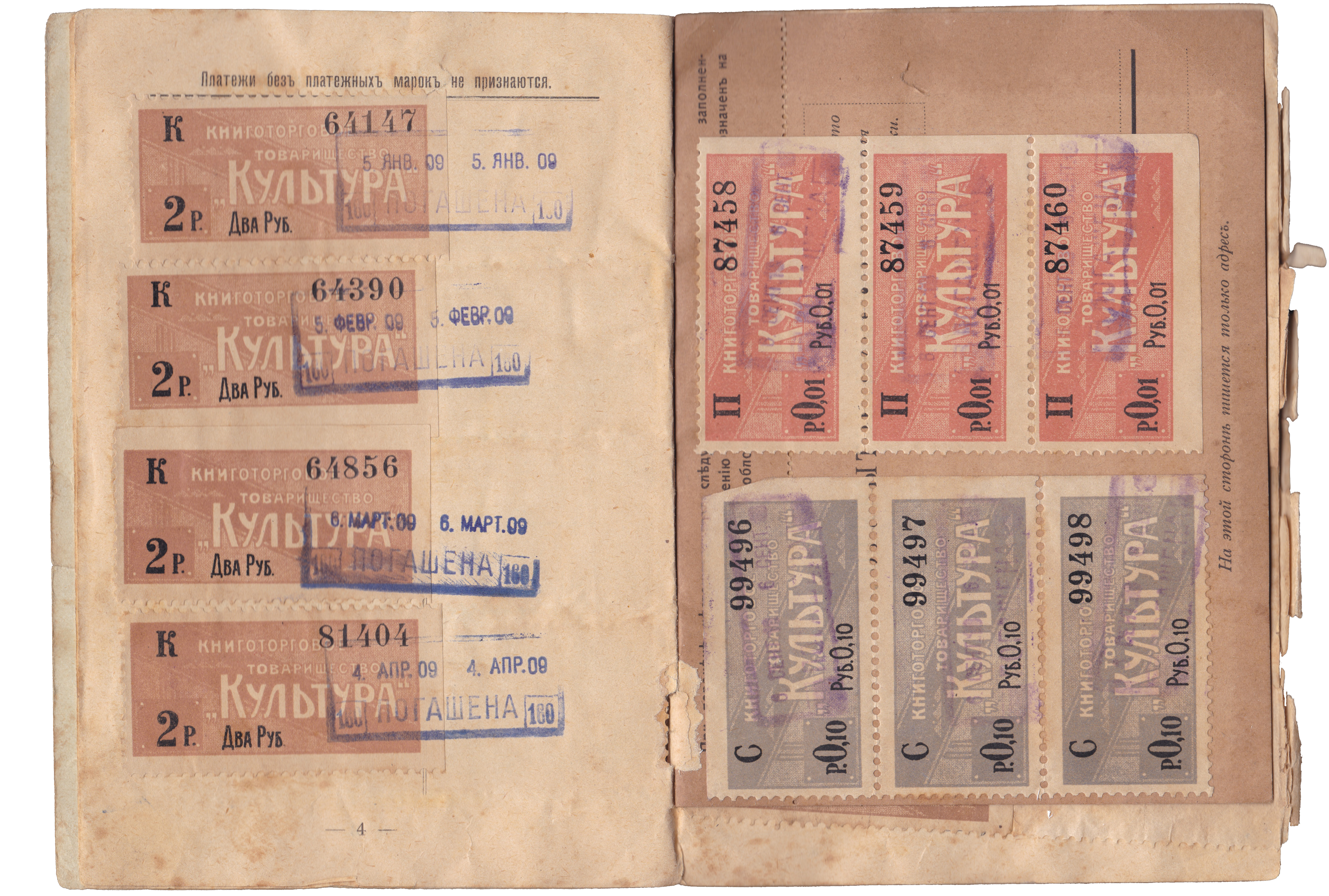
Savings stamps of retail organizations, or payment stamps, are a type of credit stamp whose economic nature is close to savings stamps. They were issued in the last decades of the 19th and the beginning of the 20th century by Russian commercial organizations to attract low-income customers.
Savings stamps of retail organizations were affixed to special forms, which, as they were filled, were accepted as proof that the required amounts had been paid. This method was used not only to repay credit, but also to accumulate funds for purchasing expensive items. If the customer refused the goods, they did not lose the right to a refund of the accumulated amount.

The Culture Society specialized in publishing and selling expensive "prestige" books and art albums. To attract broad segments of the population to buy them, "savings stamps" were issued, which were pasted into customers' special booklets as they paid small amounts of money. After the amount required to purchase the goods was paid, the booklet with stamps was exchanged for the goods, or the stamps in the booklet were canceled for the value of the goods.