
8 August — in Moscow at around 6 p.m., an explosion occurred in the underground passage at Pushkinskaya Square.
It was a casingless explosive device with a power equivalent to 800 grams of TNT. The improvised explosive device was packed with screws and bolts. The bomb had been left in a shopping bag near a kiosk where watches were sold.
As a result of the terrorist attack, 13 people were killed—seven at the scene and six later in hospitals from wounds and burns. More than one hundred people were injured. According to one version, the 8 August explosion was the result of a conflict over the right to trade in this passage. The attack was never solved.
12 August — as a result of a disaster that occurred during exercises in the Barents Sea, at a depth of 108 meters, the APRK K-141 "Kursk" sank— a nuclear-powered cruise-missile submarine. There were 24 cruise missiles and 24 torpedoes aboard. A cruise-missile launch and torpedo firing at a training target were to be carried out. An accident occurred, as a result of which the boat sank at a depth of 108 meters in the Barents Sea, 175 km from Severomorsk. The ship was commanded by Captain 1st Rank G.P. Lyachin. In total, 118 people were aboard at the moment of the disaster. All of them died. The remains of most of them were later raised to the surface and buried.
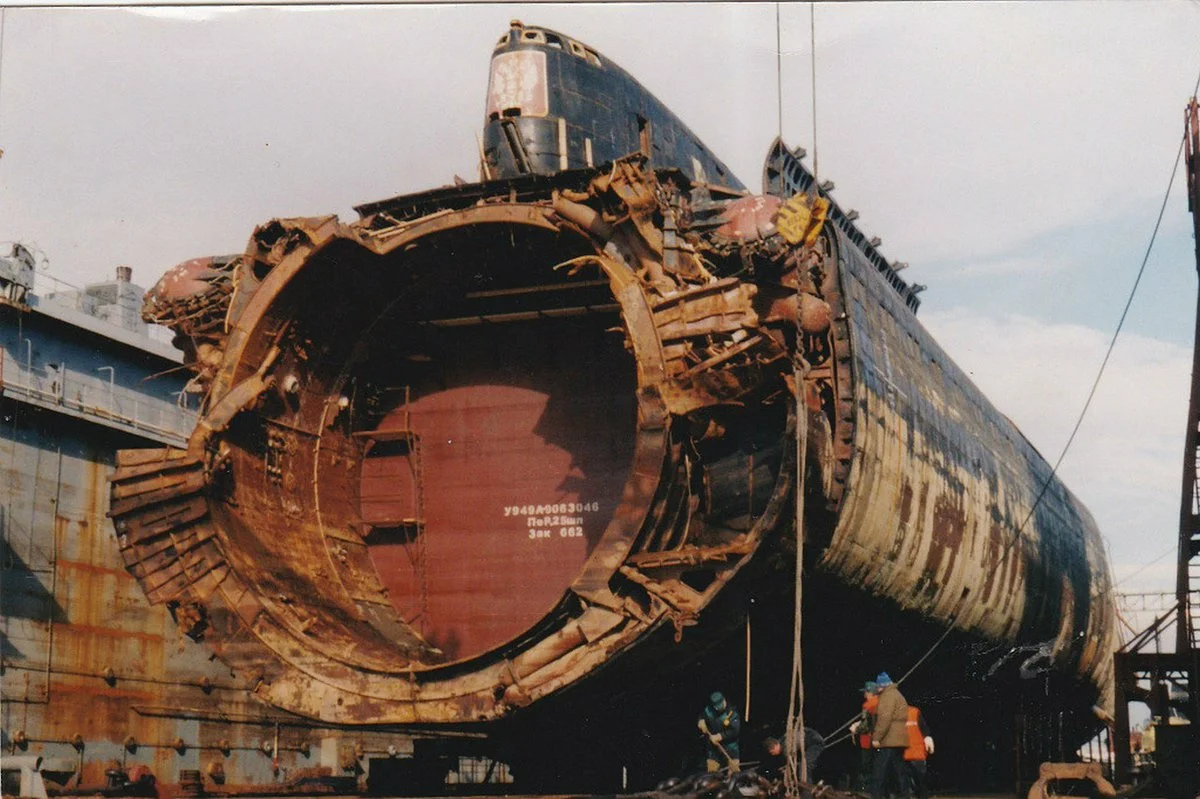
The official report, prepared in 2002 by Prosecutor General Ustinov: at 11:28:26 Moscow time, a 65-76A ("Kit") torpedo exploded in torpedo tube No. 4. The cause of the explosion was a leak of the torpedo fuel components (hydrogen peroxide). Two minutes later, a fire that arose after the first explosion led to the detonation of torpedoes located in the submarine’s first compartment. The second explosion caused the destruction of several compartments of the submarine.
Torpedoes of the specified type were considered unsafe at the time of the disaster. According to Igor Kurdin, chairman of the St. Petersburg Club of Navy Submariners, the torpedo that exploded had been manufactured as part of a batch of ten units that was declared defective—weld seams of the tanks were leaking—and was recalled to the factory to fix the defects. However, the order said to "recall combat torpedoes," while one of them was listed as a "training" torpedo and therefore was not returned to the factory; later it was supplied to the "Kursk."
27 August — a fire began at the Ostankino TV tower, lasting a full day and claiming the lives of three people. It was extinguished only on 28 August. The cause of the fire was a short circuit at a height of 460 meters, which ignited the insulation of high-frequency cables.
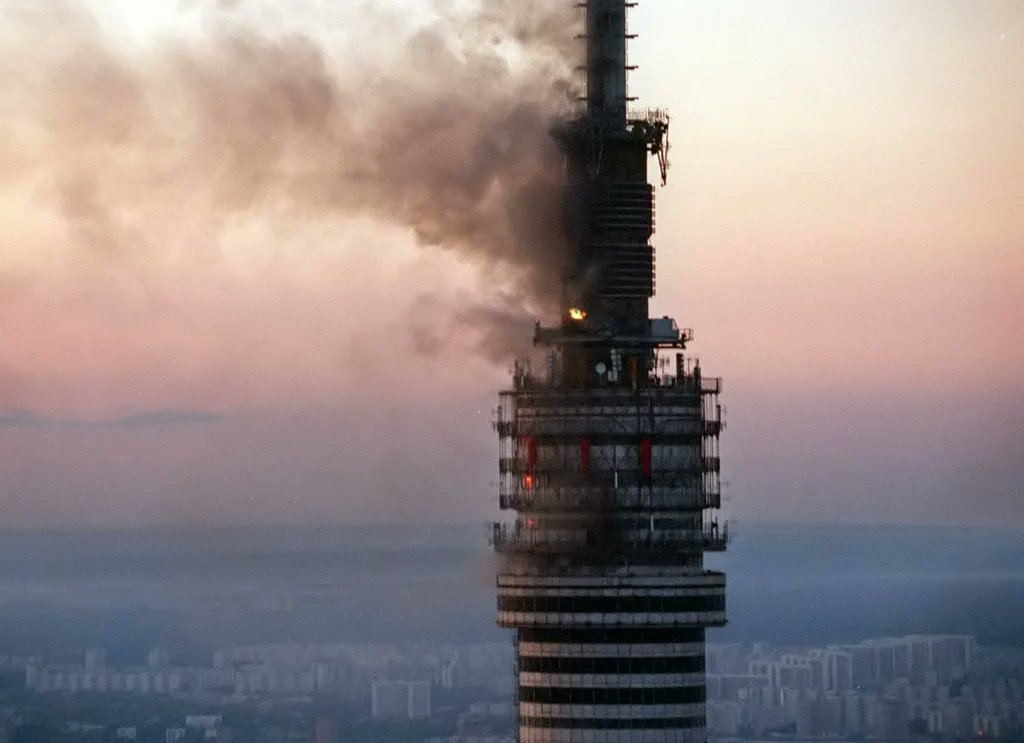
As a result of the fire, of 150 guy-wire supports only 29 remained properly tensioned. The elevator system was destroyed; the power supply, ventilation, air-conditioning, heat and water supply, communications, and alarm systems were damaged. Television broadcasting to Moscow and the Moscow Region was interrupted.
By 4 September, broadcasting on their own frequencies was restored for the TV channels ORT, RTR, TVC, NTV, Kultura, and TV-6.
From 5 September, some UHF channels also resumed operation. A public debate flared up about the tower’s future—whether it should be corporatized and transferred into private hands, how to finance the restoration work, and which agency should be given control over the tower’s operation. In particular, the view was voiced that there was no point in spending budget funds on restoring the tower and that it would be easier to build a new one.
And yet this position did not prevail—the decision was made to restore the tower.
By the end of 2004 the TV tower had been restored, and in the summer of 2005 it reopened to visitors.