
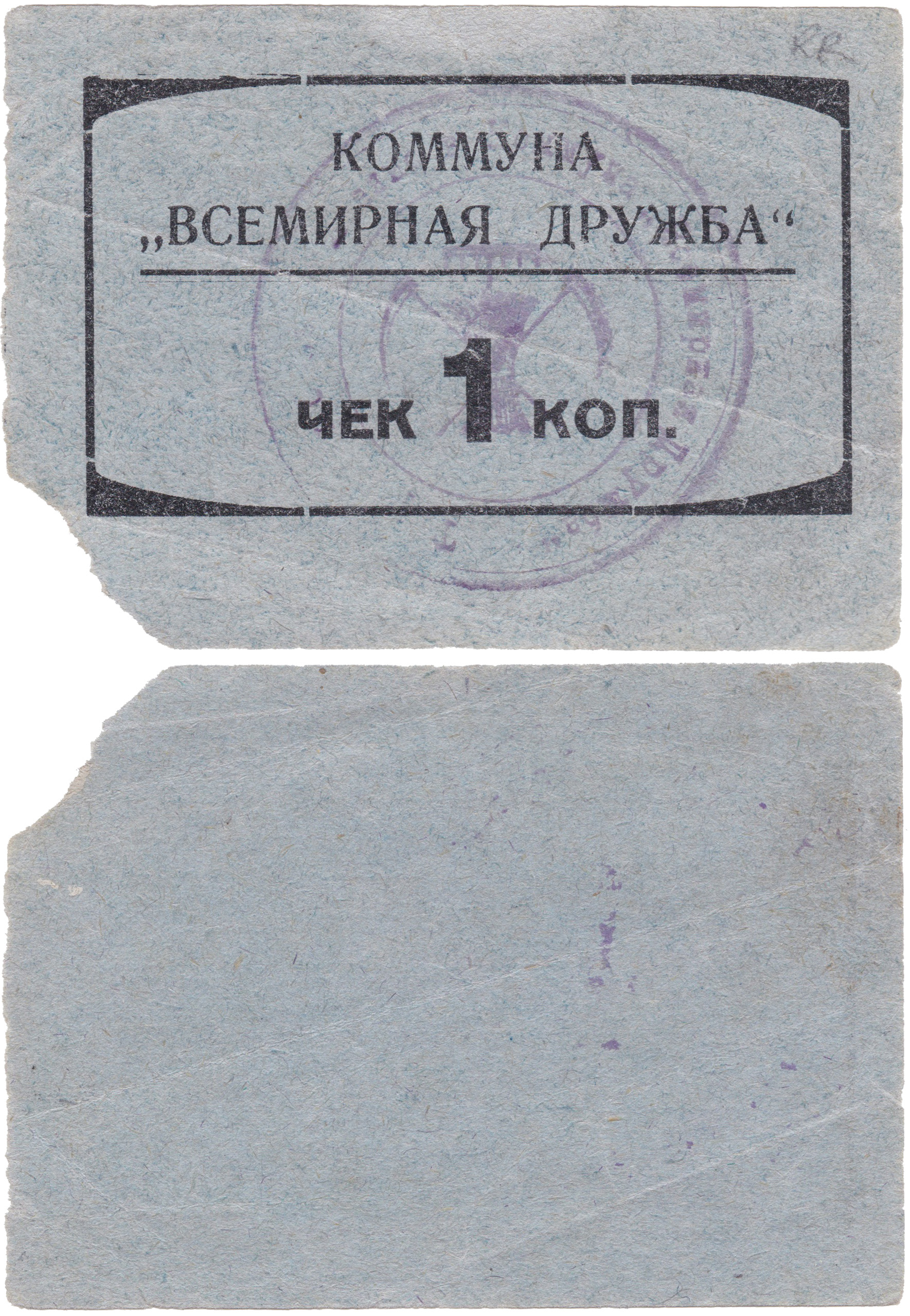
The commune’s birthday is May 5, 1918. On that day, the stanitsa commissioner of Dneprovskaya, the Cossack-Bolshevik Fyodor Karaukh, announced the creation—on the basis of a former monastery farm—of one of the first communes in the modern history of the Kuban. It was a turbulent time: hamlets and stanitsas kept changing hands, passing from the Whites to the Reds to the Greens and back again. The first communards, including Pyotr Batrak, Anton Pokusenko, Anastasia Iordanova, Domna Zhurbenko, and the Virchenko and Vasylenko families, were mercilessly robbed and killed.
“World Friendship,” under the onslaught of Denikin’s advancing forces, lasted only two and a half months. Its second birthday became June 12, 1920, when, on Karaukh’s initiative, the commune was re-established. Now its name sounded fully justified, because among the communards—besides local residents of Dneprovskaya, settlers from central Russia, and retired Red Army soldiers—there were three Czechs, four Poles, a Chinese man, and a Latvian.
The commune was located on the grounds of the former Holy Equal-to-the-Apostles Convent of Saint Mary Magdalene, where the nuns had built a strong хозяйство. In 1918, the revolutionary committee of the stanitsa of Rogovskaya seized the monasteries’ lands; the nuns and novices were declared enemies of the new власти. The commune received thirty buildings in decent condition, twenty of them designated for housing; the remaining ten were used for a school, a club, and auxiliary помещения, along with a total of 2 cows and 2 plows.